
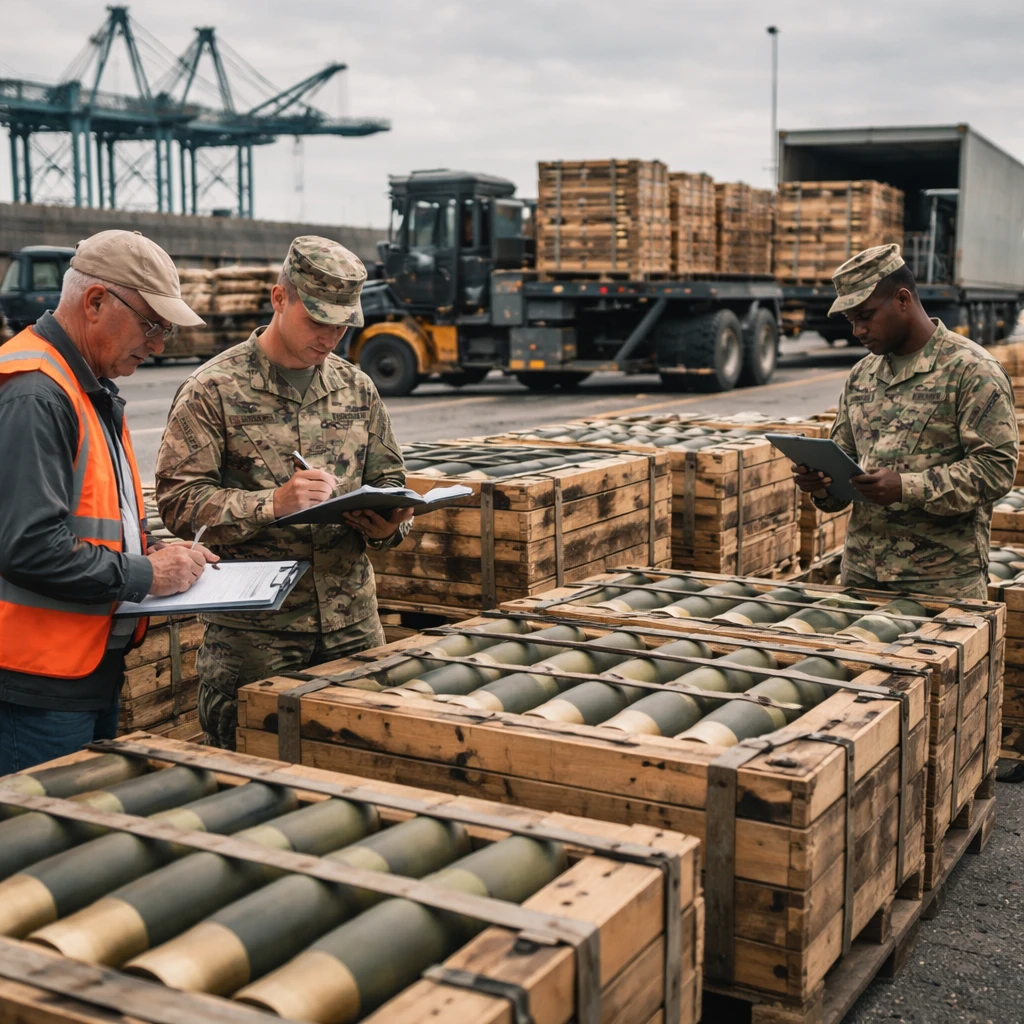
The U.S. Army has begun the process of levying financial penalties against two defense contractors after a Pentagon Inspector General review found significant delays in deliveries of large-caliber artillery ammunition destined for Ukraine.
The Army Contracting Command is acting on recommendations from the inspector general's November 20 report, which called for approximately $1.1 million in penalties for late shipments. The report identified multiple late deliveries, with some consignments arriving up to 18 months behind schedule.
An Army statement cited in reporting said the precise penalty amounts to be assessed against Northrop Grumman Corp. and Global Military Products Inc. remain undetermined and are "not available for release at this time." The statement stressed the Army's intent to monitor contract performance and apply contractual remedies when suppliers do not meet their obligations.
While the roughly $1.1 million recommended in the inspector general's report amounts to a relatively small share of the overall contract values involved, the Army's move follows public commitments from Defense Secretary Pete Hegseth to reform Pentagon acquisition practices and to enforce penalties against suppliers who fail to deliver critical materiel on schedule.
The information publicly available does not specify how the proposed charges will be apportioned between the two companies or whether additional contractual actions beyond financial penalties might follow. The Army's declaration of intent to hold contractors accountable was part of the formal response to the inspector general's findings.
Given the facts reported, the known elements are limited to the inspector general's recommendation, the scale of the recommended penalties, the maximum reported shipment delays of up to 18 months, and the Army's stated approach to contract oversight and enforcement. The Army has not released detailed calculations or a timeline for applying the contractual remedies.
Context and implications
The action highlights the Army's reliance on contractual mechanisms to address delivery shortfalls identified by oversight authorities. It also underscores that the recommended penalty sum represents a modest fraction of the total contract values at issue, according to the same reporting.
At present, the key public facts are constrained to the inspector general's recommendation and the Army's confirmation that it will pursue remedies; further specifics on penalties per contractor and any downstream effects on contract performance records or procurement schedules have not been disclosed.