
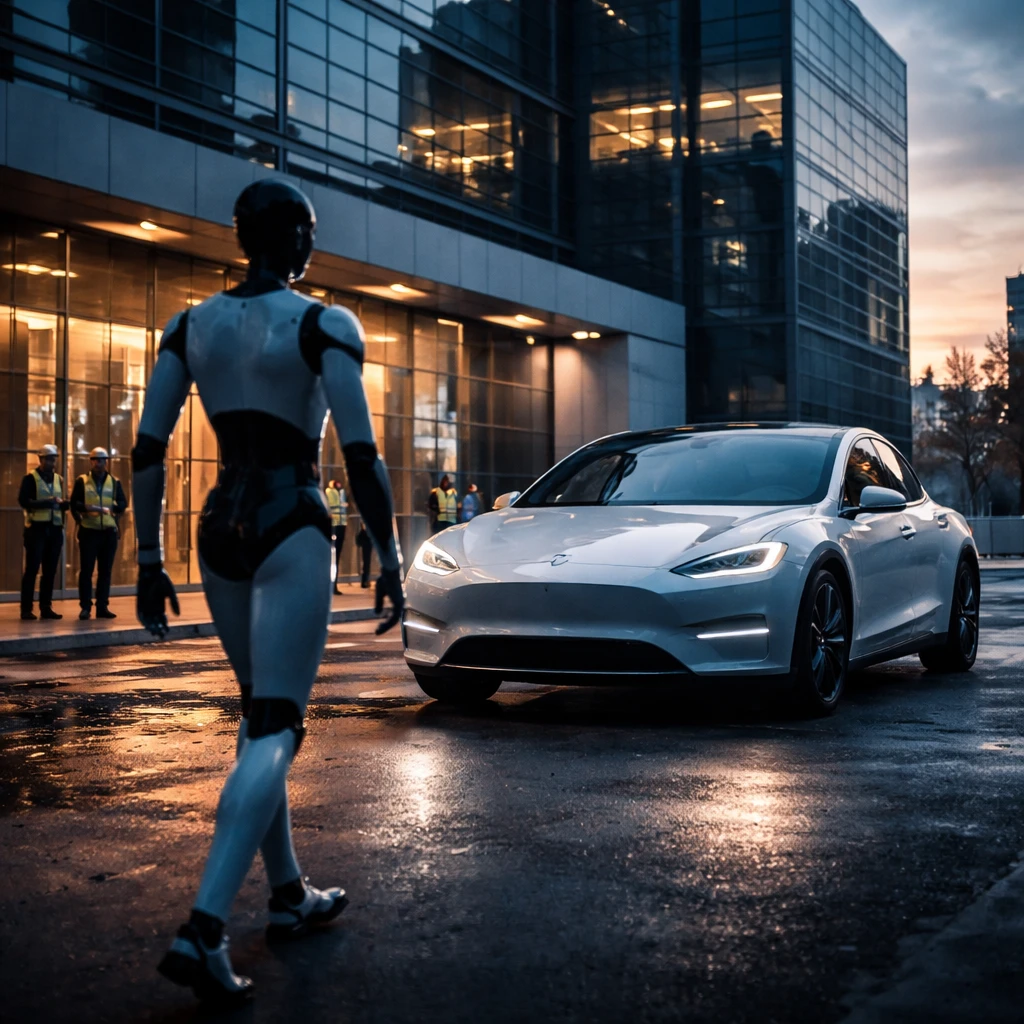
Tesla looks poised to report a robust second quarter for deliveries and earnings, yet Wolfe Research cautions that the stock’s longer-term direction will hinge on the automaker’s progress in robotaxi and humanoid initiatives.
Analyst Emmanuel Rosner at Wolfe Research forecasts Tesla will deliver roughly 420,000 vehicles worldwide in Q2, about 10% higher than the year-ago quarter and ahead of the prevailing consensus near 400,000 units. On profitability, Rosner expects automotive gross margins excluding credits to land in the low-18% range, an improvement from 17.7% in Q1 after excluding warranty true-ups. He also projects second-quarter earnings per share of approximately $0.50 to $0.52, above the $0.45 consensus.
Despite the favorable near-term delivery and margin outlook, Wolfe Research emphasized that Tesla’s core vehicle business accounts for only a portion of the company’s market valuation. Rosner said the larger valuation premium appears tied to confidence in Tesla’s longer-term initiatives, specifically Robotaxi, Humanoids, and ancillary AI services.
"The much bigger part, in our view, is tied to confidence around their longer-term (and more significant) initiatives across Robotaxi, Humanoids, and ancillary AI services," Rosner wrote.
He added that ramp profiles for these projects have become less steep than previously anticipated - "ramp curves are shallower than previously expected, most notably in robotaxi" - and warned Tesla is likely to miss its first-half deployment goals for that program.
Rosner also pointed to growing competitive pressures in autonomous vehicle and robotics markets. He highlighted several specific developments he sees as risks: Waymo’s planned expansion into 20 cities this year, Mobileye’s target to field 100 robotaxis by 2027, and accelerating humanoid production from Figure AI and Boston Dynamics.
On investor behavior, the analyst noted that TSLA stock has remained relatively resilient even as some capital flows toward SPCX, with the market pricing in an increased chance of a future TSLA/SPCX merger that offers some downside support. Rosner added that any such transaction would likely not occur until mid-2027 at the earliest.
Market snapshot included in Wolfe Research’s note showed tickers TSLA -0.9% and SPCX -1.56% during the period cited.
Summary
- Wolfe Research expects Tesla to report about 420,000 Q2 deliveries, low-18% automotive gross margins excluding credits, and roughly $0.50–$0.52 in EPS - all modestly ahead of consensus.
- The firm warns that the larger part of Tesla’s valuation rests on confidence in robotaxi, humanoid, and AI-service initiatives rather than the core vehicle business.
- Intensifying competition and shallower ramp curves, especially for robotaxi, increase the risk of missed deployment milestones.
Key points
- Delivery and earnings outlook - Q2 unit delivery estimate of ~420,000 units and EPS above consensus could support near-term stock performance; sectors impacted include automotive and equity markets.
- Margins - Automotive gross margin, excluding credits, projected in the low-18% range, affecting profitability analysis for auto suppliers and EV valuation models.
- Long-term value tied to robotics and AI - Investor expectations around Robotaxi, Humanoids, and ancillary AI services are significant drivers of Tesla’s valuation; this influences capital allocation to autonomous vehicle and robotics companies.
Risks and uncertainties
- Execution risk - Wolfe Research expects shallower ramp curves and anticipates Tesla will likely miss first-half robotaxi deployment targets; this affects autonomous vehicle timelines and related supply chains.
- Competitive pressure - Expansion plans from Waymo, Mobileye’s 100-robotaxi target by 2027, and increasing humanoid output from Figure AI and Boston Dynamics heighten market competition in AV and robotics sectors.
- M&A timing uncertainty - Market assumptions around a potential TSLA/SPCX merger provide some downside support, but Wolfe Research views any such deal as unlikely before mid-2027, leaving timing and regulatory outcomes uncertain.