
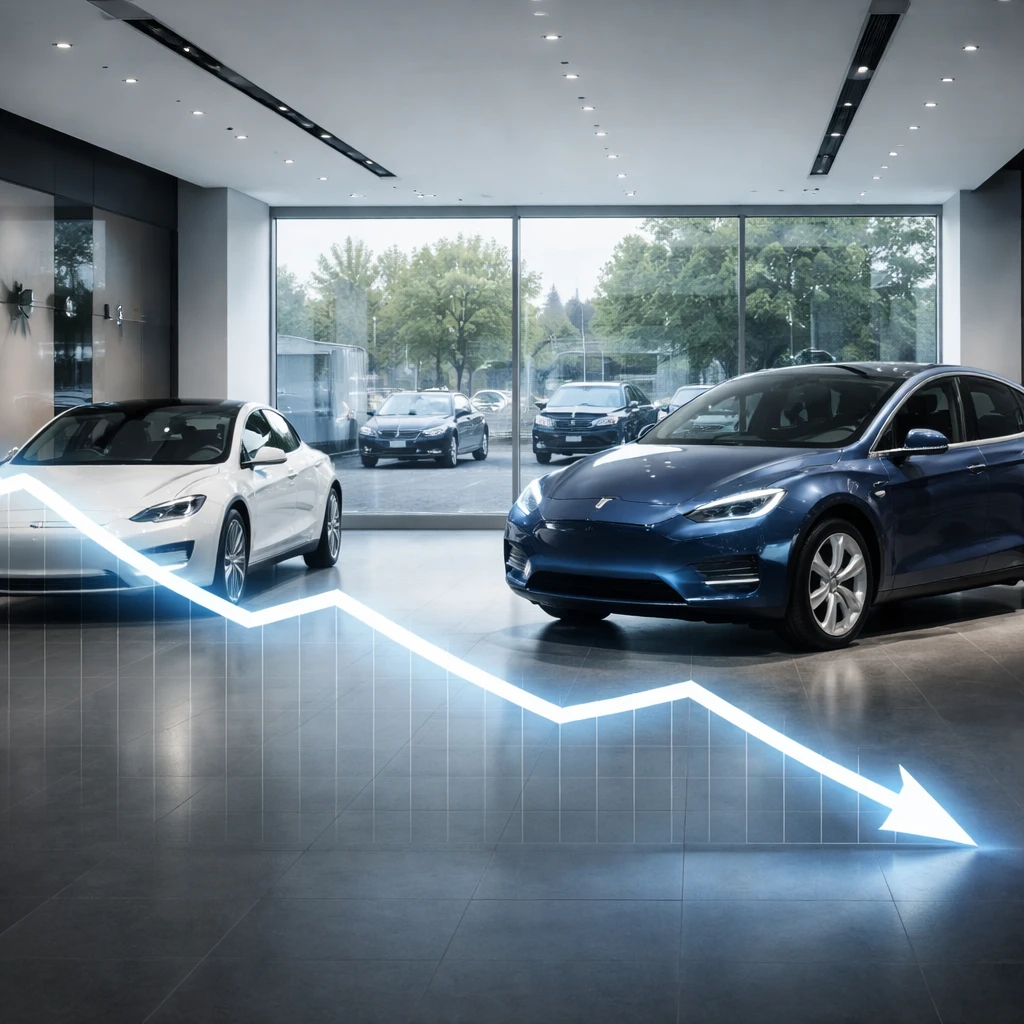
Tesla saw its brand valuation decline by $15.4 billion in 2025, a drop of 36% that leaves the electric-vehicle maker with a brand worth $27.61 billion, according to research from Brand Finance. This marks the third year in a row that the company’s brand value has fallen, moving farther from its peak valuation of $66.2 billion in January 2023 and down from $43 billion at the start of 2025.
Brand Finance’s leadership identified several contributors to the fall. CEO David Haigh pointed to Tesla’s thinner pipeline of notable new models, vehicle prices that remain high relative to competitors, and the effect of Elon Musk’s public involvement in geopolitical matters. Haigh also highlighted Musk’s reduced focus on the automotive side of the business as a factor Brand Finance considered in assessing the brand.
Consumer perception indicators tracked by Brand Finance displayed significant deterioration in several measures. In the United States, Tesla’s recommendation score dropped to a new low of 4.0 out of 10, down sharply from 8.2 in 2023. Brand Finance Valuation Director Lorenzo Coruzzi said that reputation, recommendation, trust, and "coolness" metrics were particularly weaker in Europe and Canada.
The London-based firm gathered responses from at least 1,000 people across 18 countries for its Tesla survey. While awareness of the Tesla brand rose in most markets, reflecting broader geographic expansion, the company’s U.S. loyalty score inched up slightly from 90% to 92%, signaling that many existing owners still plan to continue driving their Tesla vehicles.
Amid Tesla’s decline, BYD emerged as a notable gainer within the automotive ranking. The Chinese automaker’s brand value increased by roughly 23%, rising to $17.29 billion from $14.03 billion the previous year.
Brand Finance’s annual ranking now places five automakers ahead of Tesla in brand value. Toyota leads the sector at $62.7 billion, followed by Mercedes-Benz, Volkswagen, and Porsche among those positioned above Tesla.
Key contextual points in the Brand Finance findings include the contrast between stronger consumer familiarity and weakening attitudinal measures, the continued loyalty of existing U.S. Tesla owners, and competitive pressure from rising brands such as BYD. The data highlight reputational shifts that may influence brand positioning and competitive dynamics across the automotive sector.