
Stock Markets June 8, 2026 04:53 PM

Strike at Dauch Plant Enters Second Week, Talks with Union Stall

Local 2093 and Dauch Corp. remain at an impasse as GM monitors axle inventory and production exposure

By Caleb Monroe
Share
Twitter Reddit Facebook LinkedIn
GM

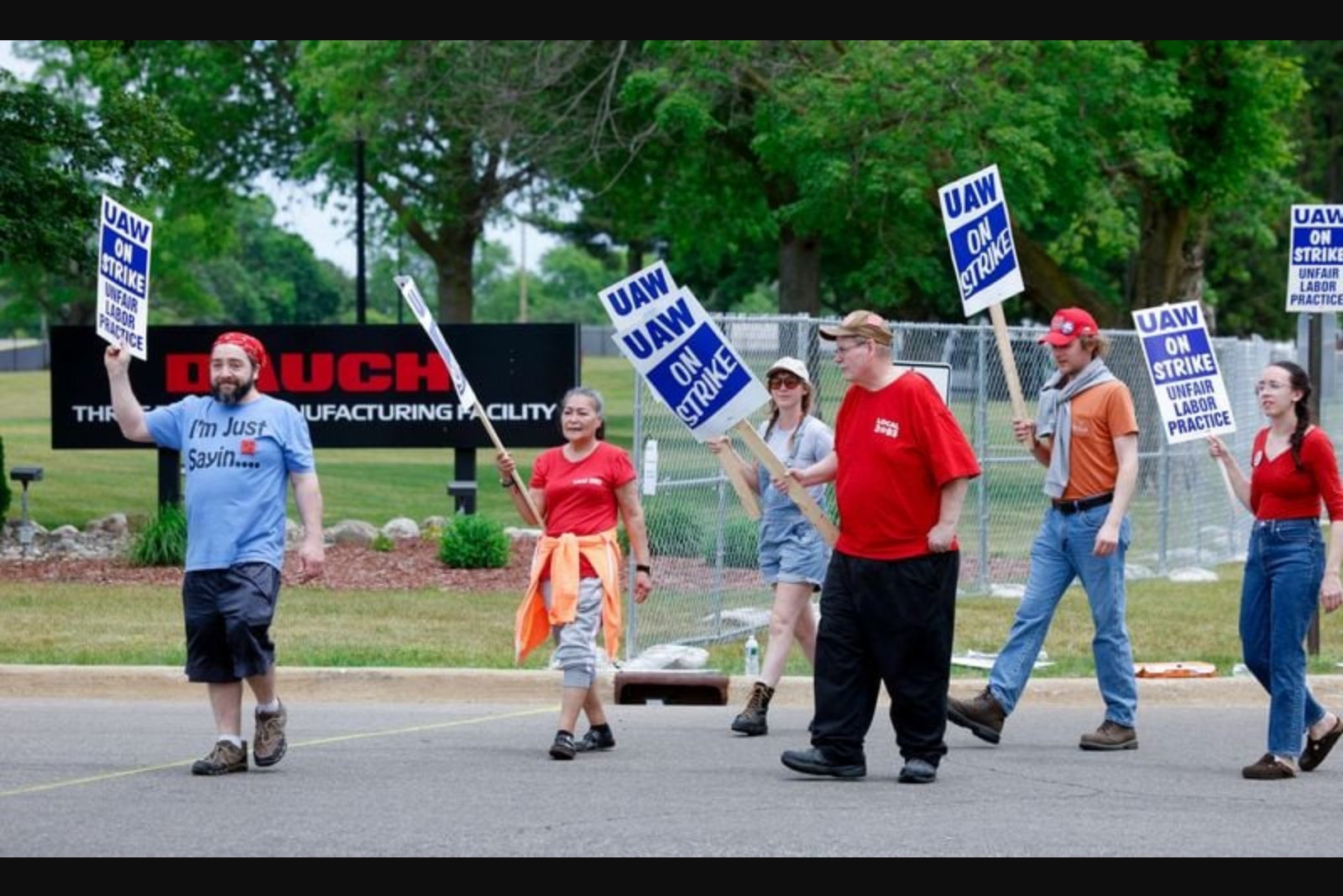
A labor strike at Dauch Corp.'s Three Rivers, Michigan axle plant entered its second week on Monday as bargaining between the United Auto Workers Local 2093 and Dauch failed to produce an agreement. Union leaders say the company walked away from talks; Dauch says it is communicating with customers and continuing negotiations. The plant supplies axles and components for General Motors’ full-size and midsize pickup trucks; GM says no plants have been affected so far and has limited axle inventory to sustain production for about two weeks.

Strike at Dauch Plant Enters Second Week, Talks with Union Stall
GM
Summarize with
ChatGPT Perplexity Claude Grok Gemini

Key Points

  • Strike at Dauch plant in Three Rivers, Michigan entered its second week as of Monday, with union and company unable to reach agreement - impacts automotive manufacturing and labor sectors.
  • Dauch supplies axles and components for GM’s full-size and midsize pickup trucks; GM reports no plants affected yet but has around two weeks of axle inventory to sustain production - impacts supply chain and auto production planning.
  • Wage dispute central to talks: top pay rose by $4 to $22/hour since a 2008 concession, and the union is seeking $30/hour by 2030 - affects labor costs and compensation dynamics in manufacturing.

A strike at a key supplier for General Motors’ pickup trucks moved into its second week on Monday after union and company negotiators failed to close a deal, union officials said.

Josh Jager, bargaining chairman for Local 2093, said in a Monday afternoon statement that talks had broken down. "Unfortunately, we just walked away from the table. The company is trying to play games with words and not providing anything productive," he said, and added that the union is preparing another proposal that would include concessions to the company. "We’re still making progress," he added.

Local 2093 represents roughly 1,000 workers at the Dauch plant in Three Rivers, Michigan. The facility produces axles and other components used in General Motors’ full-size and midsize pickup trucks.

A spokesman for Dauch, which was formerly known as American Axle, said the company remains "in close communication with our customers regarding the work stoppage." He also said, "We continue to have ongoing discussions with the union in hopes of promptly reaching a mutually beneficial and market-competitive contract."

Industry contacts indicated last week that General Motors had approximately two weeks of axle inventory available to continue vehicle production, a timeframe that highlights the potential near-term impact of a prolonged work stoppage on assembly operations.

On Monday, a GM spokesman said the automaker had not yet seen any of its plants affected by the strike.

The dispute includes a long-running wage element. Workers at the Dauch plant agreed to lower wages in 2008, and since that concession the top wage has risen by $4 to $22 per hour, Jager said. The union is seeking higher top pay, targeting $30 per hour by 2030.

Negotiations continue while the three parties - the union, the supplier and its automaker customer - weigh operational exposure and contract demands. Both sides described ongoing dialogue but remain apart on terms as the stoppage extends into its second week.


Contextual note: Information in this report is limited to statements issued by the union, the supplier and the automaker and the production-supply estimate referenced above.

Risks

  • If the strike continues beyond the roughly two-week axle inventory estimate, vehicle assembly at GM could face disruptions - risk to automotive production and supply chain continuity.
  • Negotiations remain unresolved with both sides indicating ongoing discussions but no agreement - risk of prolonged stoppage raising costs for the supplier and potential downstream production delays for automakers.
  • Wage demands and historical concessions create leverage and disagreement points that could extend bargaining - labor cost uncertainty for the manufacturing sector and potential margin pressure for suppliers and automakers.

More from Stock Markets

Snow Rothschild Prices 20 Million-Unit IPO, Raises $200 Million Jun 8, 2026 OpenAI Enters Confidential IPO Process as Anthropic and SpaceX Move Toward Public Markets Jun 8, 2026 OpenAI Submits Confidential S-1 as AI Rivals Also Move Toward Public Markets Jun 8, 2026 Mexican equities slip as S&P/BMV IPC hits one-month trough Jun 8, 2026 Colombian equities close lower as COLCAP slides 1.58% Jun 8, 2026