
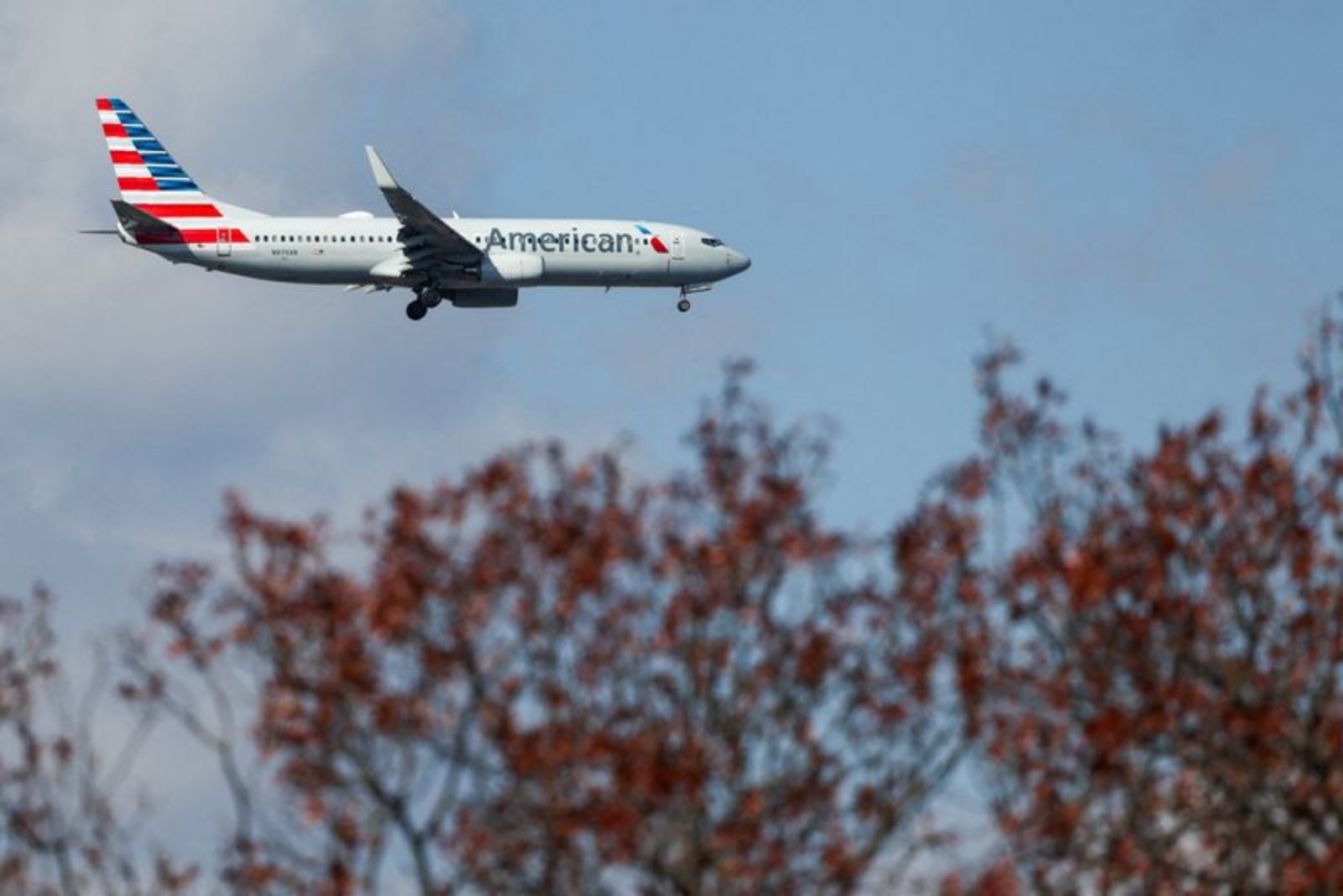
American Airlines experienced its most severe weather-related operational collapse to date after a winter storm over the weekend forced more than 9,000 flight cancellations and exposed stresses in the airline's recovery systems. The carrier warned the disruption will cut first-quarter revenue by an estimated $150 million to $200 million and will slightly reduce planned flying capacity as it rebuilds schedules and repositions crews.
Company executives attributed the scale of the problem in part to the storm’s impact on the airline’s core network. Ice and lingering cold in the Dallas-Fort Worth area - American’s largest hub - complicated employees’ commutes and crew positioning. Executives said roughly one-third of American’s workforce lives in the region around that hub, amplifying the challenge of getting staff to airports once conditions improved.
Operationally, the storm struck five of the carrier’s nine largest operating locations while it moved up the East Coast, compounding the recovery task as disruptions occurred at multiple major nodes simultaneously. That broad footprint of impact contrasts with more localized events that carriers typically absorb with less systemwide spillover.
On Wednesday morning, tracking data showed American had canceled 459 flights as of 10:45 a.m. ET - about 15% of its scheduled departures for the day. By comparison, two major competitors reported far fewer cancellations at that same point in the morning, with Delta canceling 12 flights and United canceling 10.
Crew logistics become the bottleneck
Interviews with union officials and review of internal crew messages indicate that the primary operational strain shifted to the logistics of reconnecting crews to flights after large-scale cancellations. Unions reported lengthy waits for crews trying to reach the teams responsible for reassignment and accommodation arrangements. In some instances, airline staff spent entire nights in airport terminals while attempting to secure layovers.
Julie Hedrick, president of the Association of Professional Flight Attendants, said some crews slept in terminals and waited six to 11 hours to reach departments tasked with fixing schedules and arranging hotels and transportation. The union reported that after cancellation-related reassignment delays, crews then faced further lags obtaining hotel rooms and rides, and that some flight attendants received no hotel assignments at all. "It feels like this has probably been the worst we’ve dealt with, in terms of recovering," Hedrick said.
The Allied Pilots Association recorded similar complaints. In a memo to members, union president Nick Silva said many pilots were reading updates from airport terminals, layover hotels, or while traveling as passengers to other cities so they could operate flights. Silva signaled the union planned to pursue grievances, including objections to hotel quality during the disruption, and criticized management’s response as insufficient. He also wrote that many American pilots have experienced a "six-figure" pay gap compared with peers at Delta and United over the past three years, and accused management of recycling the same explanations for operational and financial shortcomings.
Company response and incentives
American provided internal communications it had sent to employees as a response to the operational breakdown. In a note from the chief operating officer, teams were reported to be repositioning aircraft and freeing gates at Dallas-Fort Worth to improve throughput. An operational recovery update stated that by mid-afternoon the airline had handled more departures and arrivals at the airport than it did the prior day, and that travel waivers had been extended through Thursday. "The worst of this storm’s impacts is behind us," the COO wrote in the employee note.
At the same time, internal messages to pilots show American activated an extra-pay provision to encourage crew members to pick up unassigned trips as the airline reconstructs its schedule. The special pay rule adds the equivalent of five hours and 15 minutes of additional pay on certain days, on top of regular compensation. An operations executive told pilots that the incentive was being applied broadly, and one pilot familiar with the program described it as the first time he could recall the provision being used - an indication of the difficulty in restoring service levels.
Employee morale and financial context
The operational turmoil comes amid mounting employee frustration tied to the airline’s recent financial performance. American has trailed competitors in profitability, which employees say has resulted in smaller profit-sharing payouts. Some flight attendants said modest profit-sharing checks added to tensions during the storm, when crews faced long waits and uncertainty over accommodations. "Today was not a good day for that to come out," Hedrick said, describing the timing of profit-sharing disclosures as particularly ill-timed while crews dealt with logistical breakdowns.
American’s chief financial officer conveyed expectations that cancellations would ease as temperatures rose in the Dallas-Fort Worth region, with operations approaching normal by Thursday. Unions cautioned against premature confidence, stating that while the storm’s peak occurred over the weekend, the more difficult phase has been restoring adequate rest, housing and positioning for crews in order to resume scheduled flying.
Near-term operational and market implications
The company’s preliminary revenue hit of $150 million to $200 million in the first quarter reflects the materiality of the disruption. Management also indicated a minor trim to planned flying capacity as a direct consequence of the time and resources required to rebuild the schedule. That combination of reduced capacity and lost revenue will be a short-term headwind to the carrier’s performance until normal operations are reestablished.
For now, the focus remains on crew welfare, logistics and aircraft repositioning as the airline works to restore its network across multiple major hubs. Unions and employees will be watching closely how quickly management can re-establish reliable processes for reassignment, lodging and transportation in the event of further widespread weather events.
Key facts in this report are based on the airline’s operational statements, internal employee communications, union commentary and flight-tracking data available during the recovery period.