
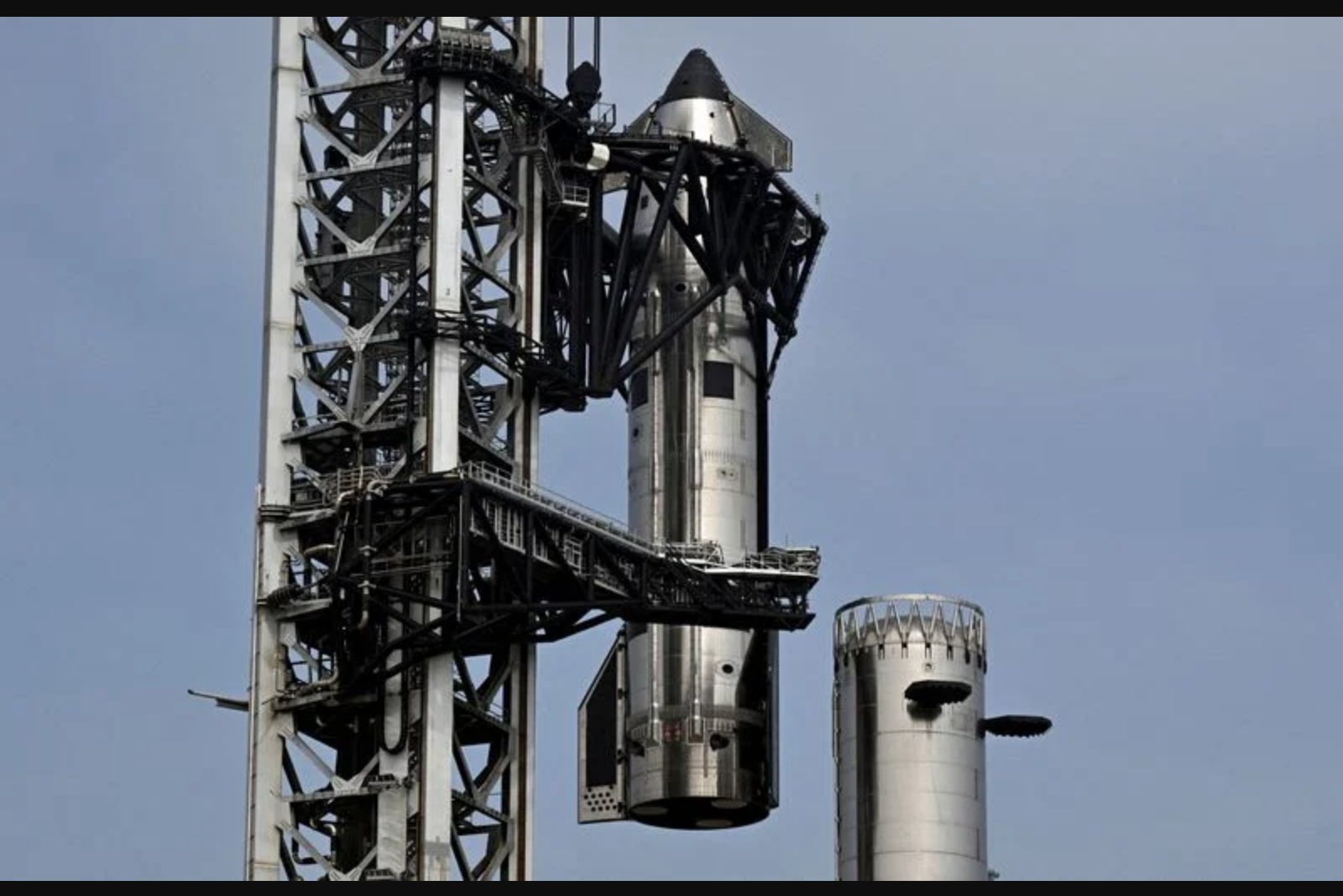
SpaceX on Thursday completed what has been described as a record-setting U.S. initial public offering, raising $75 billion after pricing its shares at $135 each. The deal caps a multi-decade trajectory that began with the company’s founding in 2002 and has been marked by technical breakthroughs, public and private program wins, high-profile failures, and rapid expansion into satellite internet and cloud services.
Timeline of major events
- March 2002 - Elon Musk starts SpaceX using money he made from the sale of PayPal.
- March 2006 - SpaceX launches its first rocket, the Falcon 1, which fails.
- September 2008 - Falcon 1 launches successfully and becomes the first privately developed liquid-fuel rocket to reach Earth’s orbit.
- December 2008 - SpaceX secures its first major contract with NASA to ferry cargo and supplies to the International Space Station.
- May 2012 - A Dragon capsule taken to space by a Falcon 9 rocket, making it the first private spacecraft to dock at the ISS.
- June 2015 - Falcon 9 explodes mid-air.
- December 2015 - First successful vertical landing of Falcon 9, marking the first controlled recovery by a large rocket after delivering a payload into orbit.
- February 2018 - The first Falcon Heavy launch carries Musk’s Tesla Roadster and its mannequin driver, Starman, into space.
- April 2019 - Crew Dragon test vehicle explodes during ground test.
- May 2019 - SpaceX starts launching Starlink satellites, a constellation capable of beaming signals for high-speed internet service to paying customers around the globe.
- October 2020 - SpaceX completes the 100th successful flight of a Falcon rocket since Falcon 1 first flew to orbit in 2008.
- November 2020 - SpaceX Crew-1 mission - the first operational mission under NASA’s Commercial Crew Program.
- April 2021 - NASA awards SpaceX the contract for the first commercial human lander on the moon, part of its Artemis program.
- September 2021 - SpaceX launches the first all-civilian crew ever to circle the Earth from space.
- November 2021 - NASA’s Double Asteroid Redirection Test mission launched into an interplanetary transfer orbit aboard a SpaceX rocket, marking the world’s first test of a planetary defense system designed to prevent a potential asteroid collision with Earth.
- April 2023 - First Starship rocket explodes after losing control.
- November 2023 - Starship launch fails minutes after reaching space.
- November 2023 - A U.S. judge blocks the U.S. Department of Justice from pursuing an administrative case accusing Elon Musk’s SpaceX of illegally refusing to hire refugees and asylum recipients.
- September 2024 - The SpaceX Polaris Dawn mission carries out its first privately managed spacewalk.
- January 2025 - SpaceX’s Starship rocket breaks up in space minutes after launching from Texas, forcing airline flights over the Gulf of Mexico to alter course to avoid falling debris.
- June 2025 - Starship explodes during a ground test.
- February 2026 - SpaceX acquires Musk’s AI startup xAI in a record deal worth $250 billion, unifying the world’s richest man’s AI and space ambitions by combining the rocket-and-satellite company with the maker of the Grok chatbot.
- February 2026 - SpaceX shifted its focus to building a "self-growing city" on the moon, Musk says.
- March 2026 - A NASA official says the Starship has accumulated at least two years of development delays since NASA picked the rocket as an astronaut moon lander in 2021, and is expected to require more time to clear remaining hurdles before landing on the moon.
- April 2026 - SpaceX confidentially files for its blockbuster U.S. initial public offering, laying the groundwork for what could be the biggest stock market flotation ever.
- May 2026 - SpaceX publicly files for its long-awaited U.S. IPO.
- June 2026 - SpaceX sets its IPO price at $135 a share, seeking to raise a record-breaking $75 billion.
- June 2026 - SpaceX agrees a multi-year cloud services deal with Alphabet’s Google.
- June 2026 - SpaceX raises record $75 billion in U.S. IPO.
Context and business implications
The sequence above shows a company that has combined repeated technical iteration with aggressive commercial expansion. SpaceX’s early years included multiple launcher failures before achieving a milestone orbit in 2008 and winning NASA business that tied the company to government logistics for the ISS. Subsequent achievements such as the first private docking at the ISS, the recovery of Falcon boosters, and operational crewed missions under NASA’s Commercial Crew Program illustrate the practical progression from experimental flights to routine services.
Alongside government work, SpaceX has pursued commercial endeavours, most notably the deployment of the Starlink constellation beginning in 2019 to provide high-speed internet services to paying customers. The company’s recent multi-year cloud services agreement with Alphabet’s Google and its acquisition of xAI in February 2026 are additional strategic moves documented in the timeline.
Summary
SpaceX’s IPO in June 2026, priced at $135 per share and raising $75 billion, comes after more than two decades of rocket development, government contracting, commercial satellite deployment and intermittent high-profile failures. The company’s public flotation follows confidential and then public IPO filings in April and May 2026 respectively, and was preceded by major corporate moves including a large acquisition and a cloud services deal.
Key points
- SpaceX raised $75 billion in its U.S. IPO, pricing shares at $135 each in June 2026 - a financing milestone for the company and the broader aerospace and capital markets sectors.
- The company’s history includes early launch failures and later technical achievements, from the first privately developed liquid-fuel rocket to reach orbit to the first private spacecraft to dock at the ISS, affecting government contracting and commercial launch markets.
- Recent corporate developments include a record acquisition of xAI for $250 billion and a multi-year cloud services agreement with Alphabet’s Google, indicating strategic expansion beyond launch and into satellite-enabled services and computing partnerships.
Risks and uncertainties
- Development delays and technical setbacks for Starship - a NASA official said in March 2026 that Starship had accumulated at least two years of development delays and likely needs more time to clear remaining hurdles. This impacts lunar lander timelines and related government and commercial missions.
- Operational failures and explosions - the company has experienced multiple high-profile incidents, including Falcon 9 and Starship explosions in 2015, 2023 and 2025. Such events pose operational and safety risks for launch services and could influence insurance and regulatory scrutiny.
- Legal and regulatory challenges - in November 2023 a U.S. judge blocked the DOJ from pursuing an administrative case accusing SpaceX of illegally refusing to hire refugees and asylum recipients, indicating unresolved legal matters that could affect public perception and compliance exposure.
SpaceX’s June 2026 IPO marks a major financial inflection point for a company that has simultaneously acted as an experimental rocket developer, a contracted partner to government space programs, and a commercial satellite operator. The record capital raised will be watched closely by investors, suppliers and customers across aerospace, telecommunications and cloud services.