
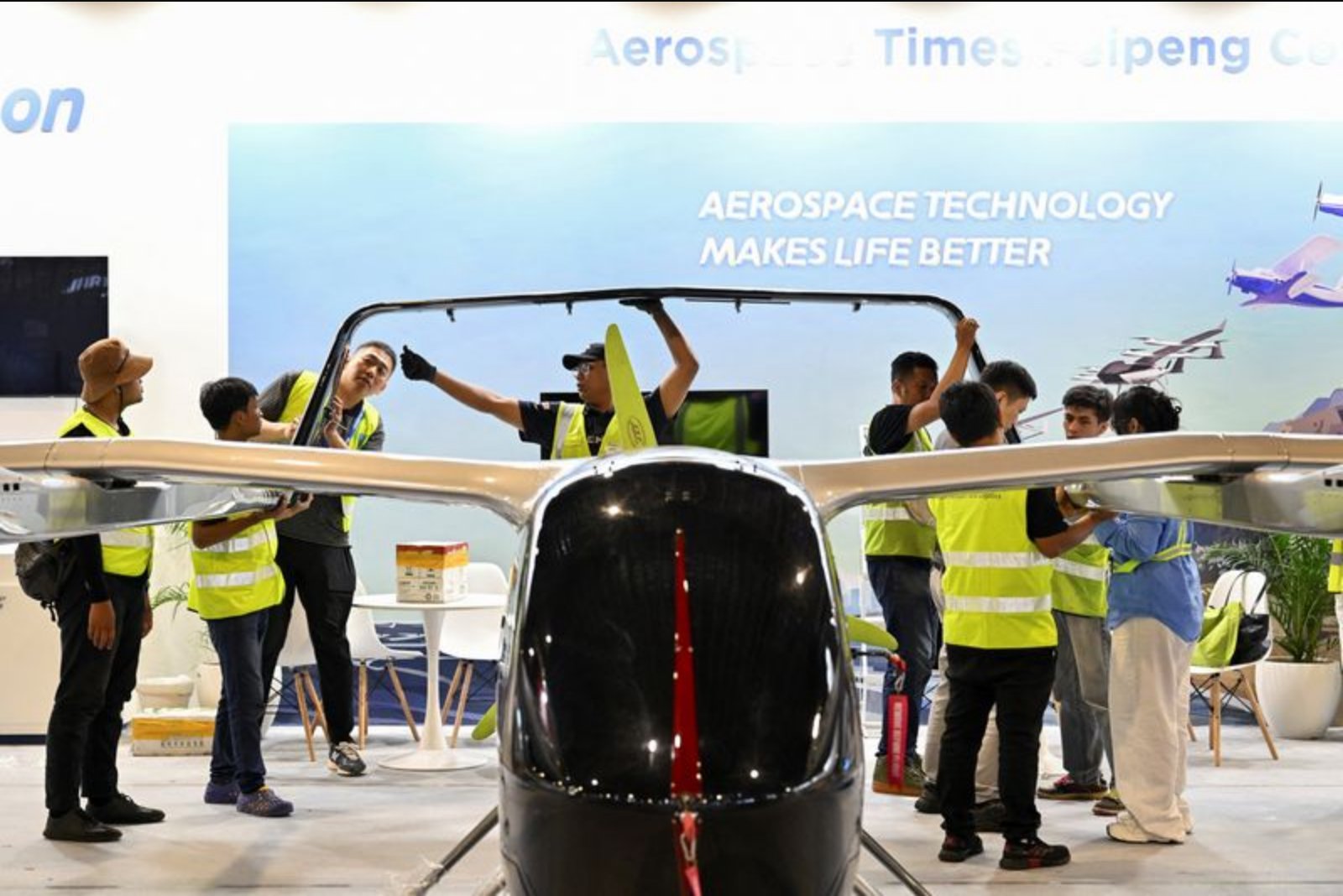
The biennial Singapore Airshow opened its 10th edition on Tuesday, bringing together more than 1,000 companies from mainstream original equipment manufacturers to smaller, defence-focused technology firms. The event arrives as aircraft makers and engine suppliers face widespread supply chain shortages that have pushed back deliveries even as airlines in the Asia-Pacific region push to expand capacity.
Organisers point to the rising momentum in the region and are projecting stronger attendance than at the previous show in 2024, when almost 60,000 people attended the four trade days. They also highlighted the addition of an associated space summit, and said on Monday that Singapore planned to make a launch announcement related to that initiative, though details of that planned announcement were not specified in available information.
Asia-Pacific is cited in briefing materials as the fastest-growing region for air travel, with China and India identified as primary drivers. Passenger traffic growth of 7.3% is projected for 2026, yet manufacturers are confronting an inability to match that pace. Jeffrey Lam, president of ST Engineering’s commercial aerospace division, framed the situation plainly: "As the aviation market continues to grow, there is a mismatch of demand-supply." He added that industry sentiment at the show would reflect "a lot of expectations, a lot of anticipation of how the industry can continue to recover to meet market demand, whether from the airlines or from flight passengers."
Industry heavyweights and newer entrants are on display across the exhibition halls. Boeing announced a purchase agreement with Air Cambodia for 10 of its 737 MAX jets. European and regional manufacturers are also present: COMAC brought its domestically produced C919 passenger jet for a second appearance at the show, and its smaller C909 regional model claimed the event’s first aircraft order earlier on Tuesday when China’s Shanxi Victory General Aviation signed a letter of intent for six firefighting aircraft.
COMAC provided user statistics for the C909 passenger version showing growing operations in Southeast Asia. According to data presented at the show, Indonesia’s TransNusa, Lao Airlines and Vietnam’s VietJet Aviation have operated the model across more than 20 routes, carrying over 700,000 passengers. Those figures were cited by the manufacturer in its promotional material at the event.
Regional business hub
While Jefferies analysts calculate that the Singapore Airshow has accounted for just 5% of global air show orders since 2012 - a smaller share than larger events held later in the year such as Paris, Farnborough and Dubai - the event remains an important regional convening point. The show draws airline executives and representatives from plane and engine manufacturers aiming to align production plans with the Asia-Pacific’s expanding travel market, which accounts for roughly 35% of global air traffic.
An Alton Aviation Consultancy report issued on the eve of the show was cited at the venue, forecasting that India, China and Southeast Asia would account for eight of the world’s 10 fastest-growing air travel markets between 2024 and 2044. The show has also attracted delegations from outside the immediate region, including civil aviation officials from Qatar and Saudi Arabia. In a commercial route development announced in Singapore ahead of the event, Singapore Airlines said on Monday it would launch four weekly flights to Riyadh beginning in June.
Defence exhibitors and displays
Defence hardware and software were prominent among the exhibits. Eleven Israeli companies, together with Israel’s defence ministry, were present as exhibitors after having been excluded from the Paris and Dubai air shows last year because of the country’s war in Gaza. China’s AVIC displayed a large model of its J-35A fighter, which the company is marketing internationally as a lower-cost alternative to Lockheed Martin’s F-35.
On the other side of the defence spectrum, Boeing confirmed it is no longer building F-15 fighter jets for Indonesia, ending what had been a headline deal for Jakarta’s military expansion. The show drew substantial attention from Southeast Asian military delegations. Vietnamese representatives viewed Airbus’ military helicopters and the A400M transport at Airbus’ stand; Thai officers inspected Embraer’s static displays; and Singapore defence ministry officials toured Israel Aerospace Industries’ booth.
Public demonstrations were part of the scheduled programme as well. The midday flying display featured air force pilots representing Singapore, Indonesia, India, China, Malaysia and Australia, underlining the event’s combination of commercial and defence agendas.
What the event means for markets
Executives and manufacturers at the show are meeting to negotiate orders, examine technical developments and coordinate delivery schedules in the context of the present production shortfalls. For airlines pursuing fleet growth, the gap between order intent and the ability of manufacturers to supply aircraft adds uncertainty to capacity planning. For defence buyers, the exhibition serves as a forum to evaluate options amid shifting procurement decisions documented at the event.
Attendance, order flow and the visibility of new entrants - from established OEMs to drone-focused defence firms - will likely shape conversations in the coming months as companies calibrate production and route expansion plans to match demand signals from the Asia-Pacific market.