
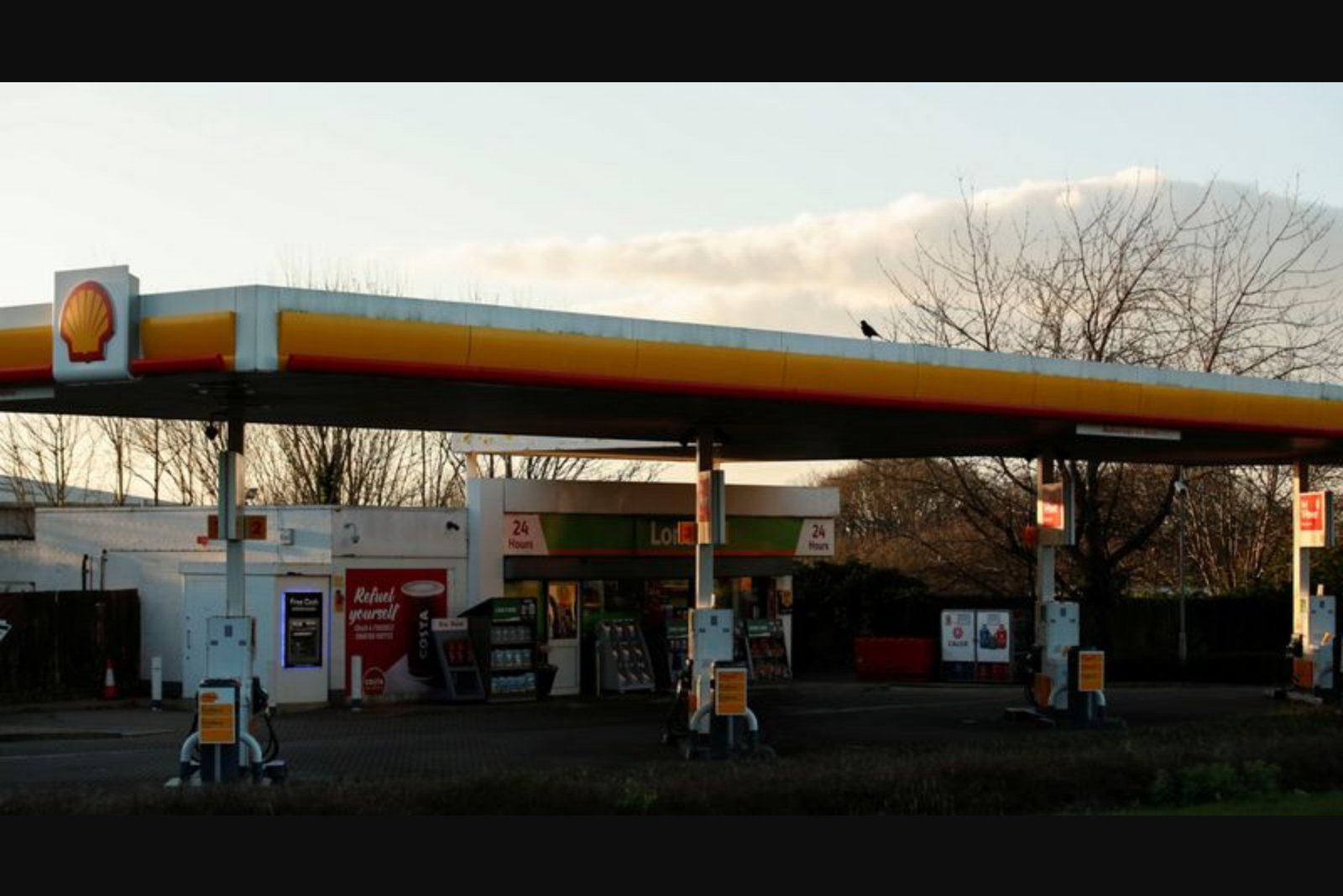
Shell on April 8 reported a weaker-than-expected start to the year in gas production and flagged a material short-term squeeze on liquidity caused by sharp commodity price swings, while saying improved oil trading would help mitigate some of the damage. The company framed the developments as an early example of how the U.S.-Israeli war on Iran is influencing the earnings profile of major oil companies.
Global benchmark Brent crude rose to multi-year highs near $120 a barrel after U.S.-Israeli strikes on Iran began in late February, followed by Tehran's closure of the Strait of Hormuz and attacks on Gulf neighbours, including damage to Shell's Qatari Pearl gas production plant. Shell said repairs at the Pearl facility could take about a year.
Volatile commodity prices produced large swings in the value of inventories, pushing working capital - a commonly used liquidity metric defined as current assets minus current liabilities - into negative territory in the quarter. Shell reported working capital movements of between minus $10 billion and minus $15 billion for the quarter and said it expected those movements to reverse over time if oil and gas prices ease.
Analysts described the shift as indicative of unusual market conditions. RBC noted the scale of the working-capital swing but said Shell's balance sheet should be able to absorb the shock. RBC raised its estimate for Shell's first-quarter net income by 7% to $6.8 billion and forecast a 31% increase in operating cash flow, excluding working capital effects, to $17.1 billion. UBS lifted its net income estimate for the quarter by 18% to $6.9 billion and its operating cash flow, excluding working capital, by 30% to $16.3 billion.
Business-line outlooks and guidance changes
Shell said trading results in its chemicals and products business, which encompasses oil trading, were expected to be significantly higher than in the previous quarter. Adjusted earnings in its marketing division, which includes fuel stations, were also forecast to increase.
However, the company lowered its first-quarter integrated gas production guidance to a range of 880,000 to 920,000 barrels of oil equivalent per day (boed), down from the prior guidance of 920,000 to 980,000 boed. By comparison, integrated gas output in the fourth quarter of 2025 was reported at 948,000 boed.
Shell said its liquefied natural gas (LNG) output outlook remained within previous guidance because production constraints in Australia and outages in Qatar were largely offset by ramp-up activity at LNG Canada.
The company warned that net debt would increase by $3 billion to $4 billion owing to variable components of long-term shipping leases. Shell's reported net debt stood at $45.7 billion at the end of 2025, with gearing of 17.7%, below the firm's stated comfort level of 20%. UBS, however, projects a larger deterioration in net debt, expecting an $11.2 billion rise.
Adjusted earnings in Shell's renewables and energy solutions unit were expected to increase to a range of $200 million to $700 million, up from $131 million in the previous quarter.
Full first-quarter results are scheduled for release on May 7.
What this means for markets and sectors
- Energy markets are being driven by conflict-related supply shocks and heightened price volatility.
- Oil trading and marketing divisions within integrated energy companies can provide a near-term earnings buffer when upstream output is hit.
- Balance sheets and liquidity metrics are sensitive to large inventory revaluations during periods of rapid price movement.
Shell's update provides a snapshot of how geopolitical events can simultaneously depress physical output while boosting trading margins, producing mixed effects on earnings and balance-sheet metrics across the oil and gas sector.