
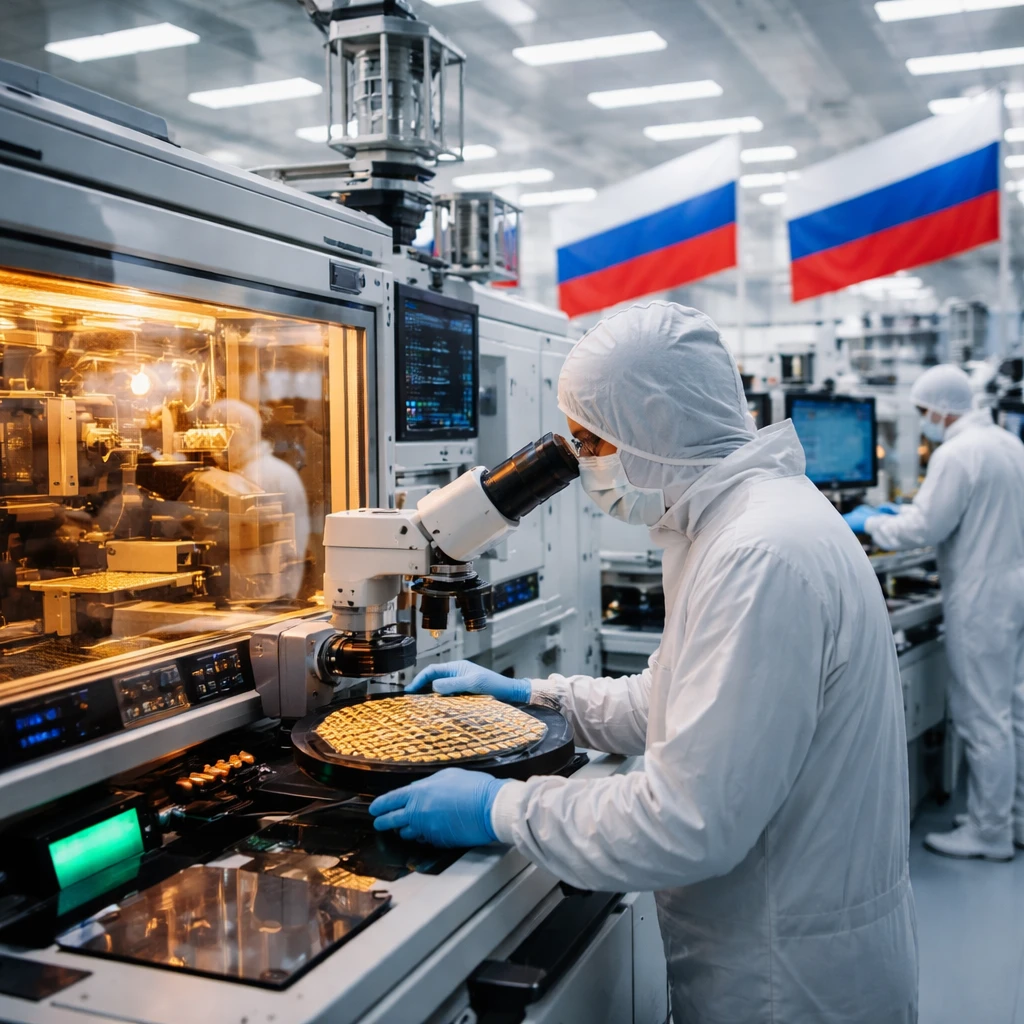
In a strategic move underpinning Russia’s efforts to secure a self-sufficient high-tech supply chain, Sberbank has acquired a significant stake in Element, a key domestic manufacturer of integrated circuits and microchips. This acquisition, valued at 27 billion roubles ($355.73 million), was announced on January 23 and involves purchasing 41.9% of Element’s shares from the private equity fund Sistema and other minority investors. Both Sberbank and Element, along with Sistema, currently face Western sanctions due to the ongoing conflict in Ukraine.
Element plays a pivotal role in Russia’s microelectronics industry, responsible for approximately 50% of the country’s production capacity in semiconductor devices and integrated circuits. The acquisition is expected to see Element’s manufacturing resources closely integrated with Sberbank’s technology division, reinforcing the bank’s transformation since its 2020 rebranding into 'Sber' and its shift towards positioning as a technology-focused firm.
However, this expansion sets the stage for a potential contest with Rostec, the state-owned defense and technology conglomerate, which holds a comparable 41.6% stake in Element. Rostec, under the leadership of Sergei Chemezov — a close associate of President Vladimir Putin — was instrumental in the founding of Element by merging its electronics manufacturing entities with those of Sistema. Reports indicate that Rostec has no intention of divesting its shares in the company, signaling a prospective shareholder standoff.
The move comes amidst Moscow’s intensified military operations in Ukraine, which have featured increased deployment of drones and missile strikes. Western sanctions have aimed to limit Russia’s procurement of critical microelectronics and semiconductor components essential for advanced weaponry and technology, compelling Moscow to cultivate its domestic technological capacities. Despite these sanctions, Ukraine has noted Russia’s growing ability to substitute smuggled Western parts with indigenous technology.
Highlighting the importance of this sector during the World Economic Forum in Davos, Ukrainian President Volodymyr Zelenskiy stressed the dependence of Russian missile production on 'critical components sourced from China, Europe, the United States, and Taiwan,' underscoring the challenges posed by targeted sanctions.
The day following the announcement of Sberbank’s purchase, its CEO German Gref attended a Kremlin-hosted meeting on microelectronics chaired by President Putin. The Russian leader emphasized the global trend among major powers, including the United States, China, and the European Union, to strengthen technological sovereignty over core electronics manufacturing. Putin stressed that advancements in military capabilities, artificial intelligence, and quantum computing hinge critically on a domestic industrial base.
"It is clear that the Russian military must be equipped with smart technology founded on our own solutions," Putin stated, extending this imperative to civilian sectors as well. Notably absent from the meeting was Rostec’s leadership, an absence that may hint at emerging friction between key players in the Russian technological sector.