
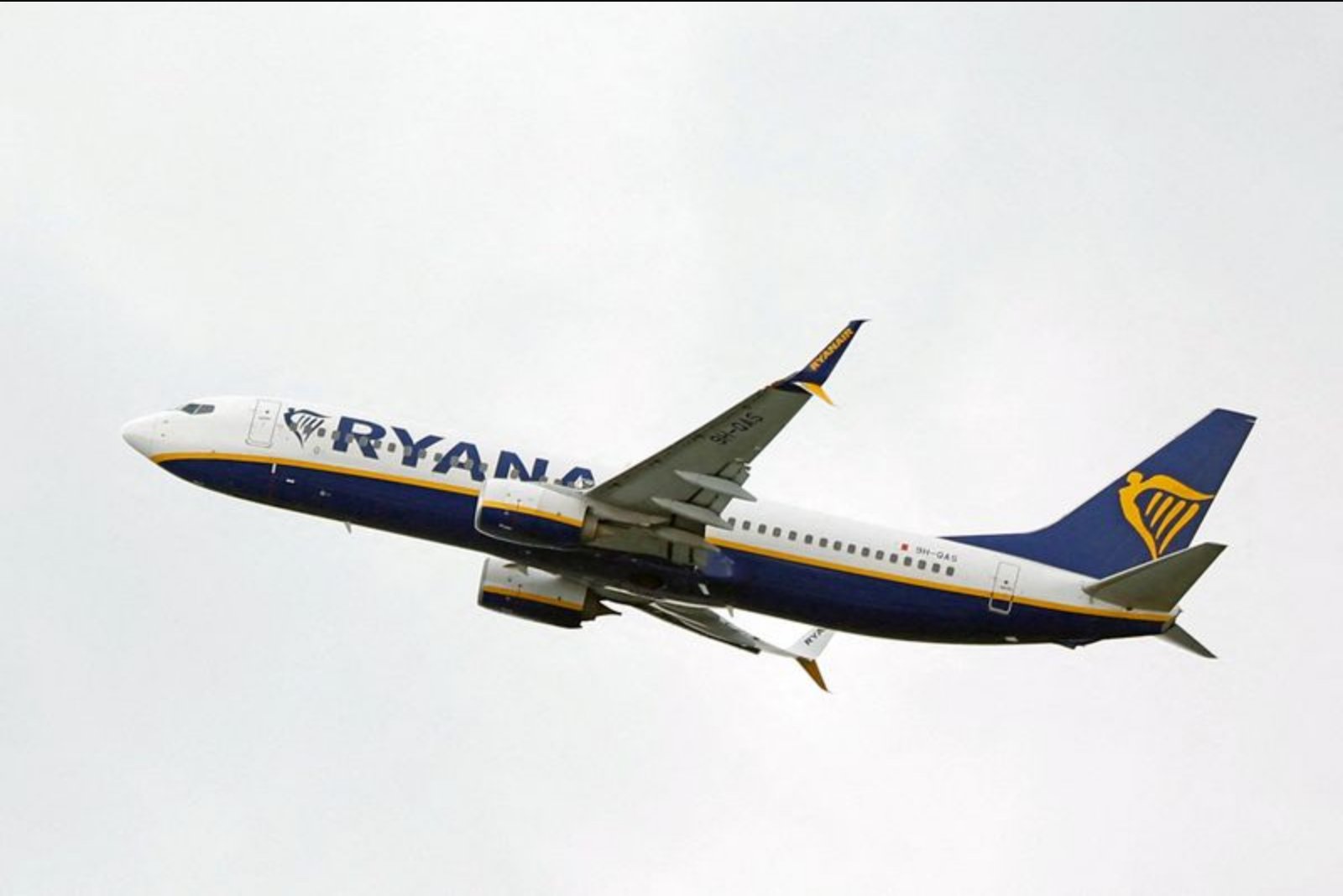
Ryanair expects to be able to offer complimentary Wi-Fi on its entire fleet within three to five years as onboard connectivity hardware improves, the airline's chief executive said in an interview. The remarks came after a public exchange of criticism with Tesla and SpaceX chief Elon Musk over use of the Starlink internet service.
The carrier's boss said Ryanair has ruled out fitting Starlink to its more than 600 aircraft at this time, though talks remain ongoing with a number of providers. Ryanair is "still in discussions" with Starlink, Amazon Web Services and Vodafone, according to the CEO.
Current inflight internet systems require an antenna mounted on the top of the plane, which creates additional aerodynamic drag and carries a meaningful fuel cost for an airline that markets itself on low fares. The chief executive said the rooftop antenna setup leads to "a fuel drag penalty that will cost us about $200 million a year." That extra expense is a central practical barrier to adding onboard connectivity under present hardware designs.
Another point of contention between Ryanair and potential suppliers is whether passengers will be willing to pay for onboard internet access. The CEO said Wi-Fi providers believe Ryanair's customers "will pay for it, and we don't think they will." Until that disagreement is resolved or the cost can be removed, the airline has held off on broad installation of current systems.
Looking ahead, the CEO described the technology as continuously evolving. He said antenna units could at some point be integrated into other parts of the aircraft - such as inside the baggage hold or within the nose cone - which would remove the current rooftop drag and its fuel implications. "Then we'll be able to offer free Wi-Fi to our clients on all Ryanair flights ... we think that will happen in the next three-to-five years," he said.
The remarks followed a recent public spat with Elon Musk over Starlink's use on Ryanair jets. The CEO quipped that he and Musk could keep trading barbs to "generate even more free publicity."
Separately, the chief executive addressed the problem of drone incursions that have caused flight disruptions across Europe. He argued that responsibility for securing airspace belongs to governments rather than airlines, saying: "Why should airlines be paying for something? Securing the skies is a government responsibility, it is a defence strategy, that is the responsibility of governments."
He added that Europe needs greater defence capability to deter such incidents, stating: "Europe needs to have much more defence capability because, you know, when (Russian President Vladimir) Putin respects Europe’s defence capability, then you won’t see any more drone incursions." European officials have attributed the incursions to Russian hybrid warfare, a claim Moscow denies.
Embedded within the wider coverage is a reference to investor tools that evaluate the airline's stock. One such service evaluates the company's shares using an AI-driven framework across financial and momentum metrics, and highlights examples of past winners it tracked. The promotional description notes the AI has no bias and identifies opportunities based on current data, while citing past stock moves as illustrative examples.
Connectivity and defence issues remain central to Ryanair's short-term planning, while technological progress could permit cost-free passenger Wi-Fi within a few years.