
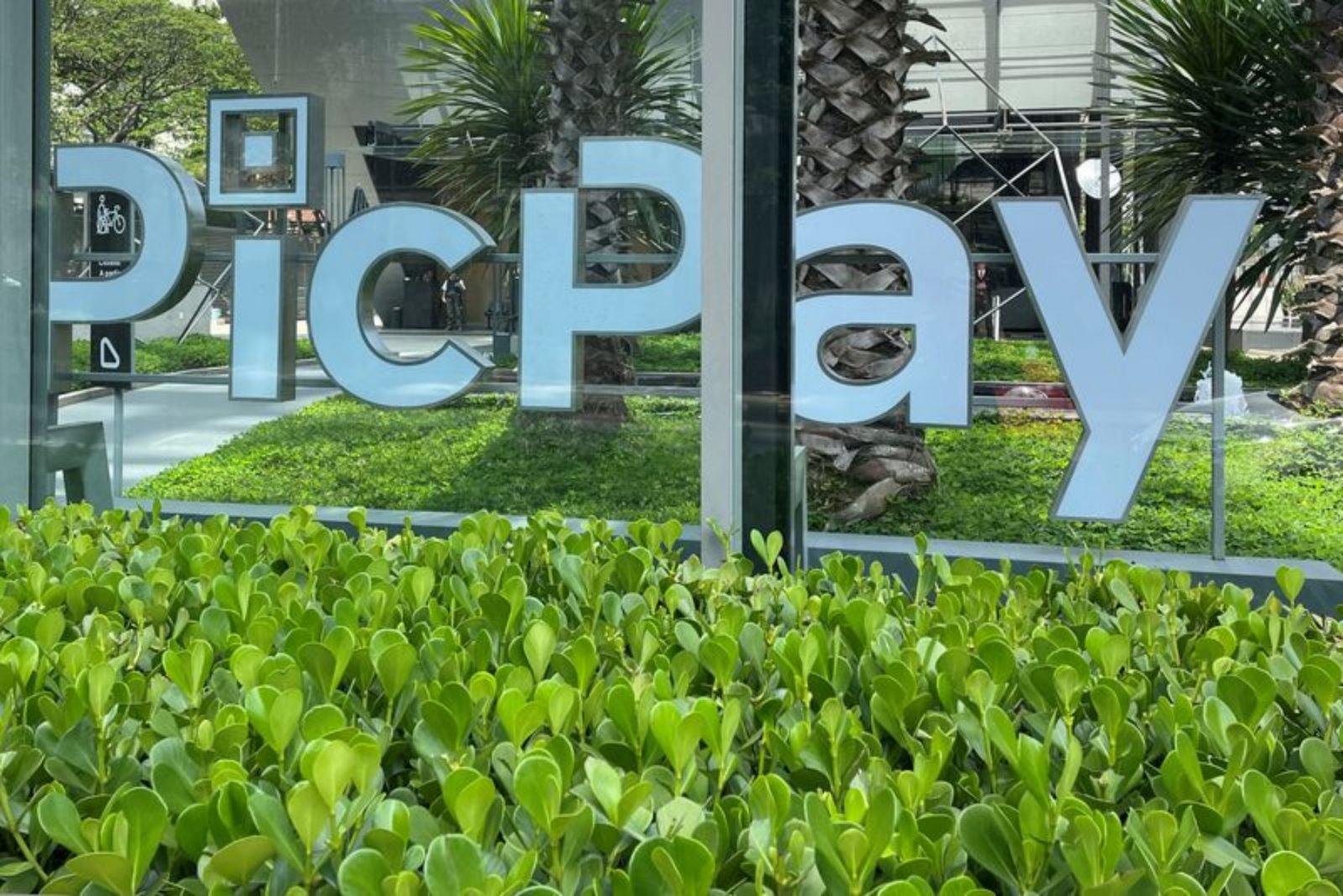
PicPay, the Brazilian digital bank backed by the Batista family, began trading on Nasdaq on Thursday after completing an offering that raised $434 million. The company sold 22.86 million shares at $19 apiece and will trade under the ticker symbol PICS. The transaction marks the first new public listing by a Brazilian company in more than four years.
The IPO implies roughly a 21% dilution for existing shareholders and placed an overall value on PicPay of about $2.6 billion, according to Brazilian business media Valor Economico. Underwriters were also granted a 30-day option to purchase additional shares at the IPO price, a move that could raise the deal size to around $500 million if exercised.
The listing is a strategic win for brothers Wesley and Joesley Batista, who retain more than 90% of PicPay's voting rights. The brothers, whose corporate group was rebuilt after a corruption scandal a decade ago, control an empire spanning meatpacking, energy, mining, fintech, media and cosmetics across at least 20 countries. PicPay itself was founded in 2012 and was acquired three years later by J&F Investimentos, the holding company associated with New York-listed meatpacker JBS.
Investor interest in the placement extended beyond the Batistas' circle. Bicycle Capital - a growth fund led by former SoftBank executives that includes Bolivian billionaire Marcelo Claure among its leaders - committed $75 million to the offering, according to a filing. The IPO, which PicPay had previously explored and then abandoned in 2021, was led by Citigroup, Bank of America and Royal Bank of Canada.
Breaking the four-year drought
Market participants framed the PicPay deal as the end of a prolonged lull in Brazilian IPO activity. Before PicPay, the most recent Brazilian company to go public was digital bank Nubank, which listed on the New York Stock Exchange in late 2021 and raised $2.6 billion at a valuation above $40 billion, becoming Latin America's largest bank by market capitalization. The last IPO on the Brazilian stock exchange was fertilizer producer Vittia in September 2021.
Anderson Brito, head of investment banking in Brazil at UBS BB, said a poll of institutional investors anticipates more than 10 Brazilian IPOs in 2026, either domestically or abroad. Agibank - a financial technology firm that was valued at 9.3 billion reais in late 2024 - filed this month to list on the New York Stock Exchange, reflecting a trend among Brazilian fintechs to pursue U.S. listings.
Market participants point to the comparative attractiveness of U.S. public markets for Brazilian fintechs. PicPay's successful offering in the United States illustrates demand from U.S. investors, even as some market participants see less appetite at home.
"With the benchmark interest rate at 15% a year, who would want to invest in an IPO in Brazil?" said Pedro Galdi, an investment analyst at fintech AGF, noting that domestic fixed-income yields can make local equity issuance less appealing.
Ulrike Hoffmann, global head of equities at UBS Global Wealth Management, said at a conference in Brazil that she expects broader IPO activity in the U.S. this year - not only from Brazilian firms but also from U.S. tech companies. Her comment suggests U.S. markets could continue to draw supply, which may in turn influence demand back in Brazil.
Cesar Mindof, a director at the Brazilian Financial and Capital Markets Association, said he expects the local market to revive through large transactions concentrated in more defensive sectors such as infrastructure.
What the PicPay IPO signals
The listing demonstrates that Brazilian fintechs remain attractive to international investors when pitched in U.S. markets. For issuers, the path to New York may provide better comparative metrics against global peers. For Brazil's domestic market, the resurgence of large-scale transactions - if it materializes - could be concentrated in sectors perceived as defensive and tied to infrastructure.
At the same time, the relative pull of U.S. venues and the strength of local fixed-income yields underline an ongoing tension in where Brazilian companies choose to list and where investors allocate capital.
PicPay's entry to Nasdaq is thus both a milestone for the company and a potential catalyst for more cross-border activity among Brazilian issuers, particularly in the fintech space, while leaving open how quickly domestic equity markets will react.