
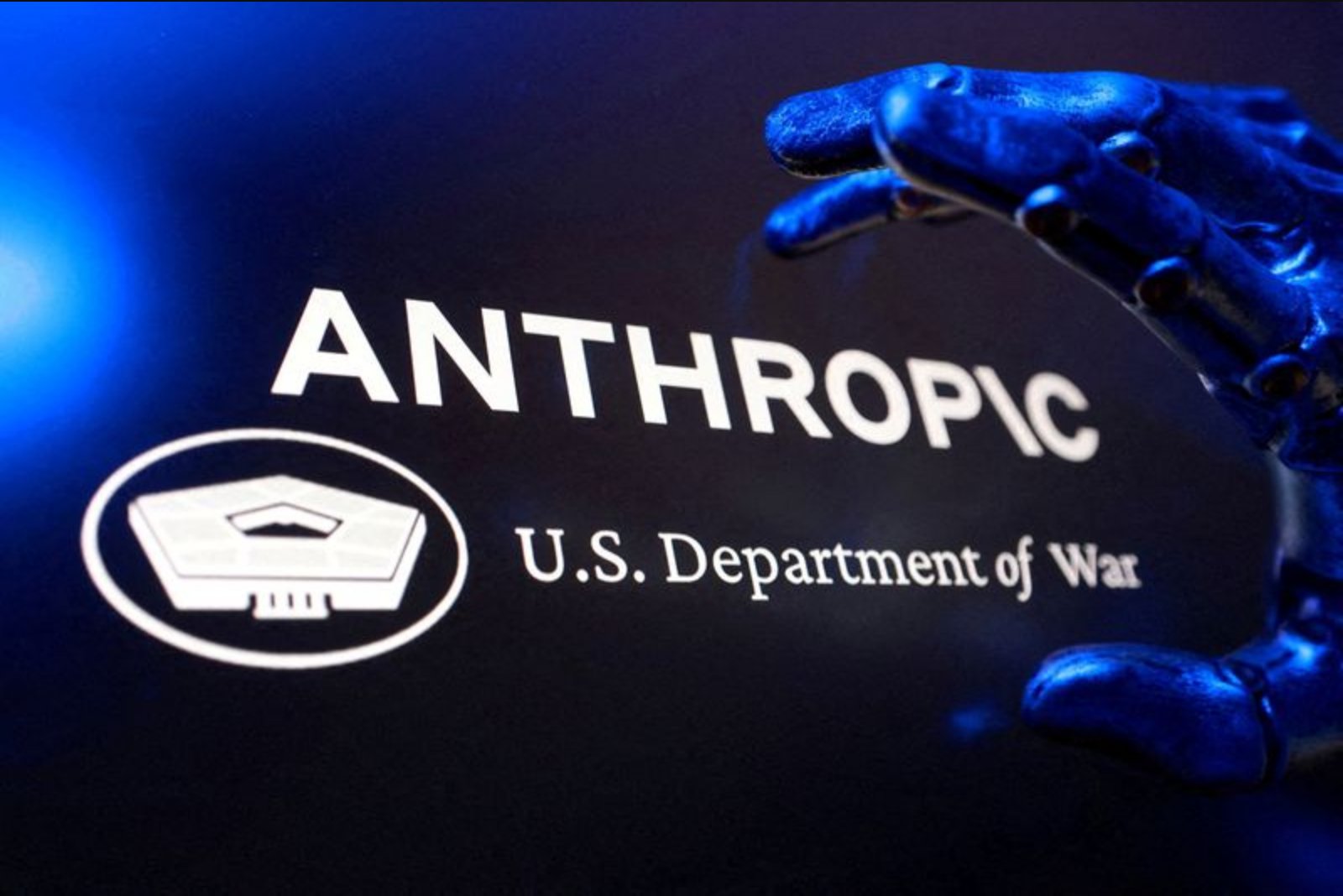
WASHINGTON, April 9 - A sudden uptick in outreach to small defense artificial intelligence firms is underway following the Pentagon's deterioration of its relationship with Anthropic, a once-preferred AI supplier. The change has prompted generals, combatant commanders and investors to make contact with companies that previously struggled to gain traction with the Defense Department.
Several emerging defense-focused AI teams, including Smack Technologies and EdgeRunner AI, say they have received a wave of solicitations about potential contracts and demonstrations in the weeks after the Pentagon publicly labeled Anthropic a "supply-chain risk" and escalated legal disputes that culminated in the company being removed from U.S. military sourcing.
Smaller contractors view this shift as a rare opening to secure work with the world's largest and most lucrative government buyer. Defense contracts typically produce follow-on opportunities across other federal agencies and serve as a credibility signal for commercial customers evaluating a firm's safety and trust posture.
Increased demand from government and industry partners
Tyler Sweatt, chief executive of Second Front - a firm that helps technology providers meet security and operational requirements for Pentagon networks - said the company has "seen a massive increase in demand from customers and the government to get AI solutions fielded since Anthropic was declared a supply-chain risk." He added that their customers are now turning to Second Front as the Pentagon looks for quicker deployment of AI capabilities following the Anthropic episode.
The effect, company leaders say, has been tangible. Since the Pentagon labeled Anthropic's products a supply-chain risk in March and the firms entered litigation, smaller contractors have been invited to accelerate talks and show demonstrations. Andrew Markoff, co-founder and chief executive of Smack Technologies, described increased urgency from military buyers: "We want more, we want demos, let’s talk about how we can move faster," he said, reporting that the department asked for more engagement and quicker timelines.
In late March a judge temporarily blocked the Pentagon's blacklisting of Anthropic. The public attention around the dispute and the Pentagon's resulting focus on provider diversity appear to have prompted personnel across the department to reach out to alternative suppliers.
Business development moves and procurement pace
Smack provides a clear example of the effects on procurement timelines. The company won a Marine Corps contract in March 2025 and produced a working prototype by October of that year. The software compresses what had been a months-long operational planning cycle into roughly 15 minutes, a capability the Marines found compelling.
Despite the successful prototype, Smack had initially planned to enter full production under a fiscal year 2027 budget cycle - which would put a production start no earlier than October 2027. Through late 2025 and into early 2026, Smack said there was little forward movement toward full operational deployment.
Once the Anthropic controversy became public, Smack reports that the Marine Corps convened multiple meetings focused on one performance question: "how fast can this move into production this year?" Markoff said those discussions produced "very specific guidance and movement and energy" aimed at readying the prototype for combat operations in 2026, an acceleration of more than a year from the previous plan.
The renewed interest was not limited to the Marines. Markoff said Smack holds agreements with the Navy and Air Force and received near-immediate engagement from U.S. Special Operations Command and other customers following the Anthropic fallout.
EdgeRunner said similar dynamics have unfolded. The company, which has been deploying with Army Special Forces elements and had an outstanding Space Force contract, said the Navy increased the tempo of its engagements. EdgeRunner's chief executive, Tyler Saltsman, noted that meetings that had been scheduled on a biweekly or monthly cadence are now occurring multiple times per week.
Security classification hurdles and faster clearances
Both EdgeRunner and Smack say they are racing to operate their systems at higher security classifications - a prerequisite for access to the military's most consequential use cases and the largest contracts. EdgeRunner reported that the military has indicated it can achieve IL-6 status - a security designation that enables handling of secret and top-secret information - within three months, a timeline Saltsman characterized as remarkable compared with the typical 18 months or longer.
Saltsman attributed the speed-up partly to pressure from Pentagon leadership to cut through procurement red tape and partly to the urgency generated by the Anthropic dispute. He acknowledged he cannot conclusively prove a causal link: "I can’t prove that the Anthropic drama sped this up," Saltsman said, "but I have a sneaky suspicion it did."
A Pentagon official emphasized the defense department's intent to continue moving forward on AI adoption, stating, "The Pentagon will continue to rapidly deploy frontier AI capabilities to the warfighter through strong industry partnerships across all classification levels."
One Pentagon technologist previously told reporters that the falling-out with Anthropic, and the department's subsequent recognition of heavy dependence on a single AI provider, compelled the Defense Department to broaden its roster of AI vendors.
Conclusion
The public rupture between the Pentagon and Anthropic has altered the business landscape for small, defense-oriented AI firms. Companies that had sought entry to the Defense Department now report faster engagement, compressed procurement timelines and new investor conversations. While some progress - such as accelerated classification clearances and faster production planning - has already been reported, leaders caution that not all outcomes are certain and that some of the observed momentum is difficult to attribute in full to the Anthropic episode. Nonetheless, defense buyers and middle-tier vendors appear to be moving with increased urgency to diversify AI sources and field capabilities more quickly.