
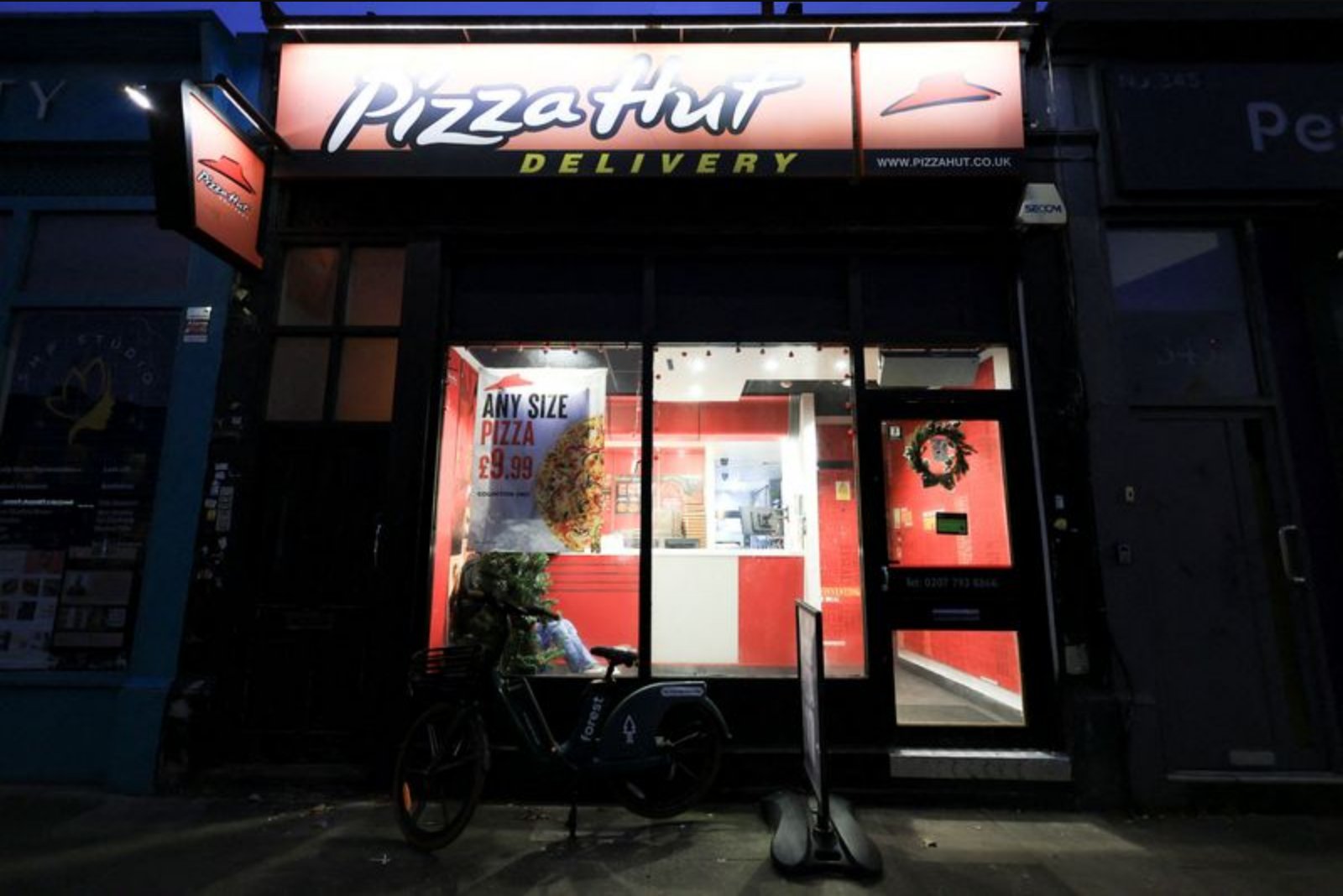
Two of America's largest national pizza chains are reportedly moving closer to changing hands as industry headwinds - from intense competition to rising commodity costs and softer consumer demand - pressure their results, according to people familiar with the conversations.
Sources familiar with the discussions said Papa John’s International and Pizza Hut, the latter owned by Yum Brands, are pursuing separate paths that could lead to their removal from public stock exchanges and relief from the short-term scrutiny of quarterly earnings. The people spoke on condition of anonymity because they are not authorized to discuss the private negotiations.
Papa John’s shares have slid about 28% over the past six months to roughly $34.99 a share as of Tuesday. In March, a Qatari-backed investment vehicle, Irth Capital, backed by Brookfield Asset Management, proposed buying Papa John’s at $47 per share, two people briefed on the proposal said. Irth has been conducting due diligence and holding talks with Papa John’s over the last month, the two people added.
Some investors privately hope Irth might finalize a deal before Papa John’s next quarterly earnings release on May 7, though the discussions remain ongoing and a transaction is not certain, the sources cautioned.
Separately, Yum Brands set another deadline this week for potential bidders to submit formal offers for Pizza Hut, people with knowledge of that process said. Private equity firms including Sycamore Partners, Apollo Global Management and LongRange Capital are among those vying for the chain, the people said. Yum may select a single suitor to enter exclusive negotiations after this week's deadline, they added, but it could also retain Pizza Hut or pursue a spinoff if offers do not meet its valuation threshold.
Representatives for Yum Brands, Papa John’s, Irth Capital, Apollo and Sycamore declined to comment. LongRange did not immediately respond to a request for comment, according to the people.
Industry backdrop and deal activity
Interest in acquiring the pizza brands has surfaced as dealmaking in the broader corporate landscape rebounded in the first quarter and as restaurant operators confront a range of uncertainties. Consumers are increasingly cost-conscious and tracking calories, while food inflation has pushed up the price of ingredients over the last year, squeezing margins.
In 2025, several smaller restaurant chains left public markets via private transactions: Denny’s was sold to an investor group for $620 million and Potbelly was acquired by private convenience retailer RaceTrac for $566 million. Canada’s MTY Food Group, owner of the Papa Murphy’s chain, has been exploring a sale since last year. California Pizza Kitchen was bought by a private investor group led by Consortium Brand Partners in December.
“Public quick-service restaurant stocks are under pressure as softer consumer demand collides with persistent structural cost headwinds,” said Will Auchincloss, EY-Parthenon’s Americas retail sector leader. “Traffic has weakened as consumers pull back, and at the same time brands are navigating higher labor costs and a far more competitive value environment.”
Performance drag and strategic choices
Papa John’s has faced a series of setbacks that have weighed on its valuation. Weaker same-store sales, declining revenue, intense competition and frequent changes at the chief executive level since founder John Schnatter’s ouster in 2018 have contributed to a marked fall from its high of about $130 per share in late 2021.
Pizza Hut's sales have also declined and the brand has become a relative drag on Yum Brands’ earnings as its other chains, including Taco Bell and KFC, perform better. People familiar with potential transactions said any buyer would likely need to invest in revamping a significant number of dated Pizza Hut and Papa John’s locations.
Going private would allow new owners to undertake those investments and strategic resets without the regular scrutiny of quarterly earnings reports, the people said. Both chains have indicated plans to close hundreds of underperforming locations as part of efforts to restore profitability.
Auchincloss reiterated that private ownership can provide operational flexibility: “For certain restaurant chains, being private offers flexibility to reset the business and invest through this cycle without the pressure of quarterly earnings.”
Recent corporate actions and management remarks
Yum initiated a strategic review of Pizza Hut in November, prompting closer attention to the brand’s future. Papa John’s rejected offers to sell at materially higher prices last year, according to people involved in those discussions.
Papa John’s CEO Todd Penegor, who assumed the role in late 2024, said last month he remains focused on operating the business amid deal chatter. That followed multiple approaches last year - a joint proposal involving Irth and Apollo and then a separate approach from Apollo that was later withdrawn.
Asked about rumors of potential bidders at a March 12 UBS conference, Penegor declined to comment on speculation: “I mean it’s been a constant, right? I’ve been in the role 18 months, and I think almost the full 18 months, we’ve always had some kind of rumor out there around the brand,” he said.
As talks continue on both fronts, the outcome remains uncertain. Any completed sale would reshape ownership and strategic flexibility for two major pizza operators while testing investor appetite for restaurant assets that must navigate shifting consumer behavior and elevated cost pressures.