
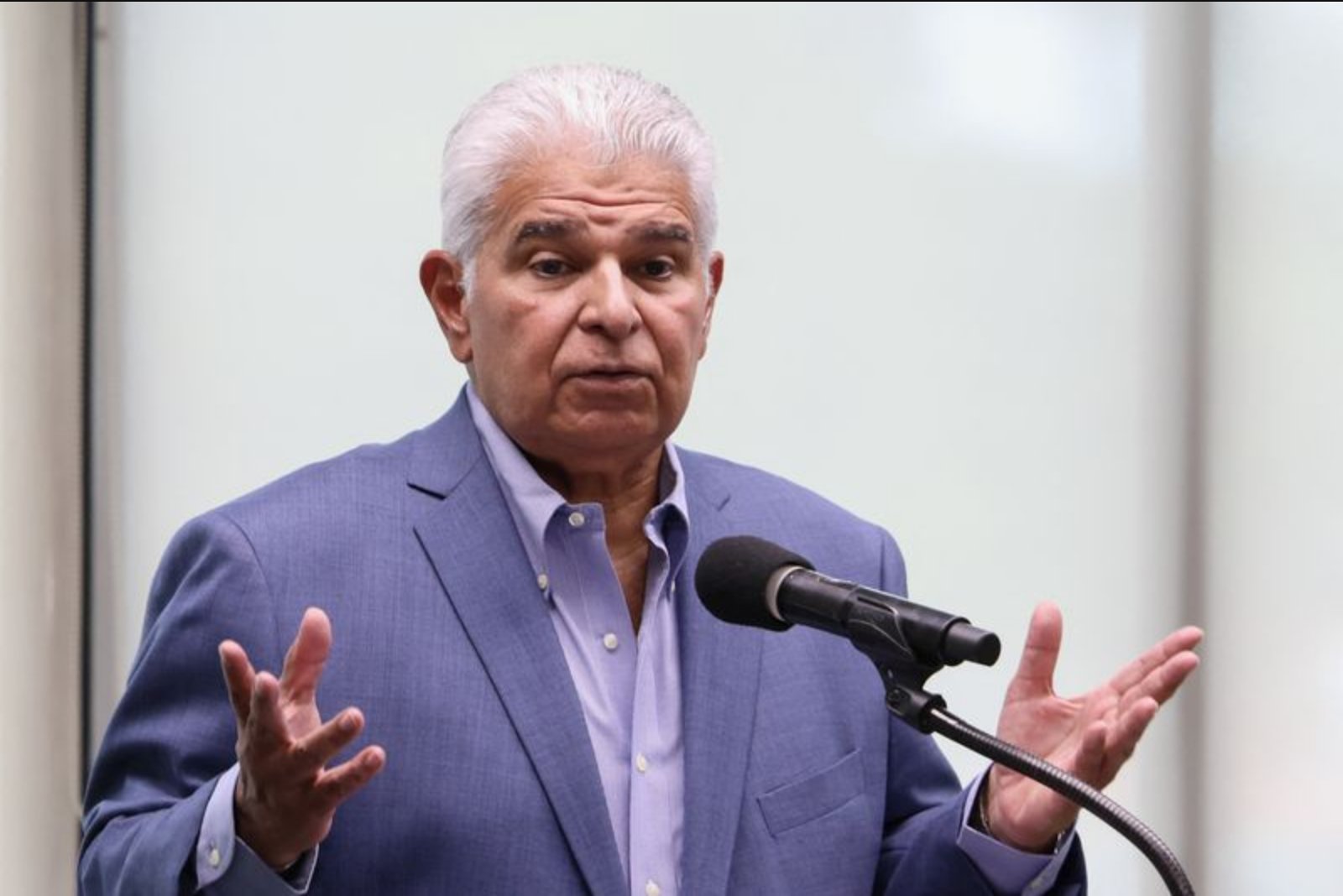
Panama City - President Jose Raul Mulino on Thursday sought to lower the temperature in relations with China, adopting a conciliatory posture one day after his foreign minister publicly blamed Beijing for an increase in inspections of Panama-flagged vessels.
Speaking at Balboa port on the Pacific approach to the Panama Canal, Mulino said Panama did not want a confrontation with China. "We are not interested in having a problem with China," he said. He expressed hope that "this situation de-escalates" and that ties would return to "a normality both in the political relationship and in the understanding that this is a problem that will be resolved."
The president acknowledged reports that Panama-flagged vessels have been held in Chinese ports but framed the trend as part of broader inspection activity within global shipping. He said similar inspection patterns have affected other large registries, including Liberia and the Marshall Islands, and that Panama was still assessing the developments.
Mulino was explicit in rejecting the notion that the inspections represented political retaliation: "They have nothing to do with political retaliation," he said. At the same time, he confirmed Panamanian authorities had raised the issue with Chinese officials and were seeking to verify the rationale for detaining vessels for inspections.
Officials link inspections to court decision
The comments follow a sharper statement from Foreign Minister Javier Martinez-Acha, who on Wednesday connected the uptick in inspections and detentions to a decision by Panama's Supreme Court. The court in late January invalidated the legal framework supporting the 1997 concession that allowed CK Hutchison's Panama Ports Company to operate the Balboa and Cristobal terminals.
That cancellation of the concession is a key element in the dispute. Beijing opposed the court ruling, and the termination came after pressure from the United States aimed at limiting Chinese influence around the strategically important canal, which handles about 5% of global maritime trade.
CK Hutchison, which ran the terminals for nearly 30 years, has accused Panamanian authorities of unlawfully seizing property and has launched international arbitration seeking more than $2 billion in damages.
U.S. regulator monitoring surge
Last month, the U.S. Federal Maritime Commission said it was closely watching the rise in detentions of Panama-flagged vessels in China, noting the number exceeded historical norms.
Mulino declined to comment on a new arbitration claim filed by CK Hutchison's Panama Ports Company against Maersk, which assumed temporary management of the Balboa and Cristobal terminals. He said that particular dispute was not a matter for the government to address.
Implications
The president's attempt to soothe tensions highlights the diplomatic sensitivity surrounding port operations and vessel inspections, and underscores the degree to which legal rulings, commercial concessions and international politics are intersecting around a key maritime chokepoint.
- President Mulino publicly sought de-escalation and said Panama wants normal political relations with China.
- Panama's foreign minister tied increased inspections of Panama-flagged ships to the Supreme Court ruling that invalidated CK Hutchison's concession rights.
- U.S. regulators are monitoring a surge in detentions of Panama-flagged vessels in China that exceeds historical norms.