
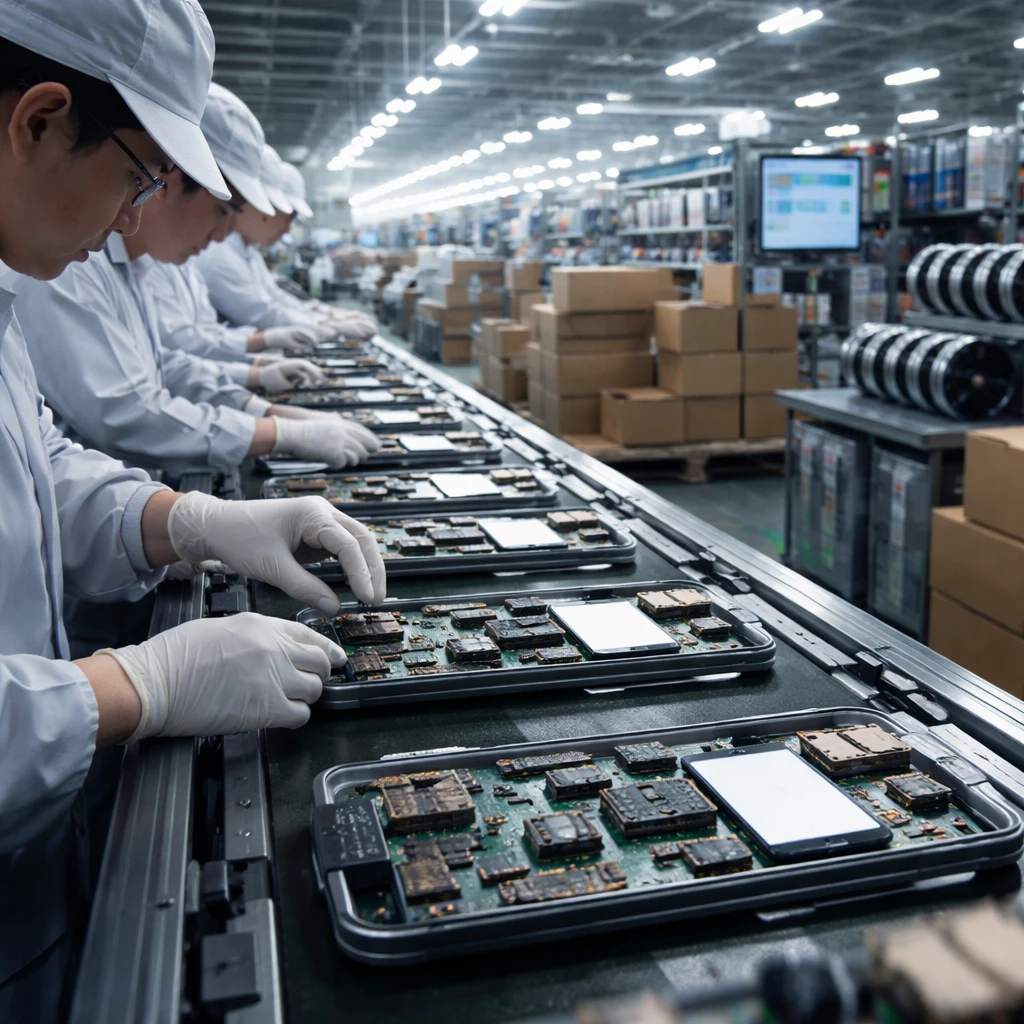
Mizuho has revised down its expectations for the handset market in calendar 2026, forecasting a roughly 4% year on year drop in global handset shipments, and warning of downside risk that could push losses past 5%.
The bank pointed to a combination of rising memory prices and ongoing supply constraints as the principal factors pressuring production, with those dynamics expected to intensify in the second half of the year. China original design manufacturers, or ODMs, are singled out as likely to reduce handset output by about 10%, with Huawei noted as a principal exception to that trend.
Analyst moves on chip suppliers
Against this backdrop, Mizuho lowered its price target for Qualcomm to $160 from $175 and maintained a Neutral rating. The firm also trimmed Skyworks Solutions' price target to $60 from $65, keeping a Neutral stance on that stock as well.
Inventory and memory pressure
Mizuho described memory constraints as already exerting downward pressure on inventories. The bank estimates China ODM handset inventory has fallen to roughly two to four weeks, down from 13 to 17 weeks a year earlier. While Apple and Samsung are identified as having relatively better secured memory supply for the period ahead, many Android handset makers could face larger strains as memory prices are forecast to rise through 2026.
China market dynamics
In China specifically, the firm expects handset production to decline about 10% year on year. Mizuho noted that government subsidies are expected to remain flat into 2026, providing limited support to demand. Within this environment, Apple is reported to be taking share in China, aided by a new phone buyback program, early DRAM procurement for 2026 and discounts tied to the Lunar New Year period.
Implications for Qualcomm
For Qualcomm, Mizuho flagged several headwinds: escalating competition from MediaTek in the higher end of the market, reductions in content from both Apple and Huawei, and the broader handset slowdown. The bank expects Qualcomm's earnings to decline about 3% year on year, and projects only low single-digit earnings growth across fiscal 2026 through 2028, noting that handsets still account for more than 70% of the company's chip revenue.
Implications for Skyworks
Mizuho highlighted intensifying competition for Skyworks from Chinese radio frequency suppliers in the mid-market, coupled with lower handset volumes. The analyst team indicated these headwinds are somewhat offset by growth opportunities in WiFi 7, automotive applications, and a ramp in exposure to AI server markets, but judged that those offsets are not sufficient to justify a higher near-term valuation.
Overall, Mizuho's revisions reflect a viewpoint that memory supply and pricing dynamics, together with competitive shifts and weak handset demand, will meaningfully shape revenue and earnings trajectories for handset-focused semiconductor and component suppliers in the coming year.