
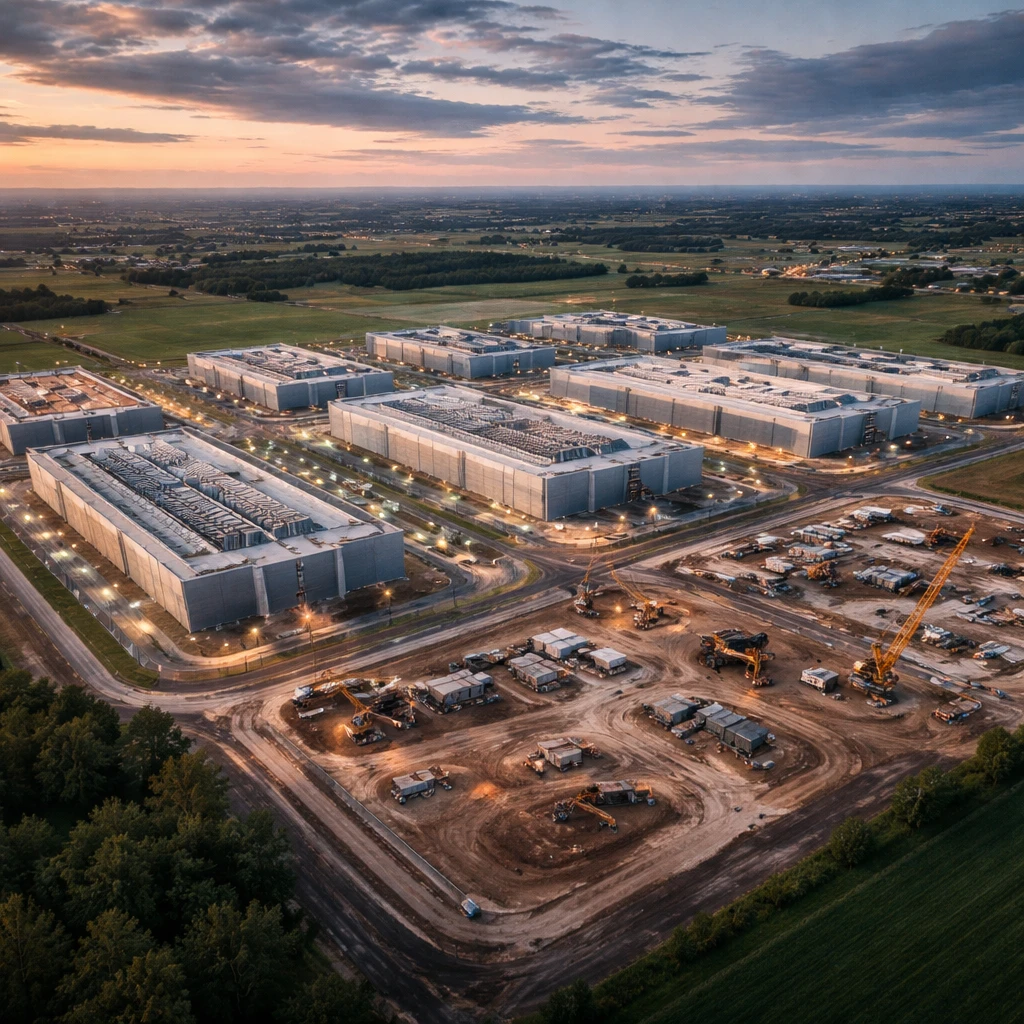
Local officials in Mount Pleasant, Wisconsin gave Microsoft Corporation formal approval to develop 15 additional data centers near an existing campus, the village board confirmed at a Monday evening meeting. The board voted unanimously to approve two proposed lots, according to a livestream of the session.
The approvals clear the way for Microsoft to expand its data center footprint in the area. Company officials have framed the expansion as part of efforts to increase computing capacity and support ambitions in artificial intelligence.
The parcels slated for development were previously held in reserve for a Foxconn factory. Plans for that plant did not materialize as initially expected, leaving the village with land it purchased using state funds. The newly approved data center sites occupy that surplus property.
Mount Pleasant officials estimate the taxable value of the planned developments at more than $13 billion. With the additional facilities in place, Microsoft is set to become the largest employer in the locality.
Details provided at the village board meeting focused on land use approvals for the two lots. The formal unanimous vote authorizes the company to proceed with the next stages of development on those parcels.
Observers assessing the local economic and market implications can point to several clear effects: an expansion of technology infrastructure and compute capacity, a substantial increase in taxable property value for the village, and a notable change in the local employment landscape as Microsoft becomes the area’s largest employer.
The record of how the land came to be available is a key element in this story. The parcels were acquired by the village with state funds and had been earmarked for a Foxconn manufacturing plant that ultimately did not move forward as originally planned. That sequence of events left acreage available for alternative uses, which Microsoft has now secured approval to develop.
The village board’s unanimous decision provides Microsoft with the local clearances needed to expand its facilities on the identified lots. The meeting and the vote were publicly viewable via the village’s livestream.
Sectors affected: Technology infrastructure and data services; local government finance and real estate; regional labor and employment.