
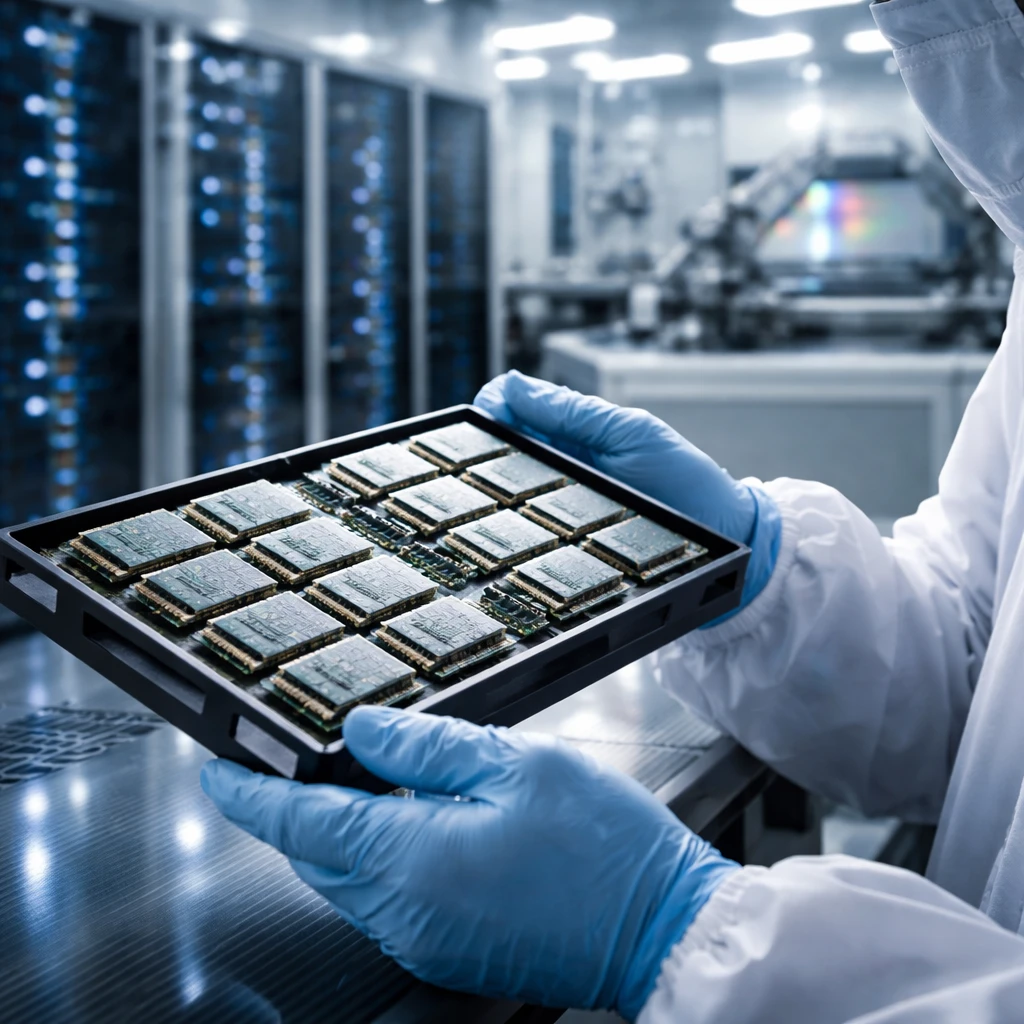
Micron Technology (NASDAQ:MU) shares dropped about 2% on Monday after news circulated that Samsung Electronics (KS:005930) is nearing certification from Nvidia (NASDAQ:NVDA) for its newest high-bandwidth memory product, HBM4. The reports have heightened investor attention on the competitive landscape for memory used in AI accelerators.
Bloomberg reported that Samsung has moved into the final qualification phase with Nvidia after it provided initial HBM4 samples in September. According to the report, Samsung is preparing for mass production in February and expects to be ready to ship soon after, though the precise timing for shipments was not specified in the report.
In Seoul trading, Samsung shares rose as much as 3% before paring gains. At the same time, rival SK Hynix saw its stock decline. The market reaction reflects concern that Samsung could win share in the HBM segment, a market currently dominated by SK Hynix, and that such a shift could influence Micron's position as a supplier of memory for AI-focused hardware.
Analysts cautioned against reading Samsung's progress as an immediate zero-sum loss for competitors. Jordan Klein, a TMT analyst at Mizuho, emphasized that qualification by Samsung does not preclude opportunities for other suppliers. Klein noted:
"My point is that selling HBM4 to NVDA or AMD is NOT A ZERO SUM GAME. Demand exceeds supply. Pricing is set to be a lot higher in HBM4 vs HBM3e. All three memory suppliers will qualify and ship HBM4 to NVDA this yr," Klein stated.
Klein also said Nvidia's next-generation Rubin server design is on schedule to begin initial shipments around mid-year, with volumes expected to ramp up in the third and fourth quarters. Those timing comments underline the market's focus on product qualification and production ramp schedules as drivers of supplier revenue and share.
The HBM market has grown in importance as artificial intelligence workloads increase demand for high-performance memory solutions in advanced computing systems. How suppliers qualify, time production ramps and fulfil orders for customers such as Nvidia will be central to their competitive trajectories in the months ahead.