
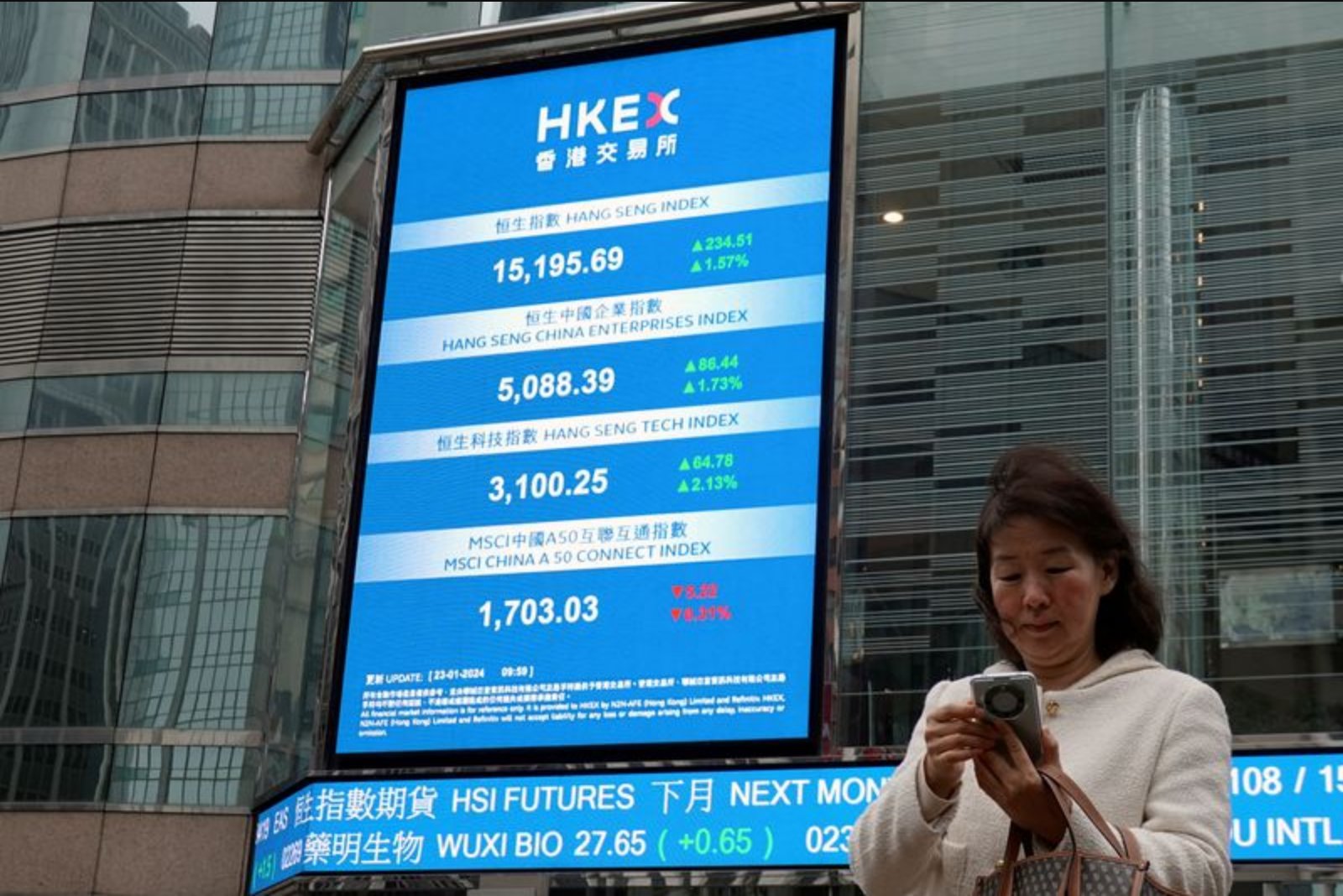
Asian equity markets moved to a more cautious footing on Thursday as the fragile pause in Gulf hostilities showed early signs of breaking down, lifting oil and reawakening concerns about a persistent inflation impulse.
Market attention focused on the Strait of Hormuz, where activity showed scant evidence of a meaningful reopening. Iran’s posture in the waterway - asserting control and seeking payments for safe transit - underscored the vulnerability of a key oil route and helped nudge energy prices higher.
"You have a fifth of the world’s oil supply moving through a corridor that is still effectively under the influence of one of the parties to the conflict," said Nigel Green, CEO at deVere Group. "That’s not stability."
He added: "You don’t need a full blockade to move oil markets sharply higher again. Missiles are still being launched in the Gulf, Israel is still engaged on another front, and yet markets are behaving as though the region has normalised."
On the oil front, U.S. crude futures climbed 2.8% to $96.99 a barrel, while Brent rose 2.1% to $96.74. The rise in energy costs comes against the backdrop of an already elevated oil price level, roughly 40% above pre-conflict readings referenced in market commentary, and has renewed concerns about inflation cascading through consumer prices.
Equities and futures
Japan’s Nikkei oscillated around the flatline after a sharp 5.4% gain the previous session. South Korea’s market trimmed 0.4% following a 6.8% jump in the prior session. MSCI’s broadest index of Asia-Pacific shares outside Japan eased by 0.3%.
In the U.S. futures market, S&P 500 and Nasdaq futures were both down 0.2% as the prior day’s rally lost momentum. European futures showed a mixed picture with EUROSTOXX 50 futures up 0.1%, DAX futures down 0.3% and FTSE futures up 0.5%.
Inflation and rates
With oil prices elevated, inflation pressures were expected to show through in official data. U.S. core prices for February were forecast to register a 0.4% increase for a second consecutive month, a projection that did not yet factor in the more recent uptick in energy costs.
Minutes from the Federal Reserve’s most recent policy meeting indicated a growing number of policymakers thought an interest-rate increase might be necessary to counter inflation, even though many still anticipated the next move would be a cut. The tone in the minutes helped curb a rally in Treasuries that had been more pronounced in European debt markets.
Yields on U.S. 10-year Treasury notes stood at 4.29%, up from 3.96% before the attack on Iran. Market-implied expectations for policy easing have narrowed significantly: fed funds futures priced in just 7 basis points of easing for the remainder of the year after having pared back expectations for 50 basis points of cuts since the end of February.
"The committee broadly agreed that it was too early to act, suggesting the Fed will likely remain on hold this year, in line with our view," noted analysts at JPMorgan in their summary. They also flagged a shifting risk profile for the European Central Bank, now seeing the possibility of a single hike this year rather than two.
Currencies and commodities
The dollar regained some composure after initial losses. The euro was flat at $1.1660, down from a peak of $1.1721. The dollar held at 158.60 yen after earlier slipping to 157.89.
Gold traded flat at $4,718 an ounce, following an overnight bounce to $4,777.
This mix of renewed energy-driven inflation risk, a reassessment of central bank policy paths and uneven equity performance left investors in a more sober mood across Asian markets, as the prospect of persistent higher energy costs remained a clear cross-market theme.