
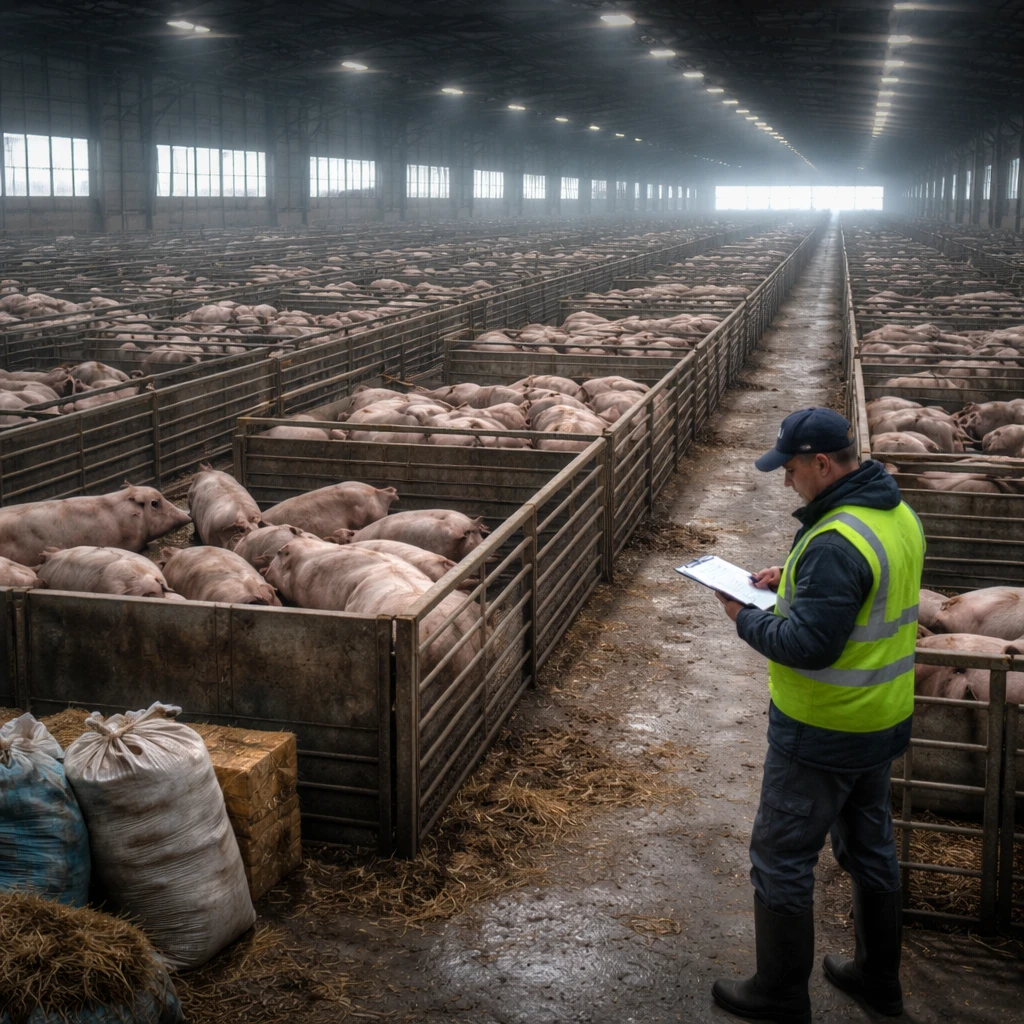
China’s pork sector is under mounting pressure after hog prices declined roughly 30% year-over-year to under Rmb10 per kilogram by the end of March, a drop that Macquarie says represents a 15-year trough. The firm also highlighted substantial breeding losses, with per-head figures exceeding Rmb400 in March as the industry contends with excess supply.
Sow inventories in China were recorded at 39.58 million heads at the end of January. That level was down 2.6% compared with the same month a year earlier and off 0.1% month-over-month, yet still measured 1.5% above what Macquarie denotes as normal levels. In response to weak prices, the National Development and Reform Commission has announced a second round of central frozen pork reserve purchases this year to provide upward pressure on prices.
Looking ahead, Macquarie projects a turnaround in industry profitability in the second half of 2026. The forecast is premised on declining sow inventories beginning in the fourth quarter of 2025. The report notes that the current combination of depressed hog prices and higher feed costs could hasten capacity rationalization and further market consolidation among producers.
Across the Pacific, U.S. hog market metrics showed modest strength. The March average hog price in the United States rose 3% month-over-month and 8% year-over-year. U.S. lean hog futures were at US$0.91 per pound by the end of March, up 4% from a year earlier. Breeding hog numbers as of March 1 fell marginally quarter-over-quarter and were down 1% year-over-year. The U.S. Department of Agriculture projects U.S. hog prices in the second quarter of 2026 will climb 6.2% year-over-year, backed by elevated beef prices and robust export demand.
Other protein and dairy indicators in China also showed movement at the end of March. The price for white-feather broilers fell 4.8% month-over-month, a decline attributed to slow seasonal demand and the drag from weaker-than-expected hog prices. In contrast, chick prices improved by 7% month-over-month. Trade developments affected the poultry sector as well: China suspended imports of French breeding stock in February 2026 after an avian influenza outbreak in France that was reported on December 29.
Outside of meat markets, China’s raw milk price held at Rmb3.03 per kilogram in March, a modest decline of 1.3% year-over-year. The mixed signals across hogs, poultry and dairy underline divergent pressures within China’s broader agricultural complex, as producers, policymakers and traders navigate supply dynamics and price sensitivity.