
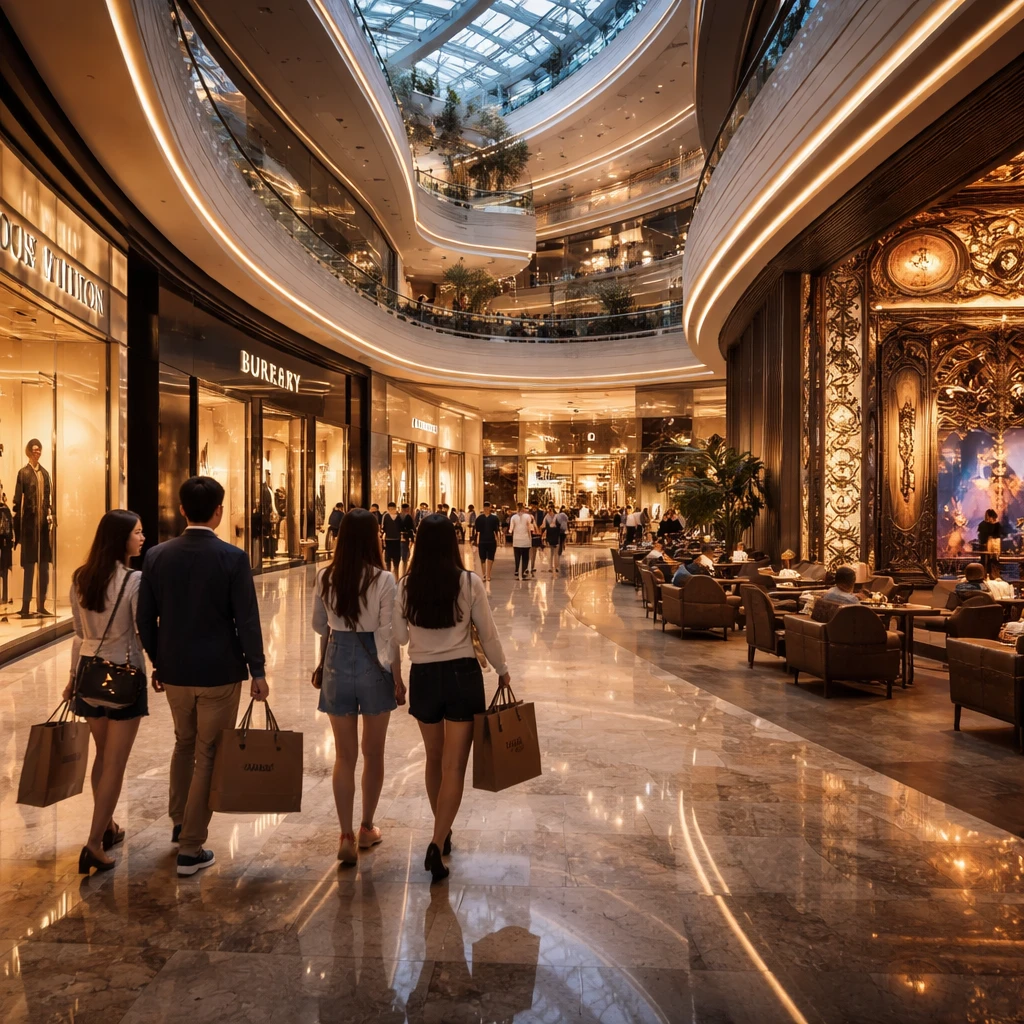
Luxury retail in China is undergoing a geographic shift as spending by affluent consumers migrates away from a handful of megacities and toward a growing roster of second-tier urban centres. Malls in cities such as Nanjing and Changsha are registering sales that rival or exceed those of long-established first-tier luxury markets, prompting major brands to relocate marketing and sales focus to these lower-cost but consumption-rich locales.
Industry observers say the pattern reflects both changes in consumer preferences and the strategic responses of luxury groups seeking to capture demand where it is now most concentrated. "The fact that you have all these second-tier cities now in the top 10 (luxury sales) ranking - it’s crazy if you think about it," said Zino Helmlinger, head of China retail at CBRE.
China still accounts for roughly one quarter of global luxury spending, but sales across the country have lost momentum since the end of a post-pandemic surge. Sluggish wider economic growth and the fallout from a property sector crisis remain headwinds, filtering down to the street-level shopper. Even so, recent corporate updates have signalled pockets of recovery: Burberry said last week that China’s Generation Z helped revenue beat analyst expectations, while LVMH on Tuesday flagged a recovery in China as it reported fourth-quarter sales that topped forecasts.
One prominent example of the new dynamic is Nanjing Deji Plaza. When Louis Vuitton launched its beauty line "La Beauté Louis Vuitton" in China, the brand made several products - including eye shadow, lip balm and a 1,200 yuan lipstick - first available at Nanjing Deji Plaza rather than a first-tier location. Data published earlier showed that Nanjing Deji Plaza had, for the first time, overtaken Beijing SKP as China’s top-performing high-end shopping centre. The mall in the Jiangsu provincial capital, which has a population of about 9.5 million people, posted sales of more than 24.5 billion yuan in 2024 compared with Beijing SKP’s 22.2 billion yuan, state media reported. Analysts said Deji likely remained at the top in 2025.
Deji’s offering goes beyond conventional retail. The mall includes an art museum, a modern food hall and unusually elaborate restrooms spanning 500 square metres (5,382 square feet) with themed areas such as calligraphy, classical music and cyberpunk. Those restrooms became viral on social media, and have even hosted pop-up presences from brands including Self-Portrait and Estee Lauder’s MAC Cosmetics.
"There are many delicious types of food and the selection of shops is excellent," said 24-year-old Zhou Shiyong of Nanjing Deji Plaza. "Only Deji has this kind of assortment; other shopping malls don’t have it, which is why we come to Deji."
Industry specialists describe Deji as dominating commercial efficiency in its region. The mall, owned by real estate conglomerate Deji Group, is the only shopping centre in the Nanjing area that houses every major luxury brand while also carrying more accessible labels aimed at Gen Z shoppers. Those younger consumers are an increasingly influential cohort in the luxury market, as brands chase shifting tastes.
"Deji has the highest luxury sales density in China. They have an ultra-strong VIP ecosystem, deep brand partnerships, frequent store upgrades and they basically dominate commercial efficiency," said CBRE’s Helmlinger. "Brands would rather wait for a location there than go to another project just a few kilometres away."
The shift is not limited to Nanjing. Malls in other second-tier cities such as Changsha IFS, Wuhan Wushang and Hangzhou In77 have climbed luxury sales rankings, according to Helmlinger. Research from MDRi cited in recent reporting found that luxury shoppers in second-tier cities spent an average of 253,800 yuan in 2024, up 22% from the prior year, while spending among consumers in first-tier cities fell 4% to 250,200 yuan.
Part of the explanation is economic. McKinsey research released last year showed consumers in the largest Chinese cities were most likely to cut discretionary spending. By contrast, consumer confidence has proved stronger among young and middle-income shoppers in second-tier cities where living costs are lower and perceived job security is firmer.
Demographic flows are also a factor. Savills’ James Macdonald pointed to a net inflow of people from top-tier centres to many second-tier cities, boosting the local middle class. Macdonald, head of Savills research for China, said recent corporate earnings suggest a modest recovery in the sector, driven in part by more active investment in flagship experiences in first-tier cities combined with targeted, performance-led strategies in the top malls of lower-tier cities.
Brands are experimenting with different ways to engage consumers. Burberry, for example, has trialled branded experiences such as an ice rink and a pop-up shop on a ski slope as part of its efforts to connect with Chinese shoppers. At the same time, top malls in second-tier cities have significantly upgraded their tenant mixes and experiential offerings, providing local consumers easier access to luxury labels without the need to travel to Shanghai or Beijing.
"It really shows China is going through a wide change in consumer behaviour, and in where money is localised and spent," Helmlinger said. "In the coming few years we’re going to see many more second-tier cities rising, because that’s where the money is."
Currency note: ($1 = 6.9554 Chinese yuan renminbi)