
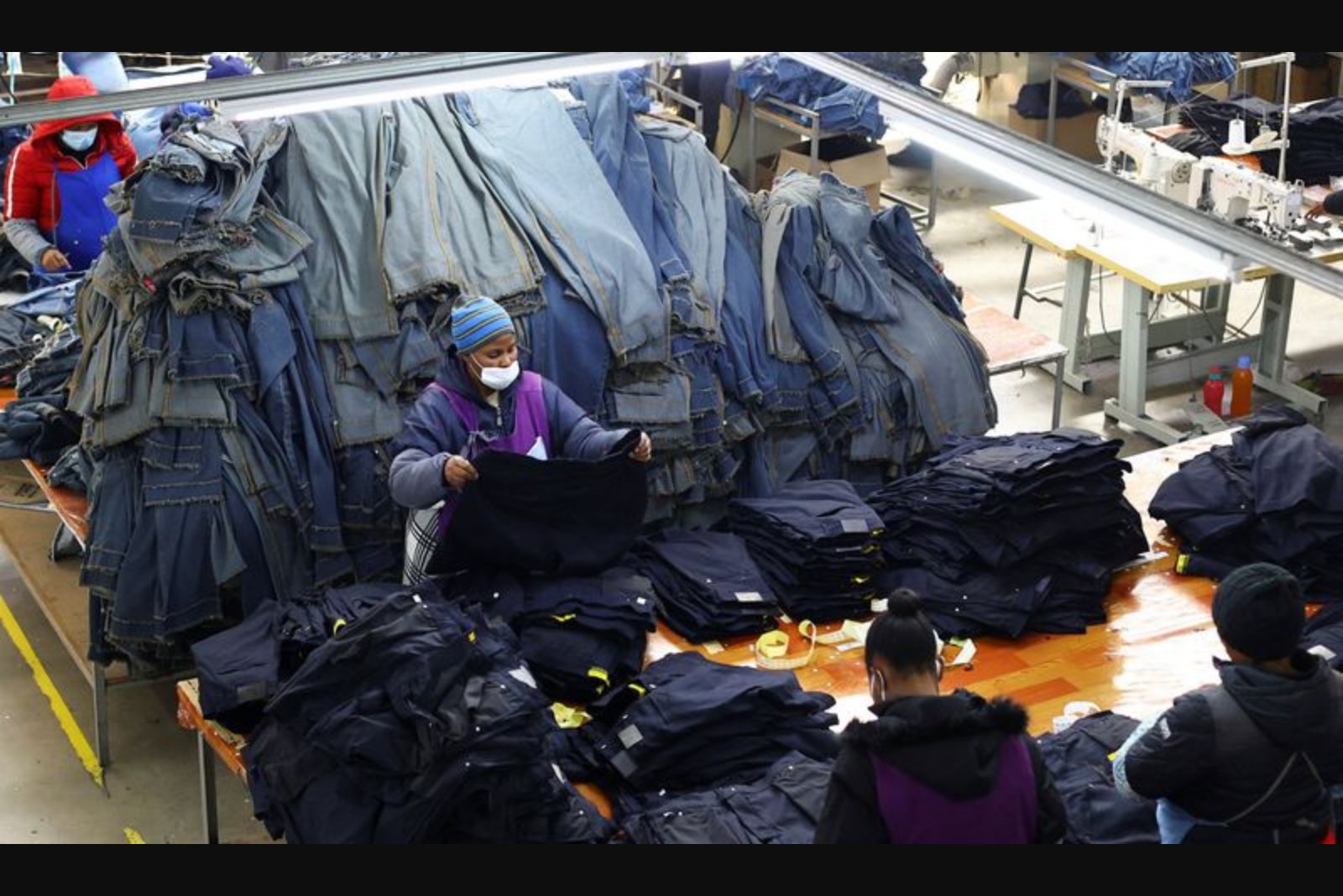
For workers like Matokelo Masenkane, whose employment ended in October after Lesotho lost its tariff-free entry to the U.S. garments market, the return of AGOA protections brings a measure of relief but not a full remedy. Since her layoff, the 36-year-old mother of three has risen early to wait at factory gates hoping to be picked for casual work - opportunities she says are scarce.
"It is even more painful taking the already little food from the house to eat while you queue, when you could have ... shared it with your kids," Masenkane said, describing how the loss of regular wages has affected daily life.
The flow of relief came after U.S. President Donald Trump signed an extension of the African Growth and Opportunity Act (AGOA) on Tuesday, continuing the trade programme, first enacted in 2000, through to December 31, 2026. The one-year extension removes the immediate threat to Lesotho's garment exports but leaves longer-term questions unsettled.
AGOA was introduced to offer duty-free access to the U.S. market for eligible Sub-Saharan African nations across more than 1,800 products. Its lapse in September had placed hundreds of thousands of African jobs at risk and exposed exporters to punitive measures. Lesotho, which has been described as Africa's most U.S.-dependent exporter, was particularly vulnerable.
In April, Lesotho initially faced a 50% tariff imposed under measures announced on April 2 - the day described in the original announcements as "liberation day" - a tariff level that was later lowered to 15%. Even the reduced rate presented a significant burden for a country whose textile sector is its dominant export industry.
Textile exports to the United States under AGOA represent about one-tenth of Lesotho's roughly $2 billion gross domestic product. The country's overall goods and services trade with the United States totalled $276 million in 2024.
Trade Minister Mokhethi Shelile, speaking in his office, welcomed the extension while voicing concern about its short duration. "I’m optimistic that we will get something long term," he said. He also cautioned that "The one-year extension ... is not a conducive timeline for our businesses," indicating that producers and exporters require a clearer, longer-term framework to plan investments and employment.
For many workers and factory owners, the extension ends months of uncertainty that followed AGOA's expiry. Yet the renewal effectively defers the question of a stable trade relationship rather than resolving it. Lesotho's reliance on U.S. consumers buying its clothes makes any future expiration or further tariff actions a continued source of risk.
Context and immediate implications
- AGOA's extension through the end of 2026 restores duty-free market access that supports Lesotho's textile exporters.
- The textile industry is the leading export sector for Lesotho and accounts for a meaningful share of national output.
- Despite tariff reductions from 50% to 15%, the episode highlighted the sensitivity of Lesotho's economy to changes in U.S. trade policy.
The extension halts the most acute risk to jobs and exports in the short term, but Lesotho's trade minister and affected workers alike make clear that the one-year window will require rapid follow-up to deliver the longer-term certainty businesses need.