
KeyBanc Capital Markets has launched coverage of Space Exploration Technologies with a Sector Weight recommendation, stating that while the company holds a commanding market position, much of its future growth appears priced into its valuation.
The brokerage characterized SpaceX as "the dominant leader in space launch and space-adjacent verticals," but cautioned that risk and reward are balanced at present pending clearer signs on Starship development. On KeyBanc’s 2027 estimates, the shares trade at approximately 29 times price-to-sales and 71 times EV/EBITDA, representing a material premium compared with peers across space, artificial intelligence, and communications services.
SpaceX’s business is organized into three reporting segments: Connectivity, Space, and AI. Connectivity primarily encompasses the Starlink satellite broadband service and accounted for 61% of the company’s 2025 revenue. Space covers launch vehicles such as Falcon 9 and the Starship program. The AI segment includes the Grok chatbot and the xAI computing infrastructure that came under SpaceX following the February 2026 merger with Elon Musk’s AI startup.
Starlink is identified by KeyBanc as the principal profit generator, producing roughly $11.4 billion of revenue in 2025 with an adjusted EBITDA margin of about 63% for that year. The analysts noted that at sufficient scale, Connectivity alone could support a meaningful portion of enterprise value. That dynamic, they said, limits downside risk to the overall investment case and permits the Space and AI segments to be valued more as sources of incremental upside rather than necessities for the thesis to hold.
On the AI front, KeyBanc observed that the segment remains loss-making but has secured sizable compute contracts. The firm highlighted a long-term arrangement with Anthropic valued at roughly $1.25 billion per month and a separate agreement with Google worth $920 million per month. Based on KeyBanc’s projections, AI revenue could reach approximately $50.6 billion by 2027, making it the largest medium-term growth driver for the company.
Despite those contracts, the brokerage flagged limited early commercial adoption of the Grok model. KeyBanc reported Grok’s U.S. business adoption at just 3.1%, versus 41% for Anthropic and 39.5% for OpenAI. The analysts described the coming 12 to 24 months as a "prove it phase" for the product, underscoring that broader market traction is not yet evident.
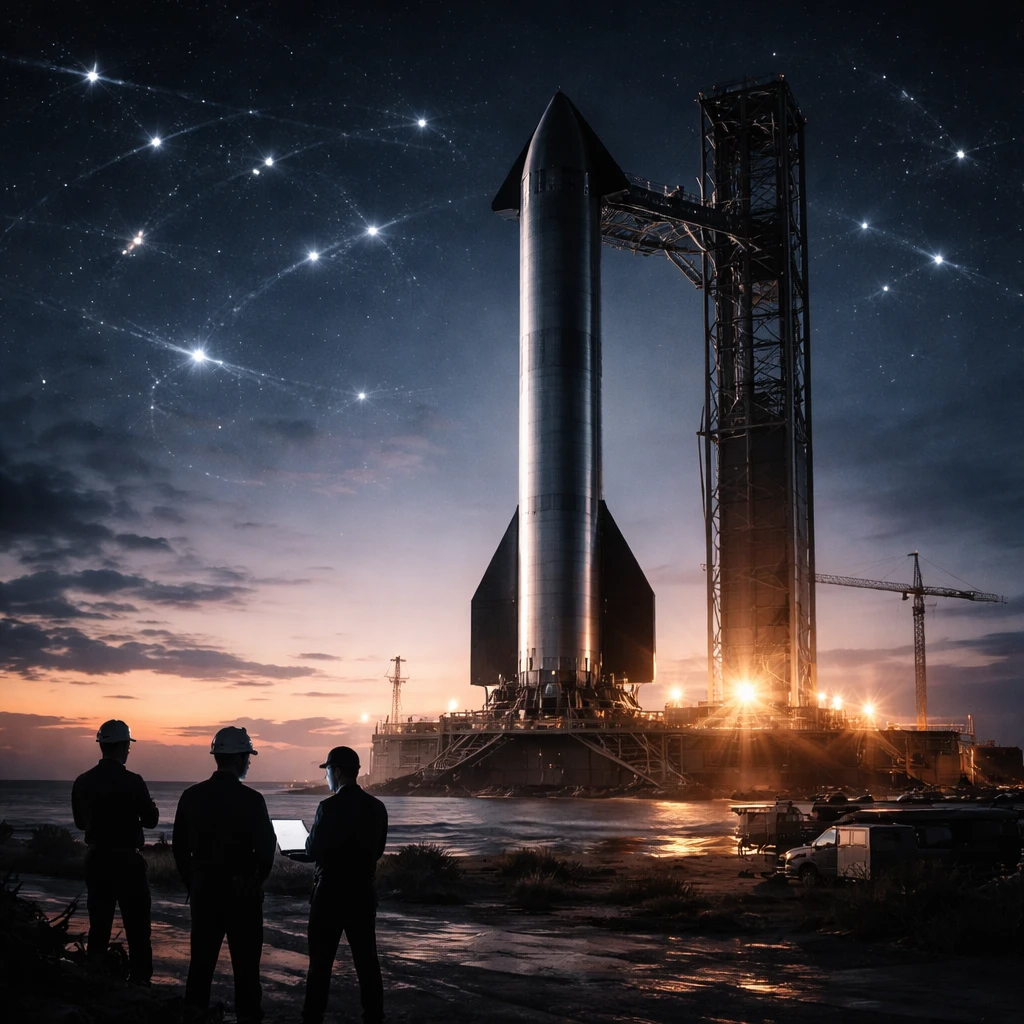
KeyBanc also identified the development timeline for Starship as the central variable in its investment thesis. The rocket is viewed as critical for deploying the next-generation Starlink V3 satellites, lowering launch costs through full reusability, and ultimately enabling advanced concepts such as orbital data centers. Starship flight 13 is scheduled for June 29. While analysts expressed confidence that Starship will eventually succeed, they said they adopt a conservative stance on the pace of its development.
Additional structural characteristics of SpaceX’s public share position were noted. The company has roughly 13 billion shares outstanding with only about 5% in the initial float, and Elon Musk’s stake — representing 42% of shares — is locked up until June 2027. KeyBanc did not assign a price target in its initiation report.
Context and implications
KeyBanc’s initiation presents a view that balances clear strengths against concentrated execution risks. The firm’s emphasis on Connectivity as a stable earnings base suggests limited near-term downside to valuation if Starlink maintains scale and margins. At the same time, the brokerage highlights two material upside levers - AI monetization and Starship-enabled cost reductions and capability expansions - that require tangible progress to be fully reflected in equity returns.
Bottom line
KeyBanc starts coverage with a Sector Weight rating, citing a premium valuation and contingent upside tied to Starship progress and AI adoption. With Starlink delivering strong revenue and margins, the brokerage frames the other segments as potential upside rather than prerequisites, while stressing a conservative read on timelines for Starship.