
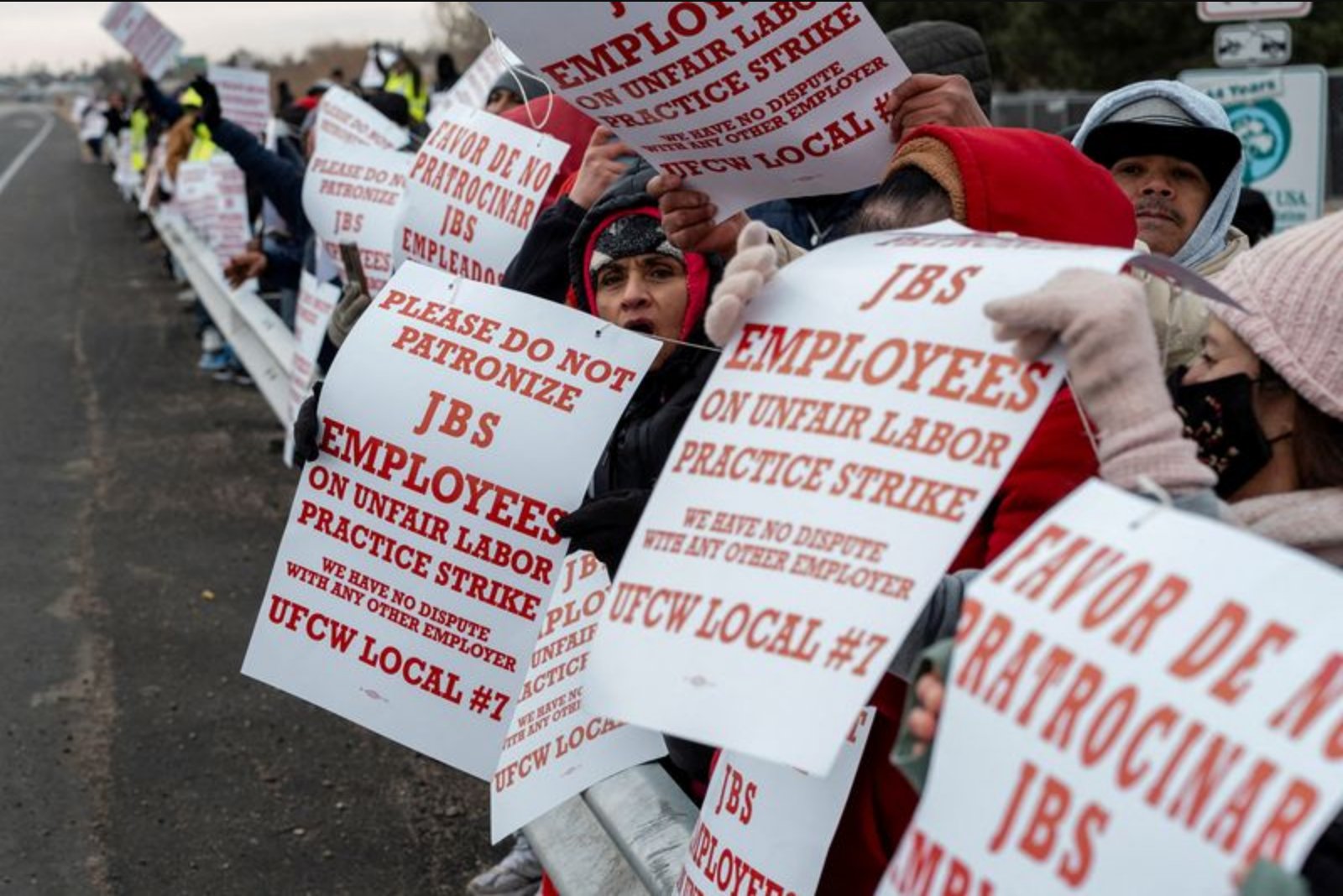
April 12 - Workers at JBS' flagship beef processing facility in Greeley, Colorado have ratified a tentative two-year contract that covers nearly 3,800 employees, the union and the company said in statements on Sunday.
The accord, negotiated between United Food and Commercial Workers Local 7 and JBS, followed renewed bargaining sessions on April 9-10 after roughly a month of strikes aimed at securing pay that keeps pace with inflation and stopping company charges for replacing protective equipment.
According to Local 7, the agreement - described by the company as unchanged from its most recent offer - delivers an almost 33% wage increase over the next two years. The union also said the contract prevents workers from being required to pay for personal protective equipment and protects them from increases in healthcare costs.
JBS said it was pleased to have reached an agreement but added that it was disappointed that UFCW Local 7 leadership opted to remove a historic pension benefit that had been part of a national pact negotiated last year in coordination with UFCW International.
As part of the settlement, the union agreed to withdraw seven alleged unfair labor practice charges that it had filed against JBS.
The labor action at the Greeley plant occurred against a backdrop of elevated beef prices this year. Record highs in beef pricing coincided with a national cattle supply that fell to a 75-year low, prompting meatpackers such as JBS to purchase cattle to process even as they benefited from higher market prices.
The strike at JBS further tightened U.S. processing capacity at a time when the industry had already been affected by changes at other firms. Tyson Foods this year closed a beef plant in Nebraska and reduced operations at a facility in Texas, moves that have contributed to pressure on processing throughput.
The newly ratified contract ends the most recent work stoppage at Greeley and outlines terms the parties will follow for the two-year span. Details provided by the union emphasize wage increases, protections around personal protective equipment costs and safeguards against rising healthcare expenses. The company noted its concerns about the pension provision removal but confirmed the withdrawal of the seven labor charges as part of the deal.
Context and implications
The agreement resolves the immediate labor dispute at one of the nation's largest beef processing sites and restores operations that had been affected by strike activity. It also establishes wage and benefit terms without reinstating the pension element referenced in last year’s national-level negotiation between JBS and UFCW International.
While the accord settles the current standoff, the discussions and the industry background cited by both sides underscore ongoing pressures in beef processing and cattle markets that influenced the dispute.