
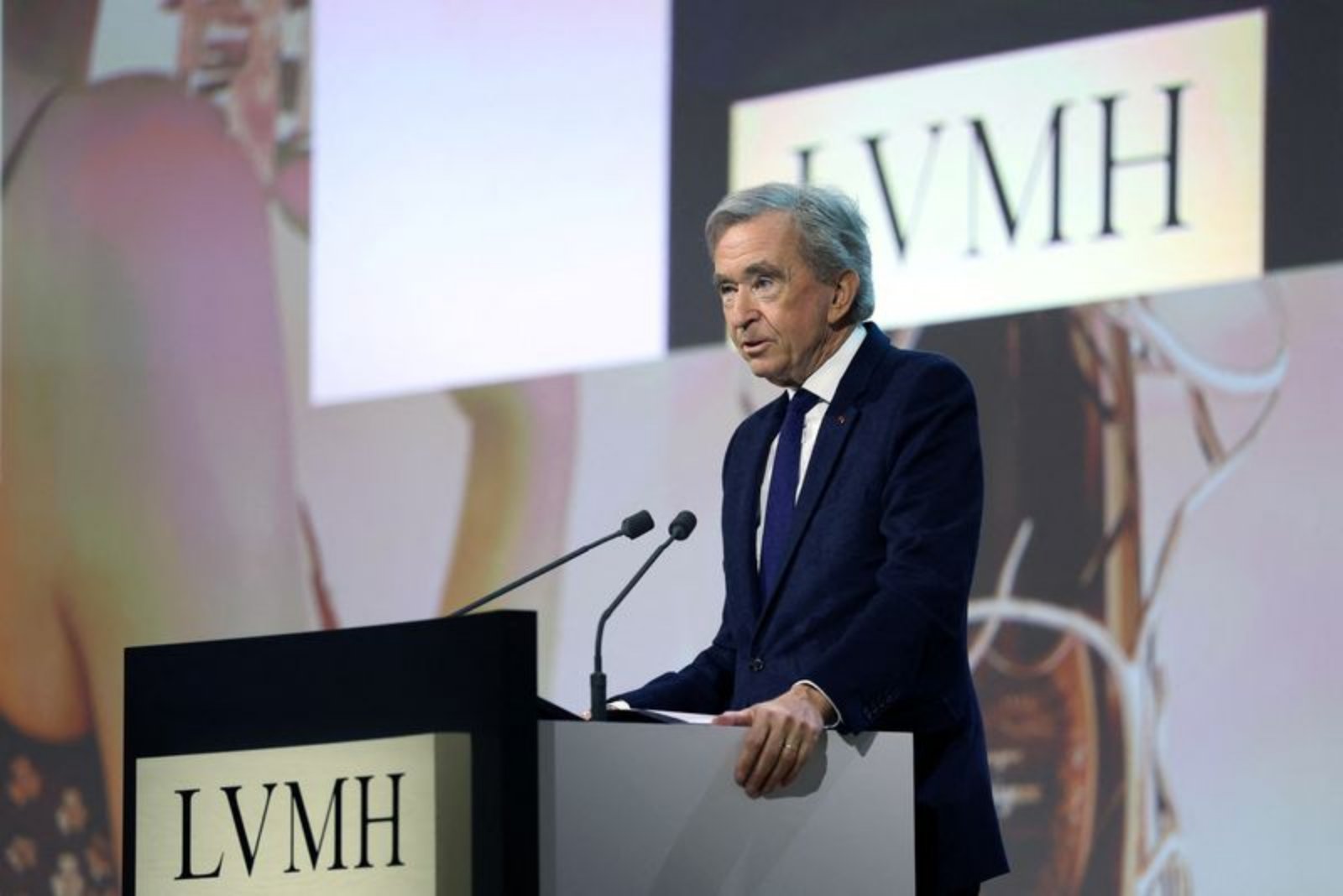
Investors in LVMH are stepping up demands for a clearer roadmap for leadership succession after almost four decades under Bernard Arnault. While Arnault continues to lead the roughly $350 billion luxury group that encompasses more than 70 brands including Dior and Tiffany, a number of shareholders say the absence of a transparent, public succession plan is becoming a risk for the company.
Several institutional investors, including long-term holders and equity managers, described uncertainty about leadership transition as a governance issue that could translate into a discount on the company’s market value. The concern centers not on the operational strength of LVMH today but on the potential disruption and decision-making frictions that could follow when control passes from Arnault, who is 76 and has not indicated an intention to retire.
Investor concerns and public comments
Stefan Bauknecht, equity portfolio manager at Deutsche Bank’s DWS - listed as LVMH’s 12th-largest shareholder in LSEG data - said that "The succession planning, as of now, appears unclear and opaque." He added: "We want more transparency and a plan on how things will evolve." Bauknecht also noted the absence of an obvious emergency caretaker arrangement, saying: "I am unaware of any emergency plan, for example a group of caretakers who would activate quickly and secure Arnault’s legacy. Such things are simply missing."
Ariane Hayate, European Fund Manager at Edmond de Rothschild in Paris, which holds LVMH stock, framed the shift in investor sentiment: "Ten years ago, succession was not a pressing issue. Today, it has become a risk factor and leads to a governance discount on the company."
Other investors voiced similar unease. Paul Moroz of Mawer Investment Management said: "They (LVMH) probably can’t give the clarity because he doesn’t have clarity in his own mind. You really don’t know until it’s done, but it’s probably low odds it works out."
Company position
LVMH has responded to investor questions by stating that succession plans for its executives are not public but that "obviously they do exist." The company added that its planning covers both a medium-term view and scenarios involving "sudden events," though it did not reference the founder’s specific role in its public reply.
Several investors reported that discussions about succession can be awkward or treated as a taboo topic in direct conversations with the company, reinforcing a sense of limited visibility into contingency arrangements.
Family structure and legal arrangements
Regulatory disclosures from a 2022 restructuring of the holding companies that control a majority of voting rights at LVMH provide some insight into how family control is organized, but they do not answer the substantive questions investors are asking about immediate leadership succession.
Under that restructuring, a new legal vehicle named Agache Commandite SAS was established with Arnault’s five children - Delphine and Antoine from his first marriage, and Alexandre, Frederic and Jean from his second - each holding a 20% stake. That unit is designated to head Agache SCA, the top holding in the control chain, once Arnault leaves his role. Corporate filings state that absent specific instructions from Arnault, decisions by his heirs would be taken by a majority of three.
Some governance specialists view such an arrangement as a potential flashpoint. Eric Pichet, a professor at Kedge Business School who studies corporate governance, warned that "This is a time bomb. There are always tensions in a second generation. And when you are five, it can’t be avoided." LVMH has dismissed the suggestion that gridlock at the holding company level is a realistic risk, saying that the alleged threat "does not exist."
Market implications and votes at the shareholder meeting
Although a majority of shareholders supported the most recent proposal to extend Arnault’s combined CEO and chairman role - an age limit extension last April that moved the cap to 85 - there were notable exceptions among institutional investors. Asset manager Baillie Gifford abstained, citing concerns about "the lack of detailed disclosure around succession plans," while Allianz Global Investors voted against the resolution. Both firms declined to comment for this article.
Analysts and some investors said scrutiny of succession has become more visible in the market, though not all see evidence yet of a measurable "succession discount." Berenberg analyst Nick Anderson said he had noticed rising market attention to the topic but did not observe clear signs of a valuation penalty tied to succession uncertainty at this stage.
What investors say is missing
Across interviews with multiple institutional holders, the common refrain was straightforward: there is little to no publicly available detail on plans that would activate quickly in the event of an unexpected change, and that opacity is what investors find troubling. Four of the seven institutional investors interviewed described the lack of clarity as problematic; six of the seven are LVMH shareholders.
Those investors argue that while long-term family control can offer stability, the transition mechanics - particularly for a conglomerate of LVMH’s size and complexity - warrant a degree of transparency that investors currently do not see.
Outlook
The debate about succession planning at LVMH underscores a broader tension between family-controlled firms and public investor expectations for governance disclosure. For now, Arnault remains in control and the legal framework put in place in 2022 defines how family ownership will be structured after his departure. But for a subset of shareholders, the remaining questions about operational contingency and the timing and identity of a successor have moved from hypothetical to material.
Investors and governance experts say those unresolved issues will likely remain a focus for the market and could influence perceptions of LVMH’s governance profile until clearer signalling or a formal plan is provided.