
Stock Markets June 8, 2026 09:08 AM

Intel Gains as Report Says Major AI Firms Explore Its Chip Manufacturing

Potential orders from Google and testing by Nvidia lift Intel shares amid constrained foundry capacity

By Marcus Reed
Share
Twitter Reddit Facebook LinkedIn
INTC GOOGL NVDA TSM

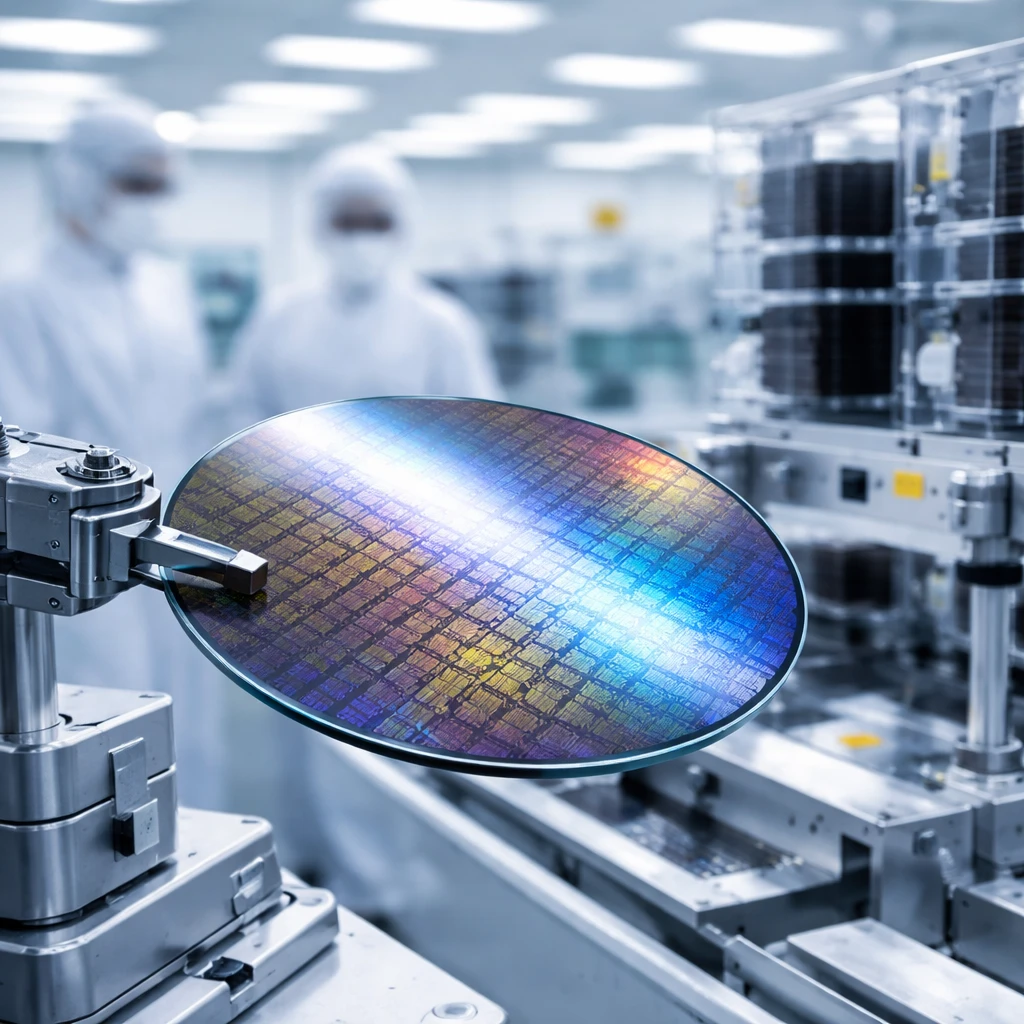
Intel shares jumped after a report said major AI chip designers have discussed using the company as an alternative manufacturer for advanced processors as foundry capacity tightens. The report said Google placed a multi-million TPU order for 2028 and that Nvidia is testing Intel technology for a multi-GPU processor. The moves come as TSMC faces pressure in leading-edge wafer and advanced packaging lines.

Intel Gains as Report Says Major AI Firms Explore Its Chip Manufacturing
INTC GOOGL NVDA TSM
Summarize with
ChatGPT Perplexity Claude Grok Gemini

Key Points

  • A report cited four people saying Intel has been approached by major AI chip designers as a backup manufacturer amid tight foundry capacity.
  • Google reportedly placed an order with Intel to build more than 3 million Tensor Processing Units in 2028; external estimates put Google's TPU output at over 6 million across 2027 and 2028.
  • Nvidia is testing whether Intel technology can integrate four graphics chips into a single processor tied to its Feynman GPU architecture, but has not placed an order; TSMC faces capacity constraints in leading-edge wafers and advanced packaging lines.

Intel shares surged in early trading after a report indicated that two leading AI chip developers have engaged Intel in talks about using the company as a backup fabricator for advanced processors.

The report, which cited four people with direct knowledge of the conversations, said the discussions involved Intel and major AI chip design companies as Taiwan Semiconductor Manufacturing Co. confronts limits on its capacity amid booming demand for AI chips.

According to the report, Google has placed an order with Intel to manufacture more than 3 million Tensor Processing Units in 2028 following months of testing Intel's advanced packaging capabilities. Tensor Processing Units are Google's in-house chips used to train and run AI models, and an outside estimate cited in the report places Google's total TPU production at more than 6 million units across 2027 and 2028.

The report added that Nvidia has not yet placed a production order, but is conducting tests to determine whether Intel's technology can produce a processor that integrates four graphics chips into a single unit. Those efforts are linked to Nvidia's Feynman series GPU architecture, which is scheduled for release in 2028, according to the same sources.

Pressure on foundry capacity was a central element of the report. It said TSMC's manufacturing capacity is strained by the surge in AI chip demand, with bottlenecks concentrated in leading-edge wafer lines and in advanced packaging production lines. The capacity constraints are the backdrop to why Intel is being considered as a potential supplementary manufacturer.

In addition, the report noted that Nvidia is running early trials on 18A, described as Intel's most advanced manufacturing process, via multiproject wafer runs. Those trials are exploratory and, according to the report, do not represent firm production orders.

Market reaction reflected the new information. Intel's stock moved sharply higher in morning trading after the report was published, while the article referenced market data showing movement in related semiconductor stocks.


Context and implications

The developments outlined in the report center on how capacity shortages at major contract foundries are prompting chip designers to examine alternative manufacturing partners. The steps reported - a large order from Google and technological testing by Nvidia - underscore a potential reconfiguration of supply relationships for high-end AI processors, depending on how discussions and tests progress.

Risks

  • TSMC's strained capacity in leading-edge wafer lines and advanced packaging could limit supply of AI chips and affect production schedules in the semiconductor sector.
  • Nvidia has not placed a manufacturing order and is only testing Intel's processes, leaving uncertainty about whether testing will lead to production commitments in the GPU sector.
  • Although Google reportedly placed a large order for TPUs in 2028, the ultimate production outcomes depend on ongoing technology tests and manufacturing agreements, creating uncertainty for cloud and AI hardware supply chains.

More from Stock Markets

Tesla Held at Critical Support as Downtrend Persists on 2-Hour Chart Jun 8, 2026 Cipher Digital Seeks $810 Million in Junk Bonds to Fund Amazon-Leased West Texas Data Center Jun 8, 2026 Mizuho Says Buy Broadcom on Pullback, Citing Massive TPU Opportunity Jun 8, 2026 Oslo stocks slip as media, transport and financials lag - OBX down 0.57% Jun 8, 2026 Vulcan Materials Shares Retreat After Dual Portfolio Moves; Investors Cautious Without Deal Terms Jun 8, 2026