
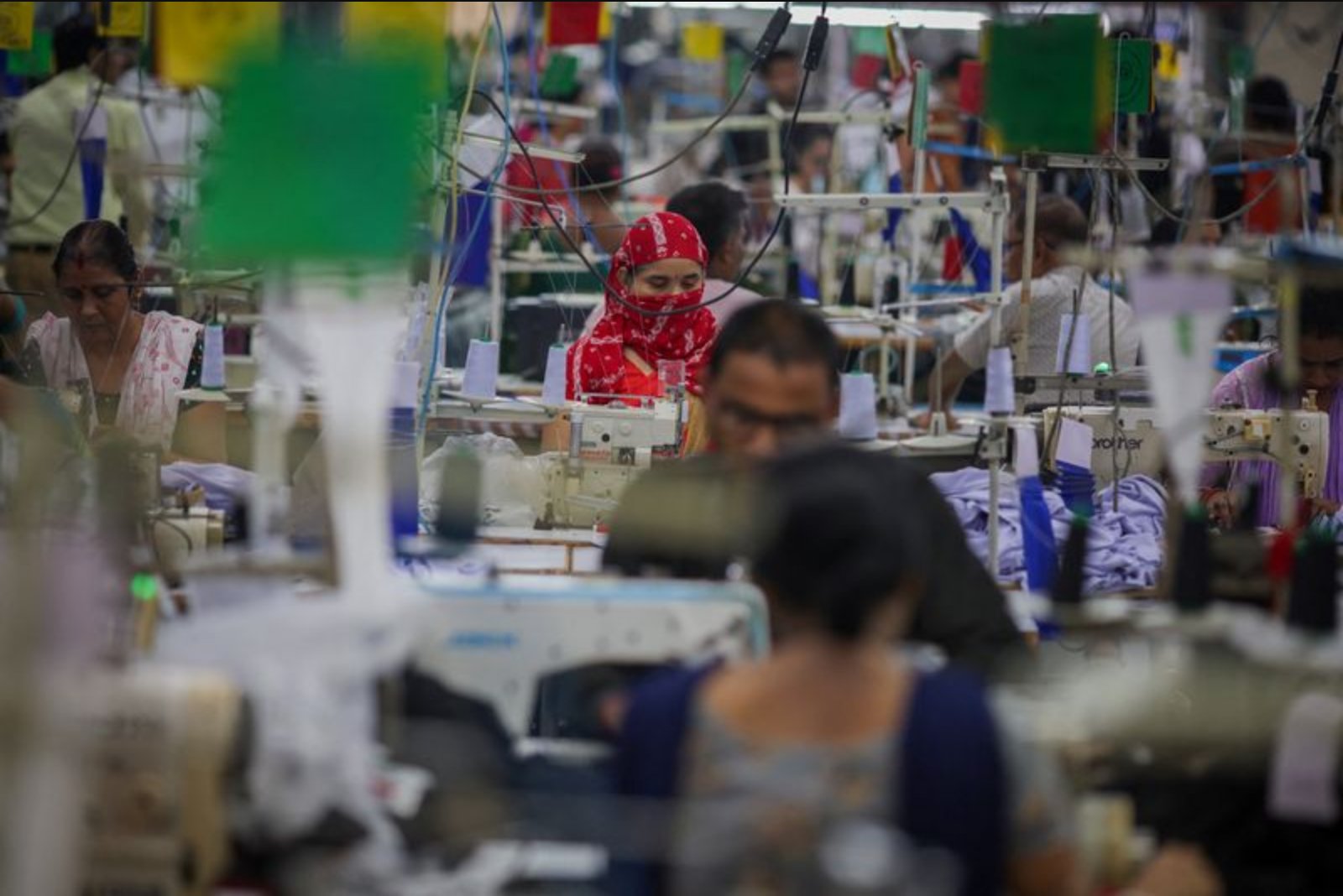
India's textile and apparel sector is pinning part of its recovery on this week's trade agreement with the European Union after facing a severe shock from U.S. tariff action last year. Washington imposed 50% tariffs in late August, a move that has squeezed U.S.-bound shipments and prompted exporters to seek alternative markets.
Under the EU accord - which officials have said will be implemented in about a year - the European Union will immediately remove duties on 90% of Indian goods. That includes the roughly 12% tariff levied on textiles and apparel, a change exporters say will bolster price competitiveness in a key market.
"At a time when the sector is weighed down by high U.S. tariffs, the India-EU agreement opens the door to greater market access,"
said Ashwin Chandran, chairman of the Confederation of Indian Textile Industry (CITI), who added that jobs in the sector are currently at risk.
The scale of the U.S. disruption is reflected in industry surveys. A CITI survey found U.S. shipments fell by more than 50% in October-December compared with July-September for nearly one-quarter of textile exporters. Exporters and industry bodies warned that, without a deal with the United States, losses could reach $5 billion to $6 billion this year.
In a letter to the government, the Apparel Export Promotion Council (AEPC) said the higher U.S. tariffs have hit companies that derive up to 70% of sales from the U.S., leaving them vulnerable to order cancellations and factory shutdowns. The AEPC urged swift government action to prevent what it described as potentially lasting damage.
Despite the drop in U.S. orders, government estimates show India’s textile and apparel exports held steady at $37.5 billion in 2025 as exporters rerouted shipments to other destinations, including the EU, the UAE, Japan and markets in Africa.
Still, the United States remains India’s largest market for these goods, accounting for 28% of exports - roughly $11 billion out of $38 billion in the financial year ending March, 2025. The EU was the second-largest destination, taking about one-fifth of shipments.
"Zero-duty access to the EU market will enhance Indian garments’ competitiveness,"
said AEPC Chairman A. Shakthivel, who projected exports to the EU could expand by 20-25% a year and double within three to four years.
At present, India’s share of the EU’s $250 billion apparel market stands at about 3%, with competitors such as China, Bangladesh and Vietnam accounting for larger proportions in part because of lower duties.
However, analysts and industry sources cautioned that the path ahead contains near-term risks. The EU has suspended preferential tariffs on Indian apparel for 2026-2028, and the new deal will not be operative until roughly a year from now. That implementation gap could temporarily raise costs and squeeze margins, analysts said.
Exporters will also face compliance hurdles. Meeting exacting EU technical and safety standards - including detailed labelling, chemical limits and health-and-environment certifications - will be necessary to realise the benefits of tariff relief.
Market alignment is another challenge. Of the EU’s top 20 high-demand ready-made garment products, India currently exports only eight cotton and two man-made fibre items, a mismatch that points to work needed to better match EU demand.
There are early commercial signs of interest from European fashion buyers. Kumar Duraiswamy, joint secretary of the Tiruppur Exporters Association, said several major EU brands, including H&M and Zara, have visited factories in Tiruppur, the southern textile hub, to plan new orders. He expects exporters to add capacity, attract new customers and expand into synthetic garments.
Industry executives expressed guarded optimism but emphasised the persistent importance of U.S. demand. Rajinder Gupta, CEO of Trident Group, said opening up the European market will be hugely beneficial at a time when exporters are facing serious challenges in the U.S. market and expects his group’s exports to double in two to three years. He also noted that the volume of U.S. business is not easily replaced by any other market.
For now, exporters are pursuing a dual-track approach: pressing New Delhi for a rapid resolution with Washington while preparing to deepen presence in the EU and other markets. How fast tariff relief translates into orders will depend on the speed of implementation, compliance with regulatory standards and the ability of Indian firms to align product mixes with European demand.