
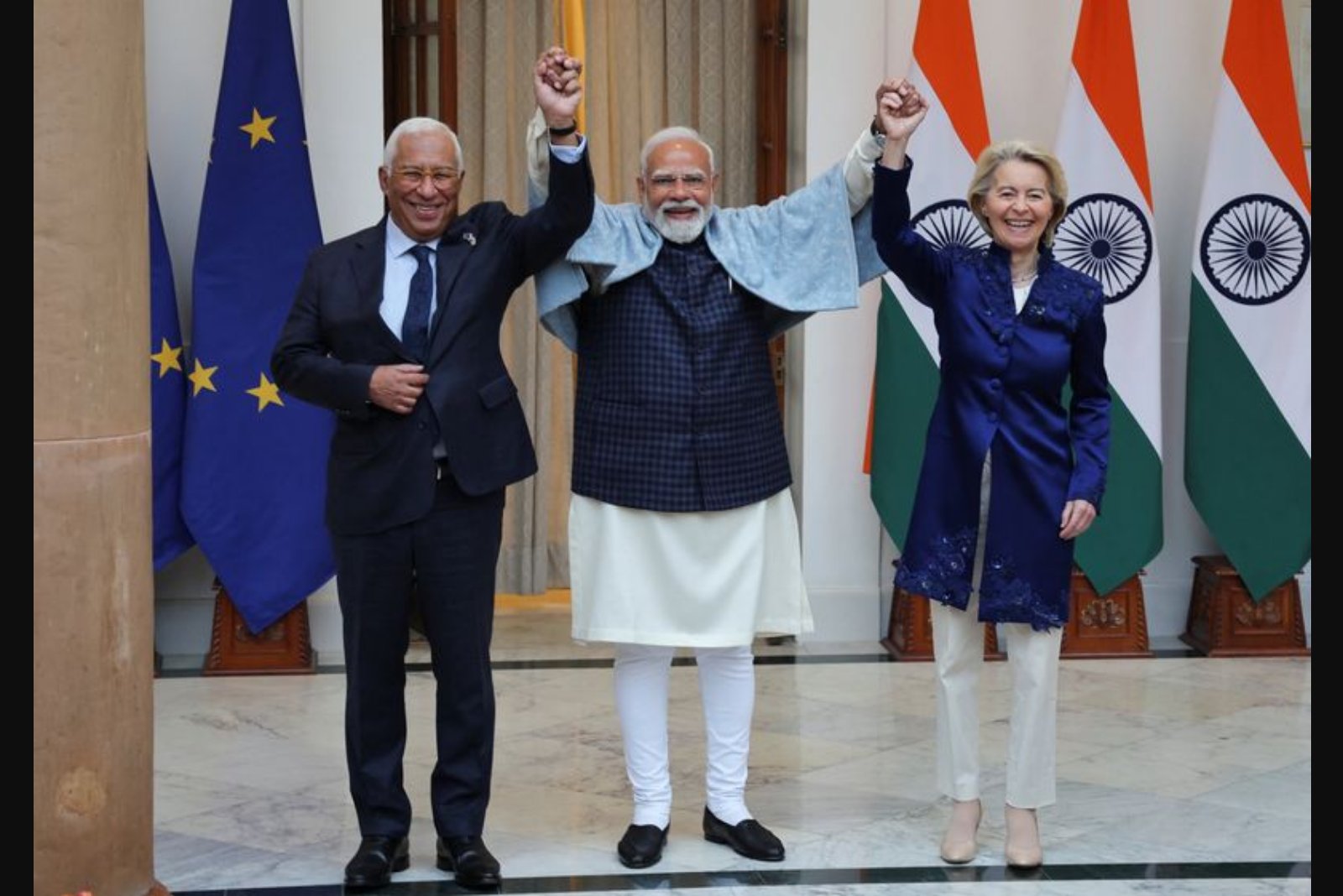
India and the European Union have reached agreement on a long-awaited trade deal that both sides described on Tuesday as landmark in scope. The arrangement will remove or lower tariffs covering 96.6% of traded goods by value, the EU said, and is forecast to double EU exports to India by 2032 while delivering about 4 billion euros ($4.75 billion) in duty savings for European companies.
Under the deal, the EU will phase out tariffs on 99.5% of goods it trades with India over seven years. According to India’s commerce ministry, tariff cuts to zero for a range of Indian exports to the EU will include marine products, leather items, chemicals, rubber, base metals and gems and jewellery.
Prime Minister Narendra Modi framed the pact in expansive terms, saying on Tuesday that "a big agreement was signed between the European Union and India" and adding that people were calling it "the mother of all deals." He said the accord would bring substantial opportunities for India’s 1.4 billion people and for millions in Europe.
The agreement also opens India’s traditionally protected market to a number of European products. New Delhi agreed to slash tariffs on passenger vehicles to 10% over five years from rates that in some cases reached 110%, a move that will benefit automakers from Europe including Volkswagen, Renault, Mercedes-Benz and BMW, according to the EU statement. Alcoholic beverages such as wines will see duties cut immediately from 150% to 75%, with a further gradual reduction to 20% planned.
Beyond autos and spirits, the pact reduces levies on a broad array of EU-sourced goods entering India. The EU highlighted machinery, electrical equipment, chemicals and iron and steel as among the categories where tariffs will be lowered.
European Commission President Ursula von der Leyen described the agreement as historic in tone, writing on social media that "Europe and India are making history today" and calling the deal "only the beginning."
Trade between the two partners amounted to $136.5 billion in the fiscal year ending March 2025. The timeline for formalizing the agreement requires legal vetting that officials expect will take five to six months, after which the signatory process can proceed. An Indian government official familiar with the matter said authorities expect implementation within a year.
The pact arrives amid a wave of trade deals signed by the EU and by India in recent months. The EU recently concluded a pact with Mercosur and last year completed agreements with Indonesia, Mexico and Switzerland. India has also finalised agreements with Britain, New Zealand and Oman during the same period.
Officials and analysts framed the flurry of activity as part of a wider effort to diversify trading relationships amid tensions with the United States. The deal discussions between India and the EU were resumed in 2022 after a nine-year pause and gained momentum following tariff actions and other trade tensions tied to U.S. policy, including a 50% tariff imposed on some Indian goods, officials said. An India-U.S. trade deal collapsed last year after a breakdown in communications between the two governments.
On the Indian side, former trade official Ajay Srivastava said the tariff concessions with the EU should expand India’s exports in labour-intensive sectors and help to partially offset the effects of U.S. tariffs. He also noted the immediate price advantage that EU products will gain in India as a result of relief from previously high duties, citing the example of tariffs on cars that reached up to 110%.
Before final ratification, the accord will go through legal scrutiny and the formal signature process. Officials expect that step to take several months, and indicated implementation could follow within a year if timelines hold.
For businesses and markets, the agreement represents a significant recalibration of trade costs across multiple sectors - notably autos, beverages, machinery, chemicals, metals and textiles - and is likely to reshape competitive dynamics between European exporters and other suppliers to the Indian market.
Currency conversion used in official statements placed 1 U.S. dollar at about 0.8422 euros in the calculations presented alongside the EU’s projected duty savings.