
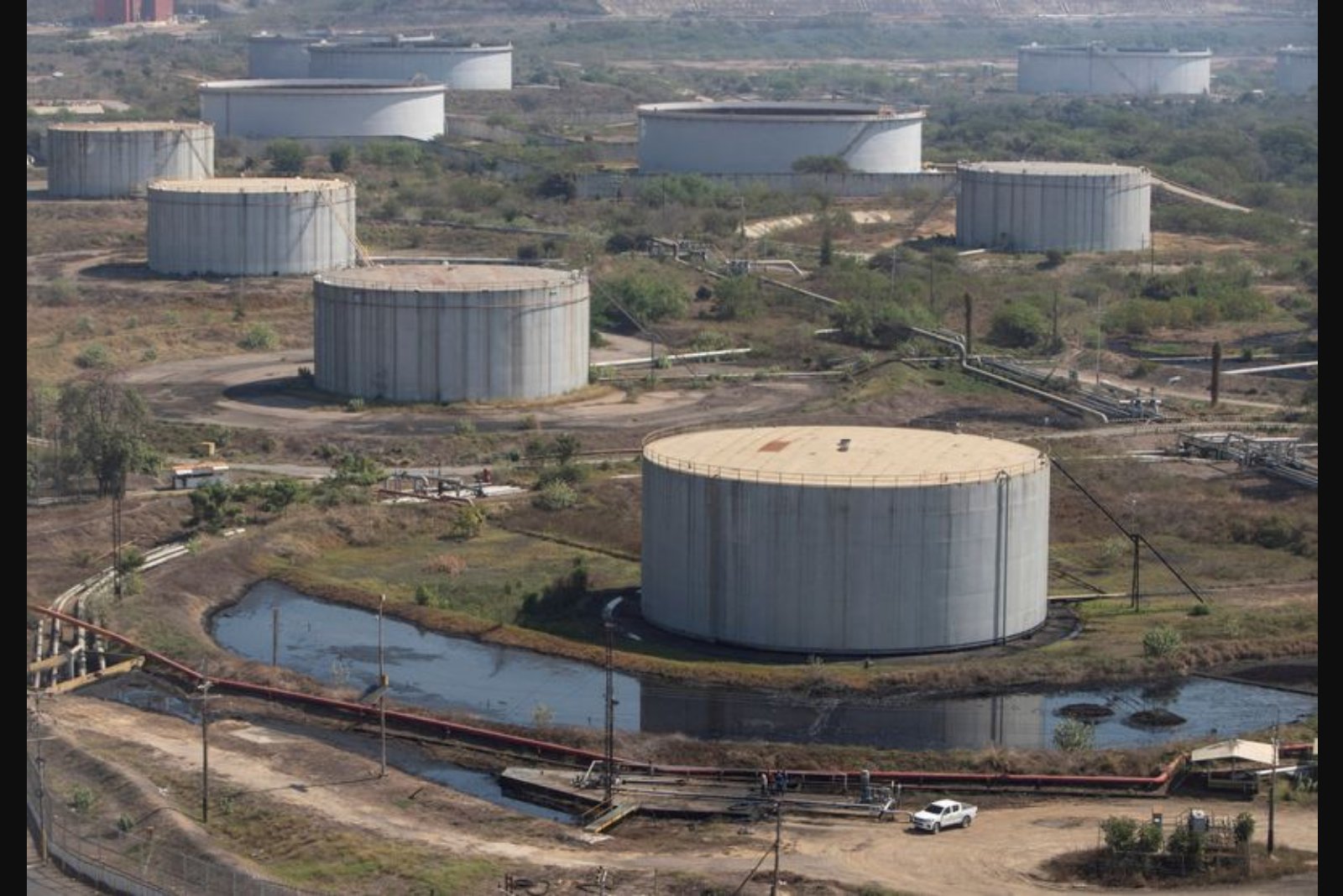
In downtown Houston, industry conversations that would once have been purely speculative are taking on a practical tone. At a local bar, a Pelorus Terminals director sketched an outline of a multi-stage plan to restore and expand marine facilities in Venezuela capable of blending and exporting crude as well as handling chemical shipments. The concept would require refurbishing one existing crude terminal, constructing a new oil terminal, converting the older site for chemical traffic and potentially adding tanks and dock upgrades. Cost estimates for the package range from $250 million to $1 billion, and the work could take roughly three to 10 years to complete.
The plan, while still preliminary, highlights the kind of infrastructure plays prompting heightened attention in Houston. Executives, private equity backers, smaller independent drillers and service companies are trading ideas on how to access Venezuela’s large crude resource base if U.S. policy and licensing permit. For some entrepreneurs, the potential upside outweighs the many unknowns. "The small guys are willing to take the risk, Venezuela is the lost world," the Pelorus director said, adding that he has already discussed the concept with two private equity investors and is lining up meetings with smaller drillers and other potential partners.
Interest is not confined to small independents. Major U.S. oil service firms and industry heavyweights are also fielding inquiries and reassessing their options. Halliburton’s chief executive said on an earnings call this month that his phone has been "ringing off the hook" with Venezuela-related approaches. The company, which left the country in 2020 amid sanctions, is pursuing licenses that could allow it to re-enter. The CEO, who has said he lived in Venezuela for several years, joined a White House meeting in January and expressed strong interest in returning, telling investors there are opportunities that could materialize "sooner rather than later." Halliburton’s efforts underline the gap between commercial appetite and the legal framework needed to operate safely and credibly in Venezuela.
That legal framework remains a central unknown. U.S. officials and industry participants have held discussions in Washington and around the country, and the Department of Energy has convened meetings that included prominent wildcatters and private oil company founders. Several of those founders attended a January 9 roundtable at the White House. Participants and bankers report active conversations, but investors and lenders say they need concrete assurances about ownership rights, asset protection and the licensing process before committing capital.
Ali Moshiri, a former Chevron executive who now leads a Houston-based energy company, has been preparing for a potential Venezuela entry for years and is in early talks to raise up to $2 billion. He has met potential investors in Houston and New York. Moshiri described two camps among U.S. companies: those exercising caution and waiting for political and legal reforms that would lower risk, and those treating the moment like a gold rush and moving quickly. "Those who have been involved with Venezuela for a long time are trying to find a middle ground," he said.
Investment bankers are watching closely but voice the same demand for clarity. The global head of oil and gas at an investment bank said that while conversation volume is high, public and private investors require a clear path to own assets, understand what they would be buying and know that protections are in place. Absent that, large-scale financing and international banking participation will be difficult to secure.
On the Venezuelan side, lawmakers have opened debate on reforms to the hydrocarbons legal framework. A proposed overhaul would introduce a new contract model enabling foreign and local companies to operate fields on their own rather than under the current joint venture structure. If approved, those changes could make it easier for independents and smaller operators to enter under more flexible terms than now exist, though final details and implementation remain uncertain.
The industry map of interest extends beyond Houston. Denver has emerged as a secondary hub, with a number of Colorado-based firms participating in White House conversations. Companies from Denver that have been involved include firms that focus on acquiring non-operated stakes, midstream operators that own pipeline and terminal assets, and independent energy groups. Executives from some of those companies say American firms could make meaningful contributions to restoring Venezuelan production if contractual and security arrangements are durable and trustworthy.
Aspect Holdings’ chairman highlighted the need for reliable contracts and extensive technical data, noting that the Orinoco heavy crude belt presents a substantial prize if arrangements can be structured to support long-term investment. He also observed that modern technologies applied to onshore and offshore exploration could unlock resources not reflected in present reserve tallies, stressing the importance of data and dependable security and contractual frameworks.
Despite talk of rapid engagement, the mechanics of how U.S. companies would operate in Venezuela are unclear. The White House has told executives they would be "dealing with us directly" rather than coordinating with Venezuelan authorities, but details about which U.S. agencies would issue specific licenses, approve deals or lift sanctions have not been fully articulated. Under current U.S. policy, any company wanting to operate in Venezuela’s oil sector needs a Treasury Department license or sanctions waiver, and international banks remain restricted from working there while sanctions persist. Legal advisers note that multiple Venezuelan laws would likely require amendment before large-scale foreign investment becomes feasible.
Pressure from Washington to accelerate private-sector action is visible. The U.S. president and his energy secretary have urged the industry to move quickly. A Latin America energy program director at a university in Houston described a White House-directed sense of urgency and said the energy secretary is pushing to deliver on the administration’s timeline. Industry insiders and U.S. officials are attempting to reconcile the desire for speed with investors’ need for certainty and protections.
Within Venezuela, sources report shifting dynamics at the state oil company. Personnel describe a new energy at PDVSA offices and across operational sites after news that the company was advancing in U.S. negotiations. Some executives are quickly setting up meetings with foreign firms to discuss production, exports, power supply and other business opportunities. A Caracas-based commercial intelligence firm that tracks investor interest said it has seen a flurry of companies studying potential opportunities but added that existing sanctions and Venezuelan legal hurdles are holding many back.
Back in Houston, entrepreneurs are pitching a range of practical projects. One developer outlined a plan calling for an initial outlay of $70 million to restart abandoned oil wells in eastern Venezuela, with an ambition to grow output to 50,000 barrels per day in roughly seven months. He projected transforming that effort into an $800 million return over time. Separately, the Pelorus director expects returns of at least 20% once his twin-terminal systems are fully operational and anticipates higher upside if a larger acquirer buys the assets after several years.
The variety of proposals underscores how different parts of the energy sector would be affected. Terminal operators, tank owners, dock contractors, power suppliers and marine service providers could all find new work if projects proceed. Midstream companies with pipeline and terminal expertise, technology and data providers, and firms that specialize in well workovers would also be in demand. But the timetable and scale of opportunity are constrained by licensing, sanctions, legal reforms and the need for reliable security and contractual commitments.
For bankers and large investors, the practical question remains how to structure deals that allow clear ownership, asset protection and enforcement in a country where many laws and institutions may need change. For smaller firms and independent drillers, the calculus is different: some are prepared to accept higher risk and move fast, while others await clearer signals from both U.S. and Venezuelan authorities.
As conversations progress in Houston offices and across other U.S. energy hubs, the balance between entrepreneurial risk-taking and institutional caution will shape which projects advance. The next steps will likely hinge on the U.S. government’s licensing process, any legislative reforms in Venezuela that alter contract terms and the willingness of international banks and larger firms to re-engage under defensible legal and operational terms. Until those elements are clarified, industry interest will remain high, but so will uncertainty.
Contextual notes - The ideas and proposals described are at varying stages of development. Some are early conceptual plans being shopped to potential investors and partners, while others involve larger firms exploring whether they can seek licenses to resume operations. No new legal approvals or contractual frameworks have been described in detail in these discussions, and many participants say they are awaiting clearer regulatory direction.