
Summary
A cohort of retired Honda Motor executives began meeting privately late last year to dissect the automaker’s slide and to hold its chief executive, Toshihiro Mibe, responsible. Over several months they exchanged text messages, met for meals and formal discussions - at times joined by current executives - and produced a written summary of their concerns. They faulted Mr. Mibe for what they described as neglect of the Chinese market and for pursuing an EV-first strategy that they say has backfired, precipitating write-downs and the prospect of Honda’s first annual loss in seven decades. After escalating their pressure, senior alumni confronted the CEO in April and demanded his resignation. Mibe refused, buoyed by the company’s nominating committee and board. He has since proposed measures to reduce costs and reorganise elements of auto development as Honda seeks to arrest the decline.
How the pressure built
Late last year a small circle of retired executives began to assemble privately to discuss what they saw as strategic and operational failings at Honda. Their communication extended beyond a handful of meetings - it included months of text-message exchanges and social gatherings. The participants drafted a written summary of their discussions documenting specific grievances, and in some instances the conversations included current company executives.
The alumni’s central contention was that Mr. Mibe, a former engineer who became CEO in 2021, had misplaced priorities and lost sight of the company’s traditional emphasis on the genba - the actual places where work and product use occur, such as salesrooms, plant floors and on the road. They argued that the CEO paid insufficient attention to China - the world’s largest auto market - and pursued an electric-vehicle (EV) programme that had proven costly and ineffective.
Key accusations and specific complaints
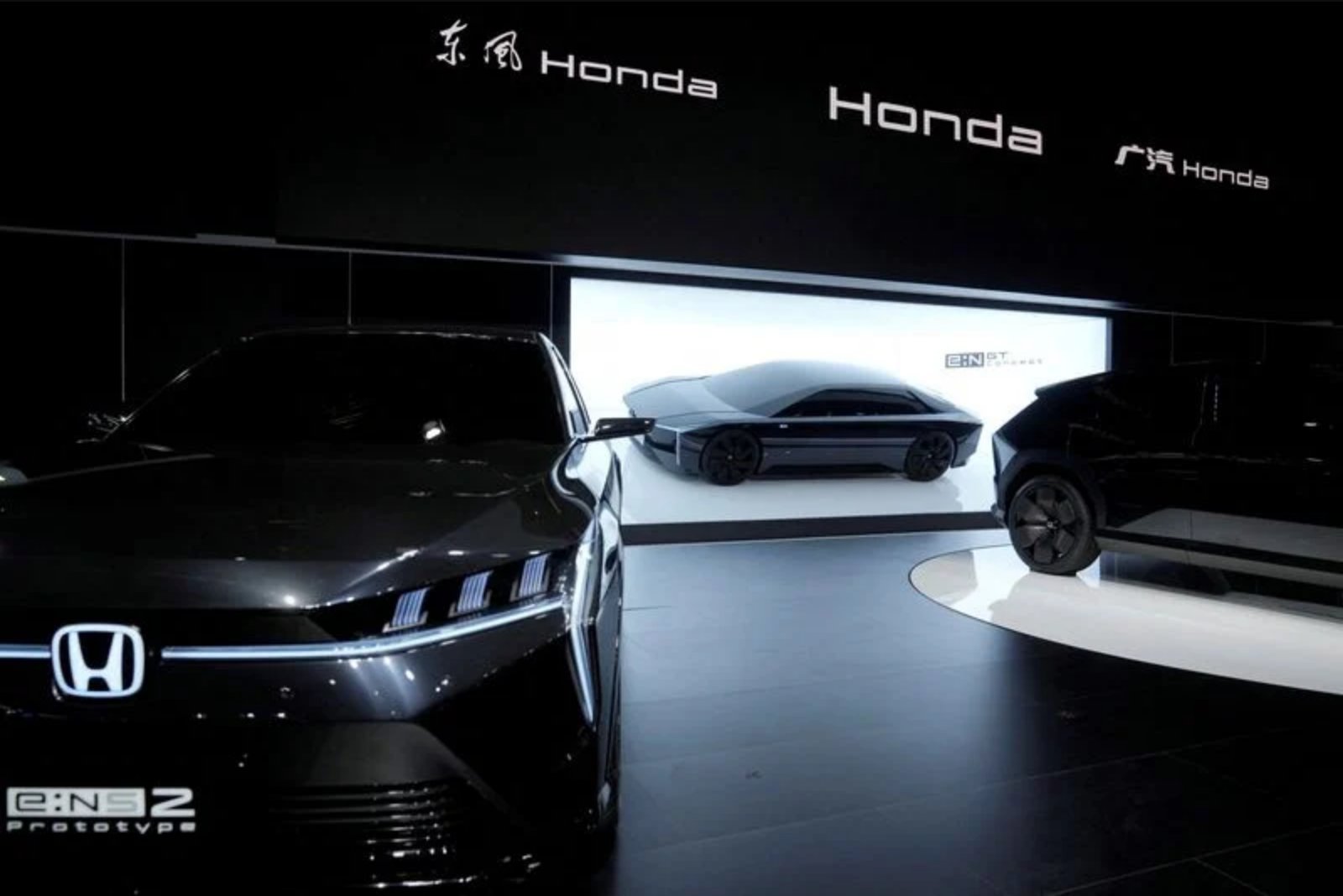
Those aligned against the CEO said the EV push was a failed bet. Honda reversed course on a pledge to go all-electric by 2040 and booked approximately $9 billion in EV-related charges after cancelling three vehicles in development. The group said additional EV-related costs could raise the total to about $12 billion. They also pointed to write-downs at other automakers, noting that rivals had taken more than $25 billion in charges when they cancelled EV programmes and lines - a comparison raised by participants to underscore the scale of the problem.
Beyond the financials, the ex-executives made a more cultural critique. They said Mr. Mibe did not sufficiently visit or listen to the genba, exemplified by infrequent trips to the Chinese market and reduced participation in China’s annual auto show, an event routinely attended by competing CEOs. Automotive market share figures they cited showed a decline in China under Mibe’s tenure - slipping from 8% in 2020 to less than 3% last year.
They also objected to Mr. Mibe’s apparent focus on brand and sponsorship activities, singling out Honda’s golf sponsorships and naming his rounds with Akie and Chisato Iwai, two professional golfers supported by the company, as instances that signalled misplaced priorities.
The April confrontation and the board’s role
By April the retired executives had reached a point of direct action. A former chief executive, Nobuhiko Kawamoto - who had been part of the discussions - went to Honda’s Tokyo headquarters and told Mr. Mibe to step down. Those present described a firm demand for resignation. The CEO, however, remained in post.
One decisive factor in Mibe’s survival was the company’s nominating committee and its board. The nominating committee, which the company created in recent years as part of governance reforms and which includes outside directors, had determined that Mr. Mibe should continue as CEO. The committee’s membership currently includes Mr. Mibe and four outside directors; he is slated to step down from the committee later this month. The existence of committees with more outside directors has, according to insiders, narrowed the influence of retired executives on such appointments.
When asked whether Mr. Mibe participated in discussions about his own future, the company indicated top appointments were determined appropriately but did not provide detail. The chairperson of the nominating committee did not respond to a request for comment.
Financial and operational consequences
Honda’s retreat from the all-electric pledge and the related write-downs mark an abrupt correction of strategy. The company announced a roughly $9 billion charge linked to scrapped EV projects; participants in the discussions estimated the ultimate hit could reach $12 billion. The CEO has accepted a temporary 30% pay cut for three months to take responsibility for the annual loss the company now faces.
Executives at Japanese suppliers told participants they were not consulted on planned cost cuts for auto development, even as the company publicly outlined intentions to reduce costs - for example, by cutting the price of new hybrid powertrains by 30%. Two supplier executives said they had not been brought into the discussions around cost-saving measures, raising questions about how realistic some of the targets may be if supplier input is absent.
The fallout has also affected internal dynamics across product lines. Staff in the motorcycle division, which posted a record profit of $4.6 billion last year, reportedly felt they were subsidising the troubled car business. That sense of internal imbalance added to tensions between divisions as the company sought to shore up aggregate results.
Culture, engineering and the genba question
Much of the critique from Honda’s alumni and some industry observers centers on a perceived erosion of the engineering culture that defined the company. The founder, Soichiro Honda, left a legacy of independence and attention to engineering detail. Critics in the alumni group said that under Mibe, that DNA was being diluted.
In February the CEO shifted auto-development engineers away from Honda’s central structure and back into an R&D subsidiary. That move reversed a prior reorganisation that, according to observers, had reduced engineers’ independence and driven many to leave rather than work closely with marketing teams. Some former executives told the group they felt engineers had fallen back into practices such as outsourcing component design to suppliers - a trend they said reduced control over costs and diminished the company’s core development capabilities.
"The CEO does not see conditions on the ground or listen to customers, and doesn’t go to the genba," the alumni wrote in their summary. Their argument was that senior management, including the CEO, were not sufficiently present at the places where product performance and customer experience are most evident - and that China was a prime example.
Responses from the company and supporters
Honda has said it remains focused on genba as a core value while taking steps to reallocate resources and work with suppliers to improve the car business through cost control. The company also defended its sponsorship activities as appropriate efforts to build the brand and meet corporate social responsibility goals. When asked about whether Mr. Mibe took part in nominating committee discussions about his future, the company reiterated that top appointments were settled appropriately.
Within the industry, some analysts and executives gave differing interpretations of Honda’s path. Koji Endo, chief executive analyst at SBI Securities, observed that Honda historically tried to manage development in-house and suggested that approach had not produced good results this time. He said, "Honda always wants to do everything on its own. This time, in the end, it did not go well at all."
Outside observers of Honda’s engineering culture also warned about the speed and scale required to adapt to modern EV competition. "I don’t know the way out for them," said Jeffrey Rothfeder, an author who has documented Honda’s history, while noting that the window for recovery may be short.
Strategic choices and missed opportunities
Insiders pointed to several pivotal decisions that illustrate Honda’s independent streak. The CEO rejected a proposal from a Japanese bank to spin off the EV business to external investors - a move that would have reduced the financial burden on Honda’s balance sheet by bringing in outside capital. Mr. Mibe reportedly told colleagues that Honda would resolve the issues internally instead. He later said the idea had been considered but is not being pursued now.
Honda’s approach in China mirrored that independence. Unlike some competitors that had partnered with local firms to develop EVs tailored to Chinese buyers, Honda only recently said it would seek closer partnerships to adapt its EV strategy to local tastes and technology. That delay coincided with the company’s loss of market share in China.
Where things stand now
Despite the pressure from former executives and the severity of the financial adjustments, Mr. Mibe remains at the helm. His continued tenure reflects the formal governance structures that now include outside directors and committees empowered to make senior appointments. The nominating committee’s decision to retain him effectively outweighed the influence of the retired bosses who mounted the campaign.
Mr. Mibe has initiated a package of measures intended to revive the cash-burning auto unit. These include reining in costs on hybrid powertrains and reorganising engineering resources. He has also agreed to a temporary pay reduction to reflect responsibility for the company’s losses.
Implications for suppliers and internal stakeholders
Supplier executives and division staff face immediate operational and financial consequences from the shifts underway. Suppliers said they had not been engaged in discussions about potential cost reductions that could affect component design and pricing, creating uncertainty about the feasibility of announced targets. Motorcycle division employees who produced record profits may feel pressure as the company reallocates focus and funding in an attempt to stabilise the auto business.
Some former executives warned that if engineers continue to outsource key design work, Honda could lose control over cost and product quality - two pillars of its historical advantage. "Honda’s ability to develop cars has declined, yet costs have not," Mr. Endo said, emphasising a deteriorating cost-to-capability balance.
Conclusion
Honda is at a crossroads. A prolonged campaign by retired executives laid bare deep frustrations about strategic direction, managerial presence at the genba and an EV strategy that has generated heavy write-downs. Though Mr. Mibe remains CEO, the episode demonstrates the limits of influence once held by veteran bosses and the growing authority of governance structures that include outside directors. The company has announced cost and organisational measures intended to arrest the decline, but suppliers, engineering teams and profit centres such as the motorcycle division face an uncertain period as those plans are tested in practice.
As Honda navigates the balance between defending its legacy businesses and retooling for electrification, the effectiveness of its cost measures, the willingness of suppliers to engage constructively, and the company’s ability to reassert its engineering strengths will determine whether the current strategy can be stabilised or must be revised further.