
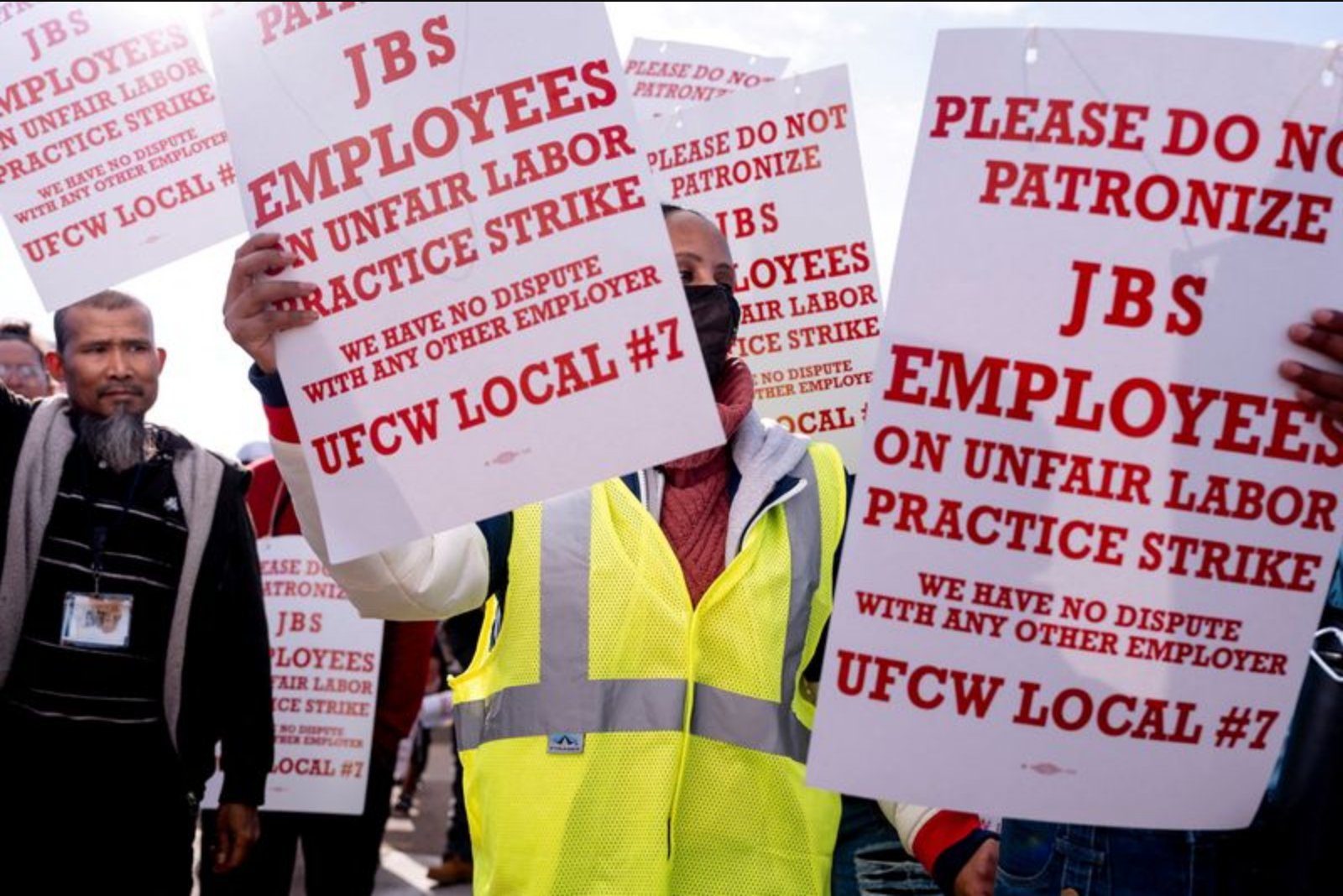
April 4 - Employees at the JBS beef processing facility in Greeley, Colorado have agreed to go back to work after the company committed to resume bargaining, the local union said on Saturday, ending a three-week picket.
The United Food and Commercial Workers Local 7, which represents about 3,800 workers at the plant, said the next round of negotiations is scheduled for April 9 and April 10. The strike had been mounted to press the company for wage increases that reflect inflation and to demand an end to company charges for replacing protective equipment.
"Workers remain united and will continue to fight until JBS fully ends its unfair labor practices," said Kim Cordova, president of the local union representing the Greeley workers. The union said it is seeking a contract offer that protects workers, provides respect, and pays a livable wage.
A company spokesperson said there had been no new agreement and that the original offer stood. "We are pleased to welcome our team members back and are preparing to resume and ramp up operations at the Greeley plant next week," the spokesperson added in an email.
The absence of the Greeley workforce had reduced U.S. processing capacity. The disruption occurred in a broader context in which beef prices reached record levels this year after the nation's cattle supply fell to a 75-year low. That decline in cattle availability drove record prices for meatpackers, including JBS, when buying cattle to slaughter, even as those companies saw benefits from climbing retail meat prices.
The dispute highlights tensions between plant-level labor actions and broader operational pressures on meatpackers. Industry players typically pursue efficiency by running facilities at high capacity to offset significant operating costs; a prolonged stoppage can therefore have an outsized effect on processing throughput.
Background and next steps
- The union confirmed the three-week picket has ended and indicated workers will return to their shifts.
- Negotiations are scheduled for April 9 and April 10 to address wages and company charges related to protective equipment.
- JBS has not changed its original offer and said it is preparing to ramp up operations once employees return.
Context on prices and capacity
Beef prices this year have hit record levels following a drop in the nation's cattle supply to its lowest point in 75 years. That scarcity translated into record purchase prices for processors buying cattle for slaughter. The strike at Greeley, which temporarily removed a portion of processing capacity from the market, added to capacity pressures at a time when some other facilities elsewhere were already operating at reduced levels.