
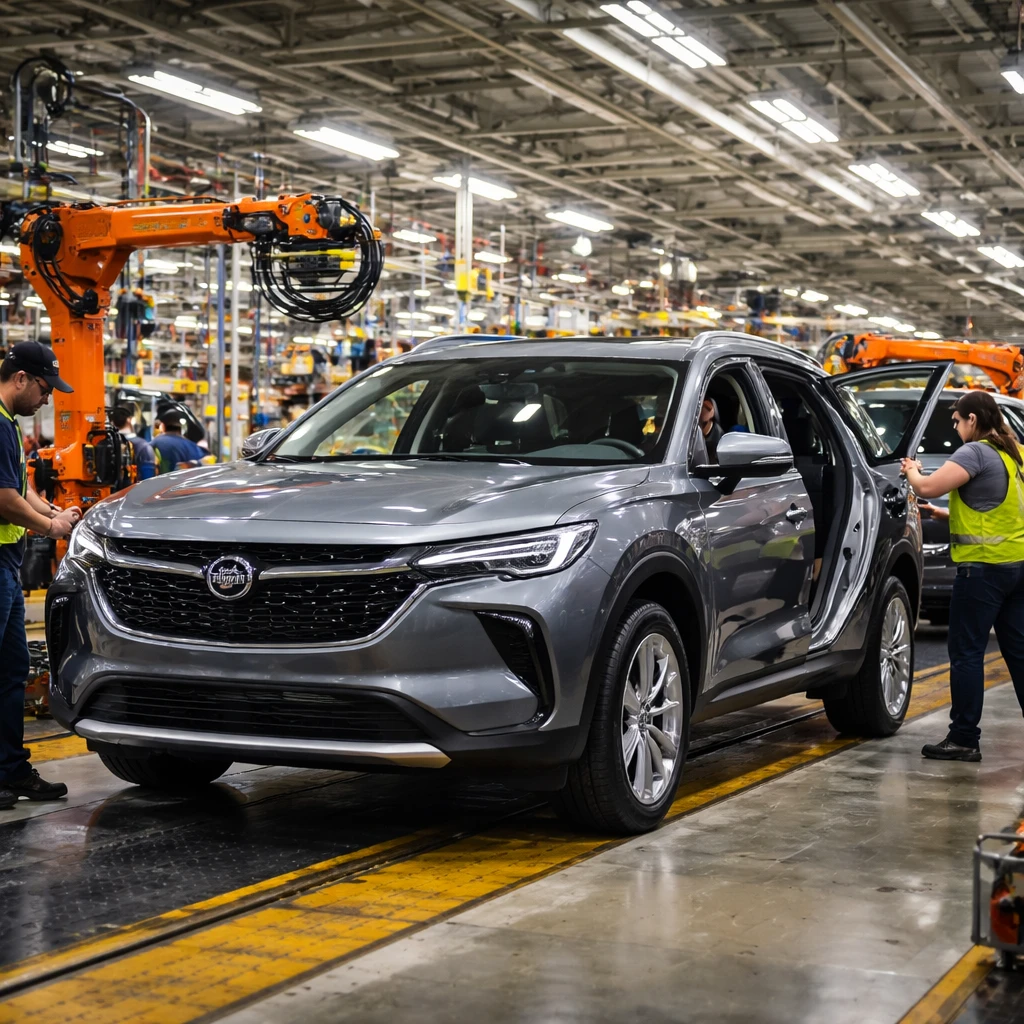
General Motors is relocating production of its Buick Envision SUV from China to the U.S., marking a significant adjustment in its manufacturing strategy to strengthen domestic operations and respond to longstanding trade tariffs. Starting in 2028, the next iteration of the Buick Envision will be produced at a plant near Kansas City, Missouri, ending nearly a decade of imports from China.
Key Points
- GM will manufacture the next generation Buick Envision SUV in the U.S. starting in 2028, ending imports from China.
- The shift supports GM’s effort to expand domestic factory work amid tariffs on Chinese-made vehicles.
- Production of Chevrolet Equinox and Blazer SUVs is also relocating to U.S. plants from Mexico, aligning with reshoring strategies.
General Motors (GM) has announced a strategic production shift for the Buick Envision, a midsize SUV that it has imported to the United States from China since 2017. The automaker will cease manufacturing the vehicle in China and instead begin producing the next generation exclusively at its facility in the Kansas City area, with production anticipated to start in 2028. This move is part of GM's broader effort to enhance its domestic manufacturing footprint and support employment within the U.S. auto industry.
The Buick Envision has been GM's sole Chinese-manufactured vehicle sold in the American market, subjected to a 25% tariff since 2018 under the former administration’s trade policies, without exemptions granted to GM. This SUV has drawn criticism from various stakeholders advocating for U.S. job protection, including leaders from the United Auto Workers union and political figures in swing states such as Michigan and Ohio, emphasizing the vehicle's symbolic role amid trade concerns.
The decision to relocate production aligns with recent GM initiatives addressing trade-related tariffs and reshoring. Last year, GM disclosed plans to relocate manufacturing of the Chevrolet Equinox SUV from Mexico to the same Kansas City-area plant, where the automaker has also commenced limited production of the all-electric Chevrolet Bolt. Following the conclusion of Bolt production, GM intends to convert this plant exclusively for combustion engine vehicles. The Equinox's production there is slated to begin in 2027.
Additionally, the company plans to transfer production of the Chevrolet Blazer SUV to its Spring Hill, Tennessee facility from Mexico by 2027, further consolidating production within the U.S. This series of adjustments reflects GM's response to tariff pressures and its commitment to strengthening domestic supply chains.
GM characterized the move as an enhancement to its U.S. manufacturing presence and a positive contribution to American employment. The company's reconfiguration of vehicle production demonstrates its strategic adaptation to evolving trade policies and market expectations. While production transitions pose operational challenges, these shifts also signal GM’s endeavor to align manufacturing with national economic and political priorities.
Risks
- Production transition may create operational challenges impacting supply chain and manufacturing efficiency.
- Ongoing trade policy uncertainties could influence future import tariffs and manufacturing decisions.
- Market dynamics and consumer acceptance of reshored vehicles may affect sales and financial performance.