
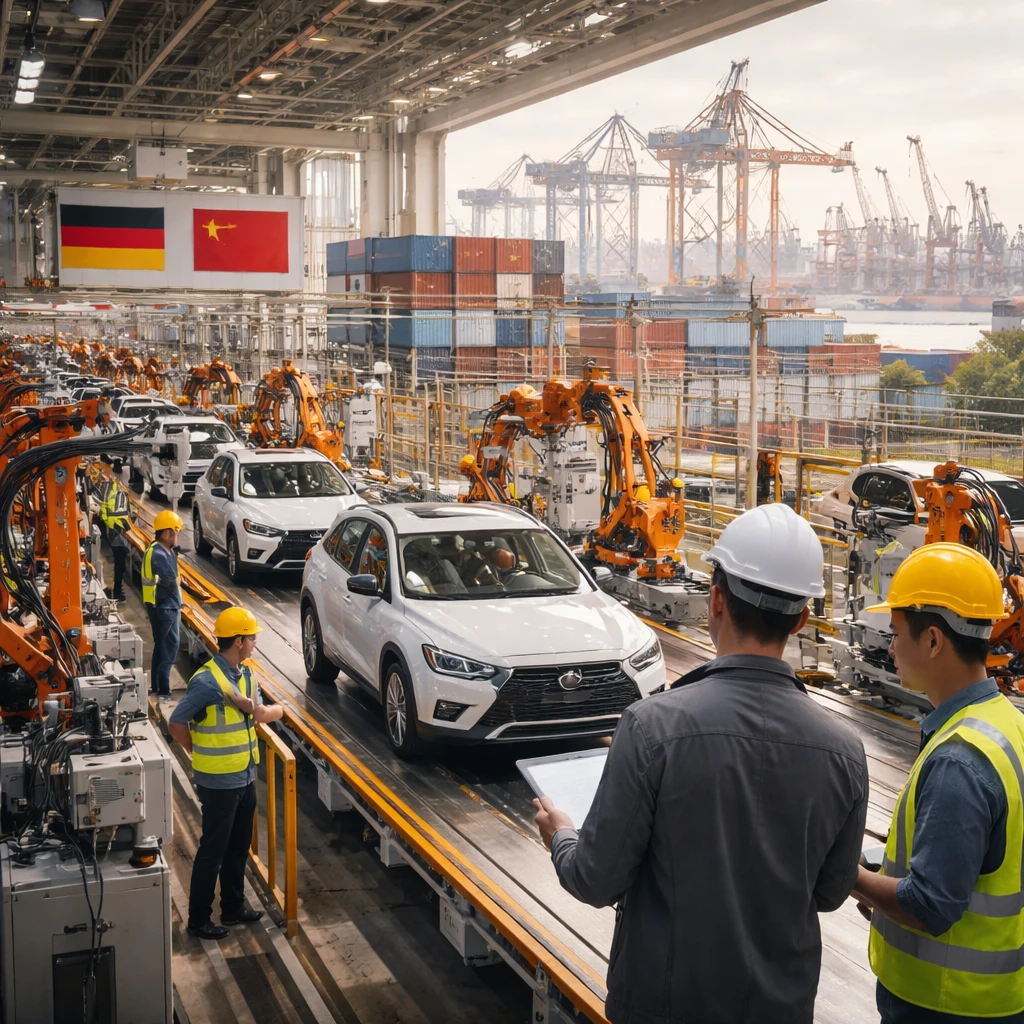
German firms increased their investment activity in China to levels not seen in four years during 2025, according to data compiled by the IW German Economic Institute and not previously reported. Between January and November last year, investments in China exceeded 7 billion euros, up 55.5% from the 4.5 billion euros logged in both 2024 and 2023.
The IW figures, which draw on data from Germany's Bundesbank, illustrate a material shift in where companies are directing capital as they respond to the changing trade landscape. Observers and company statements cited by the IW institute point to measures taken by the U.S. administration - including broad tariffs on EU imports - as one factor prompting European firms to accelerate expansion in China as an alternative market and production base.
Juergen Matthes, head of international economic policy at the IW institute, said German firms are intensifying their activities in China, noting a trend toward strengthening local supply chains. He added that fears of "geopolitical conflicts" are leading companies to scale up their China operations so these businesses can function more independently if major trade disruptions occur. Matthes reported that many companies are choosing to produce in China for the Chinese market to reduce the risk of being affected by possible tariffs and export restrictions.
The investment momentum spans sectors where German firms have significant exposure to Chinese demand. Large industrial and consumer-facing companies such as BASF and Volkswagen, technology and components suppliers like Infineon, and premium automakers including Mercedes-Benz remain heavily reliant on China, the market for a large share of global car and chemicals sales.
Concrete corporate action is evident at smaller industrial players as well. German fan and motor maker ebm-papst said it invested 30 million euros last year to expand its Chinese operations. The company reported that this sum represented more than one-fifth of its total investments, undertaken to enable production closer to its customer base. In a statement, ebm-papst described this approach as an "important anchor of stability, especially in times of tariffs and geopolitical tensions," and added that it planned to grow its U.S. business during the current year.
The IW report further notes that the 2025 investment total surpasses the 6 billion euro average recorded for the period from 2010 to 2024. The increase in investment flows to China coincides with shifts in bilateral trade rankings: China reclaimed its position as Germany's top trading partner last year after being overtaken by the United States in 2024, driven by rising imports from China.
Other indicators of the reorientation of German corporate capital include a reported near-halving of German investment in the United States during the first year of the U.S. president's second term, a trend referenced in recent reporting.
The IW data and company disclosures underline how concerns about tariffs, export restrictions and broader geopolitical tensions are influencing location decisions and capital allocation across several German industries, with potential consequences for supply chain design and market access strategies.
Methodology note - The investment figures cited are drawn from the IW German Economic Institute report based on Bundesbank data covering January to November 2025.