
Stock Markets January 21, 2026

Fortescue Reports Slight Drop in Iron Ore Output, Shipment Volumes Rise by 2% in Q2

Steady overseas demand supports shipments despite production dip, with cost challenges emerging

By Avery Klein FMG BHP RIO
Fortescue Reports Slight Drop in Iron Ore Output, Shipment Volumes Rise by 2% in Q2
FMG BHP RIO

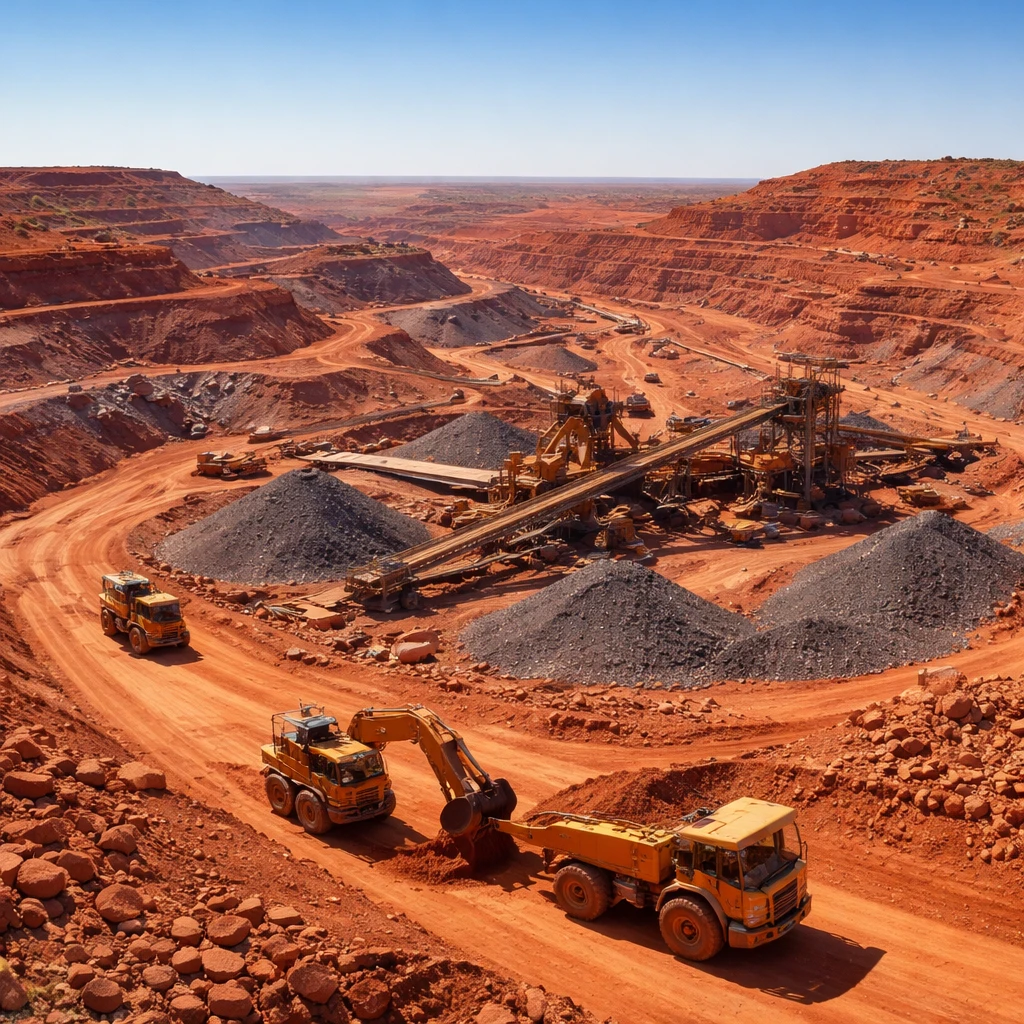
Fortescue Metals Group Ltd experienced a modest rise in iron ore shipments during the December quarter, increasing by 2% year-over-year to 50.5 million wet metric tonnes amid steady international demand. However, total iron ore production slightly declined by 1%, with hematite output dropping 8% but Iron Bridge project deliveries surging 71%. Production costs for hematite rose 5% but Fortescue maintains its 2026 production guidance and anticipates lower average unit costs moving forward. The company’s shipment growth aligns with trends observed among major competitors, though price pressures in negotiations with Chinese buyers may pose challenges ahead.

Key Points

  • Fortescue’s iron ore shipments rose 2% year-on-year in Q2, reaching 50.5 million wet metric tonnes, supported by stable global demand.
  • Overall iron ore production dipped 1%, with hematite output falling 8%, offset by a 71% jump in production at the Iron Bridge project.
  • Despite a 5% increase in hematite production costs to $19.10 per wmt in Q2, Fortescue reaffirmed its 2026 shipment guidance of 195-205 million mt and anticipates lower future unit costs.

Fortescue Metals Group Ltd, Australia's fourth largest iron ore producer, announced a 2% year-over-year increase in iron ore shipments for the quarter ending December 31, with deliveries totaling 50.5 million wet metric tonnes (wmt). This uptick occurred against a backdrop of steady demand from international markets, supporting Fortescue's ability to increase volume despite a slight reduction in overall output.

During the same period, total iron ore mined fell marginally by 1% compared to the previous year, reaching 61.4 million wmt. A notable decline was observed in hematite production, the iron-rich ore, which decreased by 8% year-over-year to 52.0 million wmt. In contrast, production from the company's Iron Bridge project in the Pilbara region of Australia displayed significant growth, surging by 71% to 9.4 million wmt, indicating successful expansion efforts within that asset.

However, the cost structure for hematite mining saw an increase, with production costs climbing 5% year-over-year to $19.10 per wmt. Despite this cost rise in the December quarter, Fortescue has maintained its guidance for 2026, projecting iron ore shipments within the range of 195 to 205 million tonnes. The Iron Bridge project is expected to contribute between 10 to 12 million tonnes towards this target. The company anticipates that hematite production costs will average between $17.50 and $18.50 per wmt in the future, indicating an expectation of improved operational efficiencies or cost reductions.

Capital expenditure related to metals is forecasted between $3.3 billion and $4.0 billion. Concurrently, energy costs and other operational expenses are estimated at $300 million and $400 million, respectively, reflecting the scale and complexity of Fortescue’s mining operations.

The shipment increase at Fortescue aligns with improvements reported by major rivals BHP Group Ltd and Rio Tinto Ltd during the same quarter, driven largely by robust overseas demand. Yet, BHP has highlighted a trend of accepting lower prices in negotiations with Chinese buyers, a scenario that Fortescue and other Australian producers may encounter. The increase in Chinese iron ore inventories projected through 2025 is likely to strengthen Beijing’s position in price negotiations for future shipments, adding a degree of uncertainty to the market landscape.

Risks

  • Potential price pressures arising from negotiations with Chinese buyers accepting lower prices, impacting revenue within the iron ore sector.
  • Rising Chinese iron ore inventories through 2025 could grant Beijing increased leverage to negotiate more favorable shipment terms, feeding volatility into the market.
  • Increased hematite production costs in the near term may compress margins if efficiencies or cost reductions are not realized as anticipated.

More from Stock Markets

SharonAI Files to Uplist to NASDAQ, Seeks $49-$51 Range for IPO Feb 2, 2026 Intesa Sanpaolo Says Domestic Lead Intact as UniCredit-Generali Talks Surface Feb 2, 2026 S&P 500 Pauses Near Flatline as Earnings Season Fails to Produce Typical Gains Feb 2, 2026 Obesity Drug Market Peak Shrinks as Pricing, Competition and Pills Reshape the Outlook Feb 2, 2026 Hedge Funds Shift Away from North America as Policy Uncertainty and Dollar Weakness Reshape Allocations Feb 2, 2026