
Stock Markets March 13, 2026 03:21 PM

Firefly Neuroscience Shares Soar After EEG Research Points to ADHD Subtype Differentiation

Company says FDA-cleared Evoke System and AI-enabled EEG/ERP analysis may help distinguish hyperactive, inattentive and combined ADHD subtypes

By Avery Klein AIFF
Firefly Neuroscience Shares Soar After EEG Research Points to ADHD Subtype Differentiation
AIFF

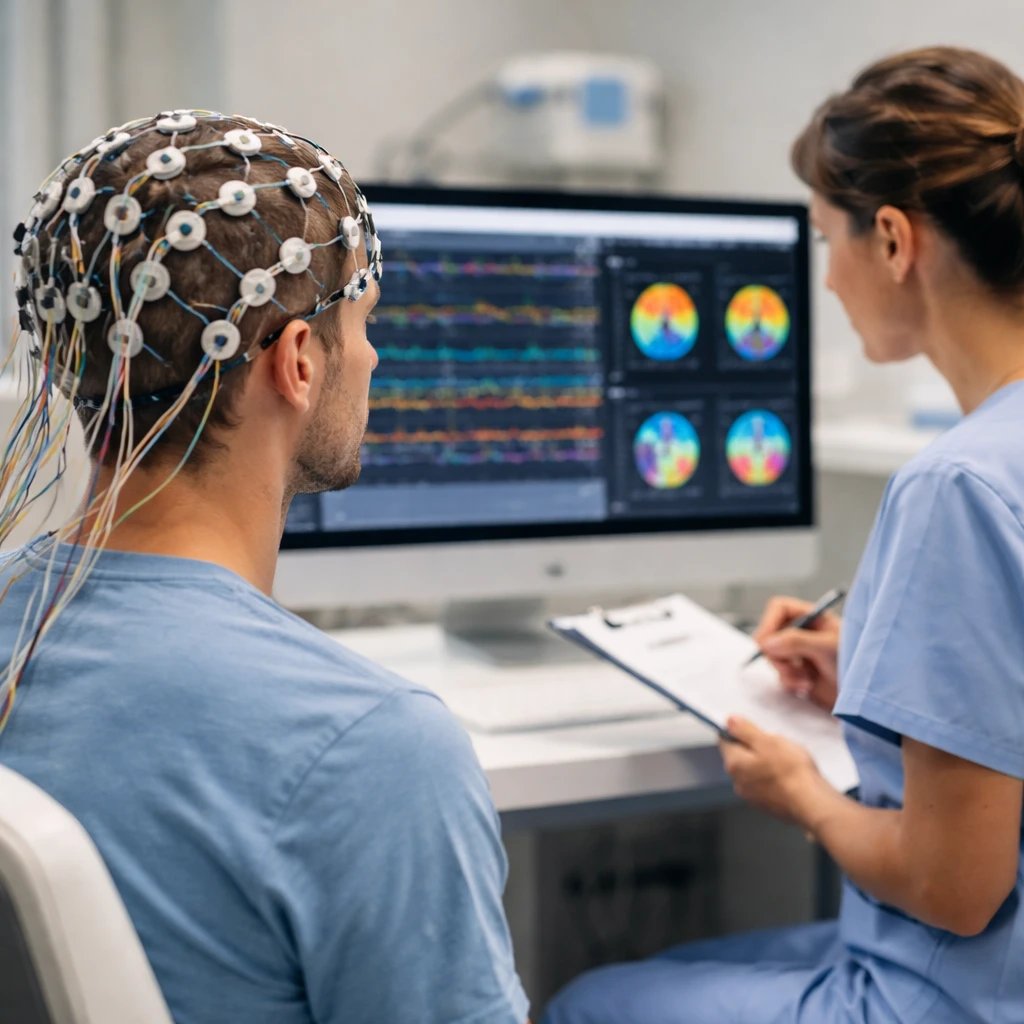
Firefly Neuroscience's stock surged after the company reported research advancements using its AI-powered EEG/ERP platform that could help differentiate the three primary ADHD subtypes. The firm's FDA-510(k)-cleared Evoke System collected resting and cognitive EEG scans that the company says may indicate whether a patient is hyperactive and impulsive, inattentive, or has the combined form of ADHD. Firefly highlighted prior peer-reviewed support and its large brain-scan repository and GPU access as elements of its development roadmap.

Key Points

  • Firefly's stock jumped 47.7% after reporting that its AI-powered EEG/ERP system may help distinguish the three primary ADHD subtypes.
  • The company's FDA-510(k)-cleared Evoke System collected Resting EEG and Cognitive EEG scans that the company says could identify hyperactive and impulsive, inattentive, or combined subtypes.
  • Firefly points to peer-reviewed research and a repository of over 191,000 brain scans, plus NVIDIA GPU acceleration, as foundations for building an EEG/ERP brain foundation model. Sectors impacted include healthcare diagnostics, neurotechnology, and medical device markets.

Firefly Neuroscience Inc (NASDAQ:AIFF) saw its share price jump 47.7% on Friday after the company disclosed research progress suggesting its AI-enabled EEG/ERP technology could help distinguish among the three main subtypes of attention-deficit/hyperactivity disorder.

The company said its Evoke System - which is cleared under FDA 510(k) - gathered Resting EEG and Cognitive EEG brain scans that may assist clinicians in identifying whether a patient presents with the hyperactive and impulsive subtype, the inattentive subtype, or the combined subtype of ADHD. Firefly noted that the U.S. treatment market for ADHD is estimated at over $10 billion.

Firefly framed the technology as a complement to current, subjective symptom checklists by offering neural signal-based precision. Company materials say this approach could help determine appropriate treatment types, guide dosage decisions, and provide an objective way to monitor whether interventions are working at the neurological level. The filing underlines that more than 22 million Americans are diagnosed with ADHD, yet an objective biological marker that distinguishes subtypes has not been established.

The firm pointed to peer-reviewed research underpinning its methodology, citing a study published in Frontiers in Psychiatry that demonstrated the diagnostic utility of EEG-based brain activity flow pattern analysis in patients with ADHD. In describing the potential clinical value, Gil Issachar, Firefly's Chief Technology Officer, said:

"Firefly’s EEG/ERP platform can leverage subtype-specific biomarker profiles to inform personalized treatment recommendations, potentially improving outcomes for the millions currently on generalized ADHD treatment plans. We believe that the technology also opens the door to ongoing treatment monitoring - allowing clinicians to objectively track whether an intervention is working at the neurological level."

The announcement also reiterated Firefly's longer-term technical objectives. The company said it is building an EEG/ERP brain foundation model trained on a repository of over 191,000 brain scans, and it has access to NVIDIA GPU acceleration to support next-generation EEG/ERP processing.


Below are concise takeaways, key points and risks drawn directly from the company's disclosure and supporting materials.

Risks

  • The company describes its Evoke System's scans as potentially helpful - language that reflects ongoing uncertainty about the technology's ability to reliably distinguish ADHD subtypes in broader clinical practice. This uncertainty affects clinical diagnostics and healthcare adoption.
  • An objective biological marker for ADHD subtypes has historically been elusive, a limitation the company acknowledges and which bears on regulatory, clinical and reimbursement pathways in the healthcare and medical device sectors.
  • While supported by prior peer-reviewed work, the announcement does not assert universal clinical validation; the extent to which the technology will translate into changes in prescribing, dosage decisions, or monitoring routines remains to be demonstrated, impacting pharmaceutical and clinical service markets.

More from Stock Markets

Tech and Energy Stocks Drive Wide Swings as Mega-Caps Lead Movers Apr 8, 2026 Markets Brace for Core PCE, Jobless Claims and GDP Data on April 9, 2026 Apr 8, 2026 SpaceX assembling a vertically integrated 'sovereign' AI stack, Munster says Apr 8, 2026 Trio Petroleum Shares Plummet After Fresh At-the-Market Share Sales Apr 8, 2026 Plus Therapeutics Shares Jump After FDA Grants Orphan Drug Status to REYOBIQ Apr 8, 2026