
Stock Markets April 10, 2026 12:36 PM

FERC Clears NextDecade to Expand Workforce and Allow Around-the-Clock Work at Rio Grande LNG

Federal approval lifts cap on peak construction personnel and permits night and weekend shifts as NextDecade accelerates construction of five-train export terminal

By Caleb Monroe NEXT
FERC Clears NextDecade to Expand Workforce and Allow Around-the-Clock Work at Rio Grande LNG
NEXT

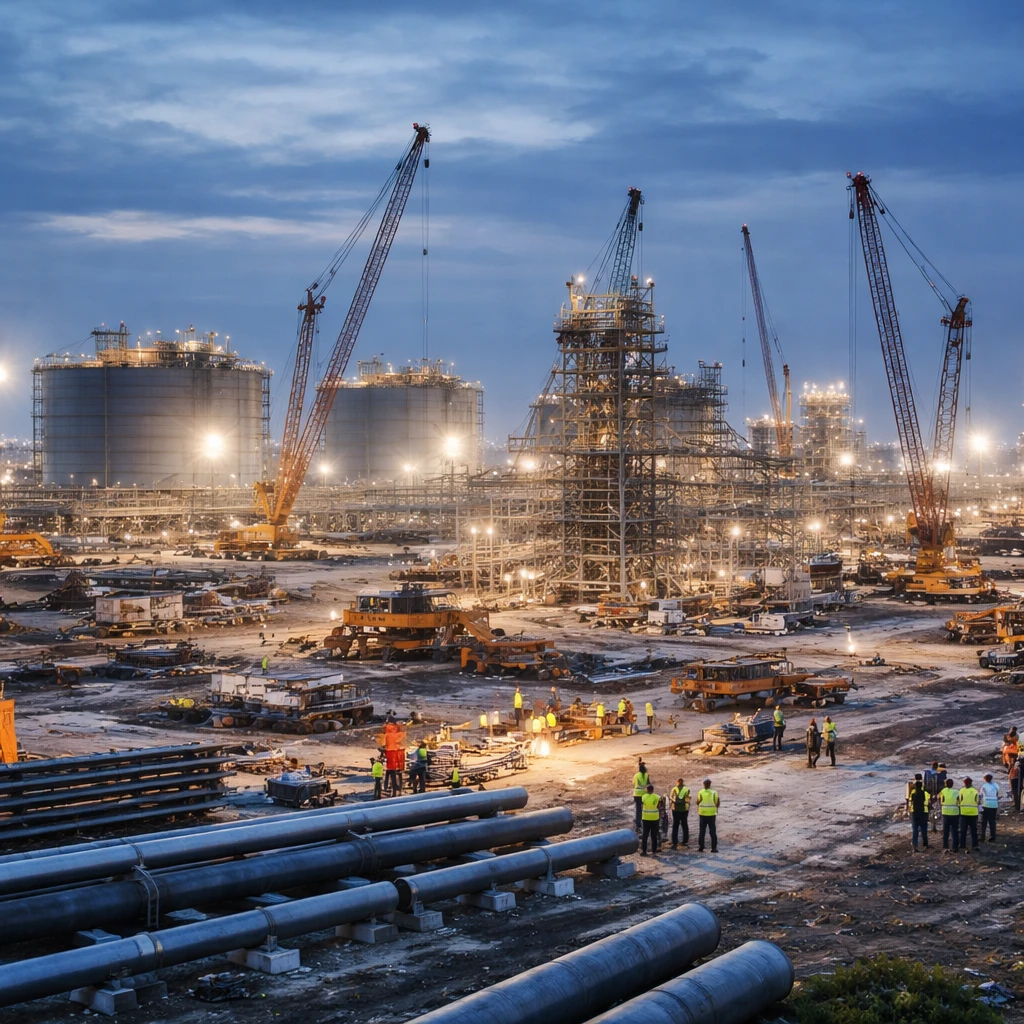
Federal regulators have approved NextDecade's request to raise the peak construction workforce at its Rio Grande LNG project in Texas and to permit continuous, 24/7 construction activity. The company sought the changes to hasten delivery of new liquefied natural gas supply amid heightened global demand tied to geopolitical tensions and disruptions to other major exporters.

Key Points

  • FERC approved NextDecade's request to raise the Rio Grande LNG peak construction workforce from 5,225 to 7,500 and to permit round-the-clock construction.
  • NextDecade cited heightened global demand for U.S. LNG amid geopolitical tensions and supply disruptions tied to damage at a major producer, which could remove up to 12.5 million metric tons from global supplies for up to five years.
  • The firm is building five liquefaction trains at Rio Grande LNG with combined capacity of about 30 million metric tons per year, and said two additional trains increased manpower and scheduling needs.

HOUSTON, April 10 - Federal energy regulators on Friday approved NextDecade's petition to increase the maximum number of construction workers at its Rio Grande LNG export terminal in Texas, according to a regulatory filing.

NextDecade told regulators the move responds to intensified global demand for U.S. liquefied natural gas (LNG) driven by geopolitical tensions. The filing cites supply challenges connected to the Iran war, stating that QatarEnergy has been unable to export LNG following damage to its plant, a disruption that could remove as much as 12.5 million metric tons from global supplies for up to five years.

In a filing dated last Friday, NextDecade requested that the Federal Energy Regulatory Commission (FERC) allow an increase of 2,275 workers to raise the peak construction workforce to 7,500, up from the previously authorized 5,225. The company said the additional manpower is necessary to accelerate construction of the liquefied natural gas export terminal.

Regulators must sign off on higher manpower levels at LNG construction sites to ensure projects remain within preapproved environmental conditions and to monitor potential impacts on the host communities. NextDecade stated that its decision to build two additional liquefaction trains at the site has increased labor requirements and created the need for construction to occur at night and on weekends.

FERC's approval covered both the requested increase in construction personnel and the permit for round-the-clock work, the filing showed. NextDecade is constructing five liquefaction trains at Rio Grande LNG with combined annual capacity of about 30 million metric tons.


Context and implications

The approved changes allow NextDecade to expand on-site staffing and schedule work continuously to meet compressed timelines. The company framed the acceleration as a response to market dynamics that have increased demand for U.S. LNG supply.

Regulatory oversight remains in place to ensure the expanded operations conform to environmental and community impact conditions that were preapproved for the project.


Project snapshot

  • Peak authorized workforce before approval: 5,225 workers.
  • New authorized peak workforce after approval: 7,500 workers.
  • Increase requested: 2,275 workers.
  • Planned liquefaction trains at Rio Grande LNG: five.
  • Combined capacity: about 30 million metric tons per annum.

Risks

  • Ongoing supply disruption from damage at a major producer could sustain global LNG tightness for up to five years, affecting energy markets and project economics - impacts felt across the energy and commodities sectors.
  • Larger, around-the-clock construction operations may increase environmental and community impacts that regulators monitor, posing risks to permitting and local relations - implications for construction and local economies.
  • Accelerating construction to meet market demand could strain project management and execution, with potential operational and labor-scheduling challenges - relevant to construction and energy project delivery sectors.

More from Stock Markets

Nike's Innovation Leadership Sees Another Change as Chief Departs Apr 10, 2026 Market Movers Friday: Avago, AMD Gain While Costco, Several Tech Names Retreat Apr 10, 2026 Existing-home sales report takes center stage for markets on Monday Apr 10, 2026 AI Deals and Security Concerns Drive This Week's Market Movers Apr 10, 2026 Burry Discloses New Stakes in JD.com, Alibaba and Others; Expands Nvidia Put Position Apr 10, 2026