
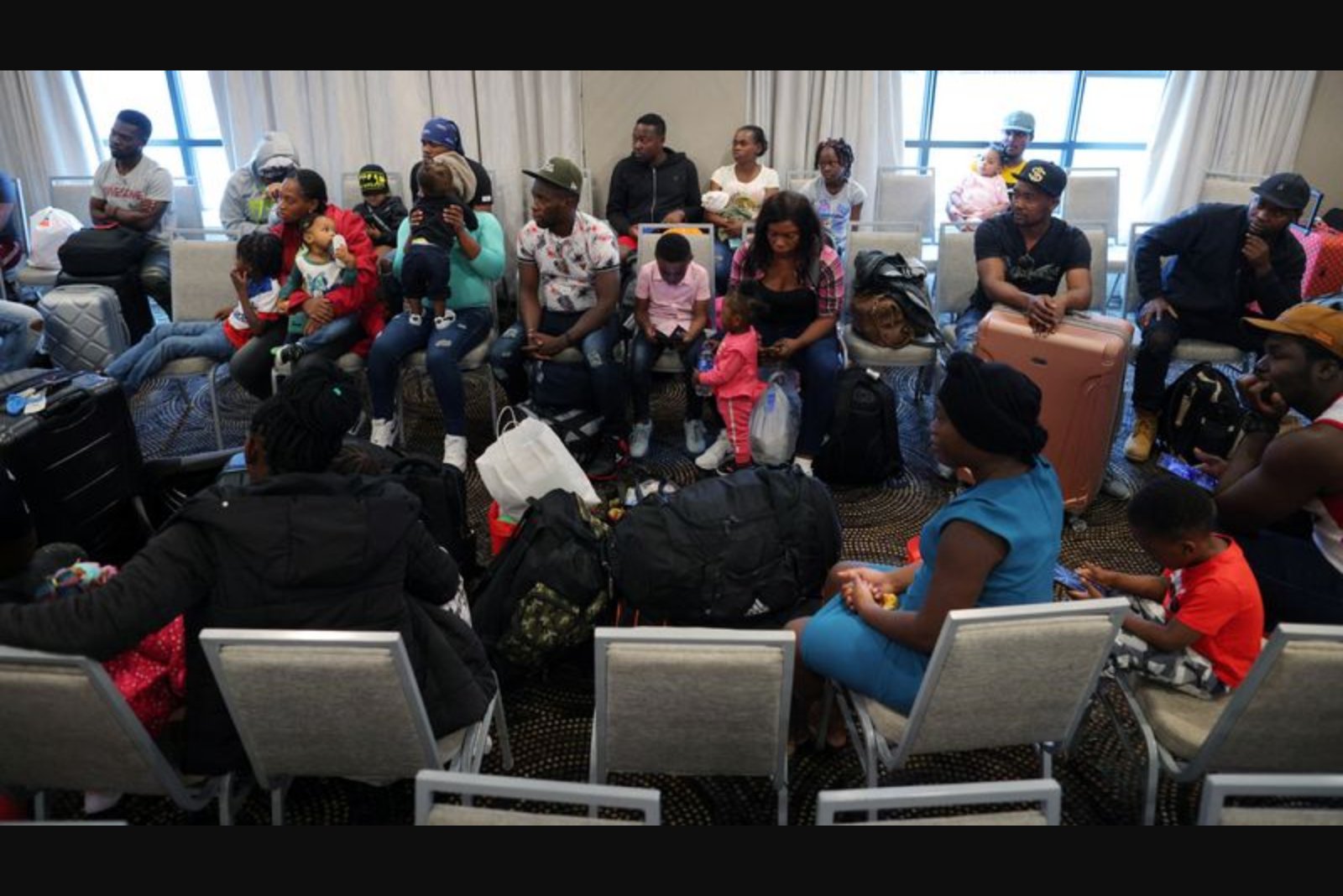
A federal judge on Monday issued an injunction preventing the U.S. Department of Homeland Security from rescinding legal protections that allow more than 350,000 Haitian nationals to remain and work in the United States temporarily. The ruling, handed down by U.S. District Judge Ana Reyes in Washington, D.C., stops the department’s effort to terminate Haiti’s Temporary Protected Status - a move that, if allowed to proceed, would have taken effect on Wednesday.
The court action came in response to a class action lawsuit filed by Haitians seeking to block the administration’s plan to end TPS and thereby expose them to potential removal. The ruling keeps in place protections for beneficiaries of TPS at a time when violence in Haiti has intensified and forced widespread displacement.
TPS is a humanitarian immigration designation available when a country has experienced a natural disaster, armed conflict or other extraordinary conditions. The status confers temporary protection from deportation and grants eligible migrants authorization to work.
Haiti was first designated for TPS in 2010 following a catastrophic 7.0 magnitude earthquake. Since then, U.S. administrations have repeatedly extended the designation. The most recent extension was implemented by the Biden administration in July 2024, which extended TPS for Haiti for 18 months through February 3, 2026. At that time, the department cited a combination of economic, security, political and public health crises - including the role of gangs and the absence of a functioning government - as reasons the country remained unsuitable for return.
The Trump administration has sought to narrow TPS protections for a number of countries, arguing that the program was intended to be temporary and not a substitute for permanent immigration relief. After President Trump took office, his administration moved in February 2025 to curtail the Biden-era extension for Haiti, instructing that the extension be truncated so it would expire in August of that year.
That effort met judicial resistance. In July, a federal judge in New York ruled that Homeland Security Secretary Kristi Noem did not have statutory authority to shorten the extension. Undeterred, the department renewed efforts later in the year - in November - to terminate Haiti’s TPS designation entirely, asserting there no longer were "extraordinary and temporary conditions" preventing returns.
The humanitarian situation described by agencies monitoring the country underscores the stakes of the legal dispute. Reports in October estimated that more than half of Haiti’s population - over 6 million people, including approximately 3.3 million children - were in need of humanitarian assistance. Separately, violence and instability have displaced in excess of 1.4 million residents inside Haiti.
Judge Reyes’ injunction now pauses DHS’s planned termination, preserving the legal protections and work authorizations for the affected Haitian nationals while the litigation proceeds. The court’s decision follows the procedural history of challenges to DHS actions and leaves the ultimate status of Haiti’s TPS dependent on further legal rulings.
What this means
- For beneficiaries: The ruling maintains current protections against deportation and keeps work authorizations in force for roughly 350,000 Haitian nationals.
- For DHS policy: The injunction halts a high-profile component of the administration’s effort to reduce TPS designations pending further court decisions.
- For humanitarian concerns: The legal pause aligns with assessments pointing to severe violence, large-scale displacement and acute humanitarian needs within Haiti.