
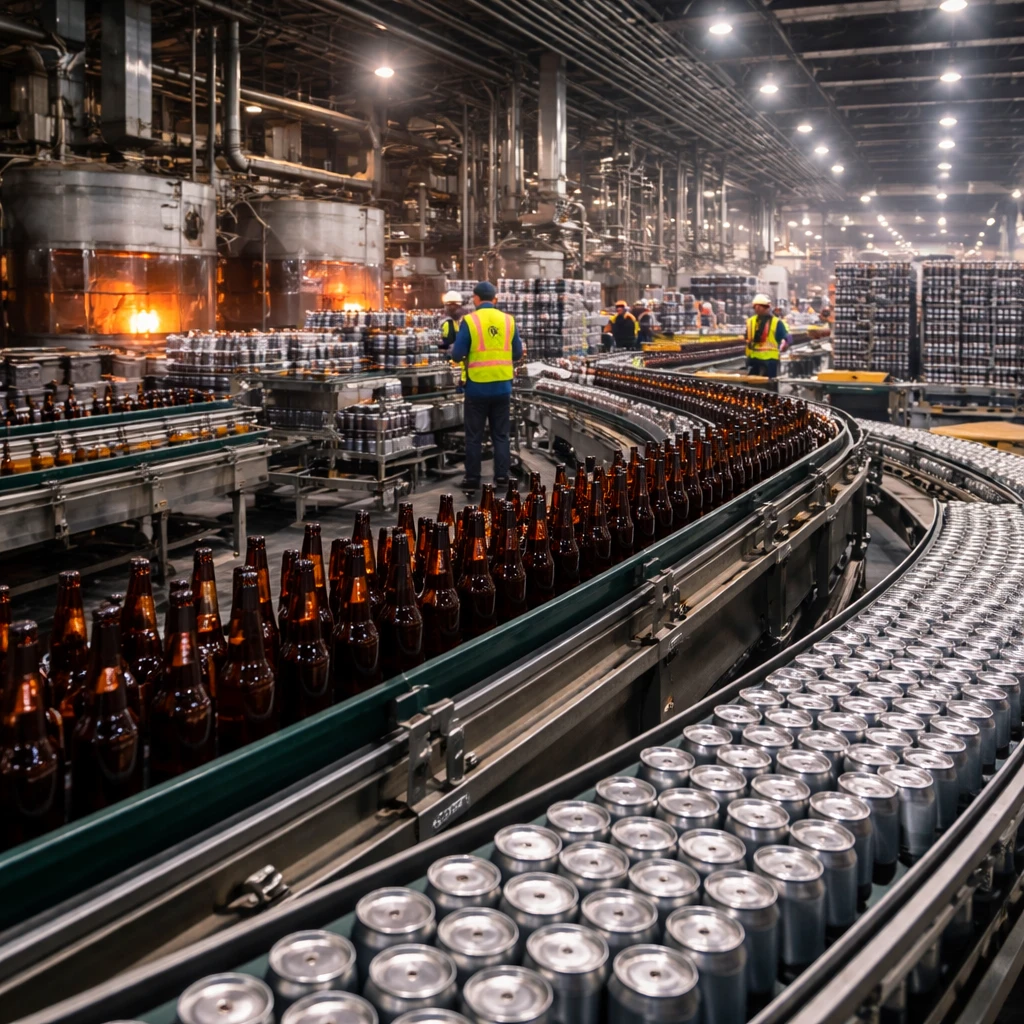
The Federation of European Businesses in India has formally requested that the Indian government waive the 10% import duty on glass bottles and aluminum cans, citing an acute packaging squeeze that is threatening operations for several large alcohol brands operating in the country.
In a letter dated April 2, the federation told authorities that its members - including Pernod Ricard, Anheuser-Busch InBev, Heineken and Carlsberg - are finding it increasingly difficult to secure sufficient packaging material as disruptions tied to the ongoing Iran conflict ripple through supply chains, Reuters reported.
The plea puts a spotlight on pressure building across India’s alcohol sector, which is valued at roughly $65 billion. Industry officials say higher prices for glass bottles, cartons and labels have been driven by the Middle East crisis, while domestic suppliers are operating below full capacity.
That constrained domestic output comes as companies face limits on their ability to adjust retail prices. In about two-thirds of India’s 28 states, changes to consumer prices for alcoholic beverages require government approval, restricting firms from freely passing on rising input costs to buyers.
Producers are already absorbing notable cost inflation. The industry is seeing up to 15% increases in raw-material costs for items such as cartons and adhesives. The federation’s letter argued a temporary duty exemption on imported aluminum cans and glass bottles would provide breathing room for businesses, warning that turning to alternative international suppliers could raise procurement costs by another 30%.
Industry data referenced in the correspondence indicate market concentration among international players. Euromonitor figures show Heineken as holding the largest share of India’s beer market, while Diageo and Pernod Ricard lead the spirits segment by volume. Beer producers, in particular, have already begun seeking price increases in several states, the Brewers Association of India has said.
Vinod Giri, director general of the Brewers Association of India, said the conflict has markedly reduced domestic supplies of glass bottles and cans, leaving brewers with little alternative but to import packaging. He added that surging international prices, together with depreciation of the Indian rupee, have pushed the cost of imported cans and bottles higher for local buyers.
Some industry sources have told Reuters that firms are exploring Southeast Asia as an alternative sourcing region. There are concerns that inventories of cans and bottles could be exhausted as soon as May if current supply trends persist.
The packaging bottleneck is compounded by broader energy pressures affecting Indian industry. Glass manufacturing is energy intensive and relies on fuels such as liquefied natural gas. The article noted that imports of liquefied natural gas fell in March to their lowest level since January 2025, based on LSEG data, fuelling further concerns about domestic production capacity for glass.
Authorities have also moved to curb allocations of some fuels. The government announced a cap on liquefied petroleum gas allocations to selected commercial users at 70% of pre-crisis volumes, a measure that could intensify production constraints for energy-dependent manufacturers.
Key points
- European alcohol firms have asked India to temporarily waive a 10% import duty on glass bottles and aluminum cans amid supply disruptions tied to the Iran conflict and rising international prices.
- The Indian alcohol industry, valued at about $65 billion and projected to grow rapidly, is facing raw-material cost increases up to 15% and potential procurement cost rises of up to 30% if alternate sourcing is required.
- Energy constraints and reduced LNG imports are worsening domestic glass production capacity, and regulatory limits restrict many companies from freely raising retail prices.
Risks and uncertainties
- Supply risk: If domestic glass and can supplies remain constrained and imports are delayed or more costly, production lines could face interruptions, affecting beverage output and inventory levels - impacting the beverage manufacturing and retail sectors.
- Cost risk: International price spikes and a weaker rupee could materially raise procurement costs, squeezing margins for producers who cannot pass on costs in many states - relevant to consumer staples and packaging suppliers.
- Energy and production risk: Reduced LNG imports and limits on LPG allocations to commercial users may further constrain glass manufacturing capacity, creating additional supply-side pressure on packaging availability.
Industry participants have urged a temporary policy response to avoid a deeper supply shortfall ahead of the summer months. The federation warned that without relief, shifting procurement to other countries may inflate costs substantially, while domestic energy and manufacturing pressures remain unresolved.