
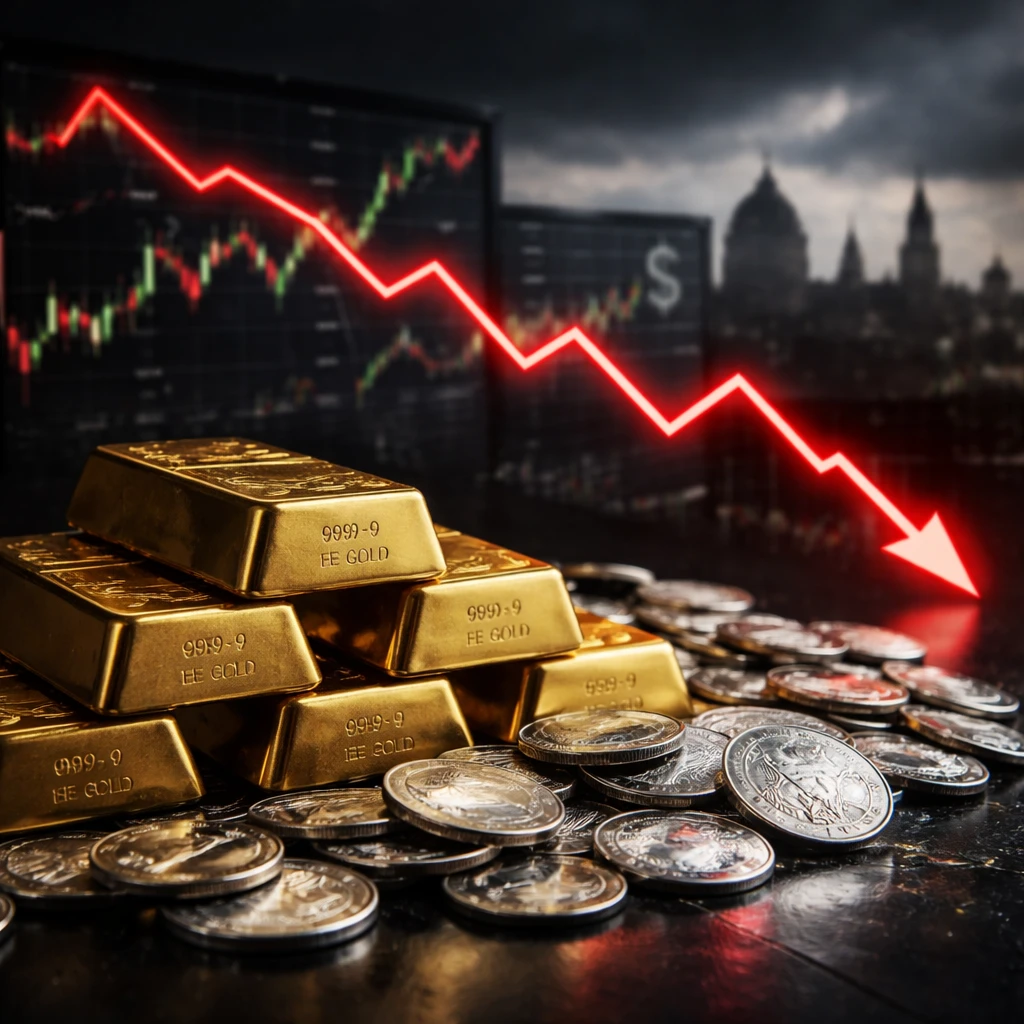
European mining shares slipped on Monday as both gold and silver extended a sharp sell-off that began late last week. The pullback in precious metals came as a stronger dollar and investor profit-taking removed momentum from a rally that had propelled both metals to fresh highs days earlier.
Spot gold fell nearly 5% to around $4,634 an ounce by 08:58 GMT, following a near-10% drop on Friday that pushed prices back below the $5,000 mark. Silver continued to trade under heavy pressure after its violent rout at the end of last week, during which it suffered its steepest one-day decline since 1980. Spot silver was last down more than 12% before trimming losses to roughly $78.53 an ounce in early U.S. trading.
The weakness in bullion translated into early losses for mining stocks across Europe. Glencore opened down about 3.5%, Anglo American fell 3.7% and ArcelorMittal slipped roughly 1.5%. Precious-metals-focused names were hit particularly hard - Fresnillo tumbled as much as 6.3% while Antofagasta lost around 5%.
The sell-off in the metals was compounded by higher margin requirements for futures trading announced by CME Group, set to take effect after Monday's close. Margins on COMEX gold futures were raised from 6% to 8%, while margins on silver contracts were increased from 11% to 15%. The margin hikes make leveraged positions more costly and can accelerate de-risking by speculators and funds.
Market participants and analysts said the recent move lower followed Friday's abrupt reversal, when earlier enthusiasm tied to the prospect of U.S. rate cuts met increased uncertainty about leadership at the Federal Reserve. That shift in sentiment took place after President Donald Trump nominated former Fed governor Kevin Warsh to succeed Chair Jerome Powell when his term ends in May, a development that added to doubts about the central bank's path.
At the same time, the dollar index has strengthened since last week, putting additional pressure on bullion. A firmer dollar tends to make dollar-priced metals more expensive for overseas buyers, while rising interest-rate expectations reduce the relative appeal of non-yielding assets versus U.S. Treasurys.
Despite the recent fall, both metals remain ahead for the year. Silver is up around 16% year-to-date, while gold is roughly 8% higher so far this year. Both metals also posted dramatic gains last year, rising about 65% and 145%, respectively.
Market context and implications
- Precious metals and mining equities reacted sharply to a combination of a stronger dollar, higher futures margin requirements and profit-taking by investors.
- Higher margin calls on COMEX contracts raised the cost of leveraged long positions in gold and silver, potentially accelerating short-term selling.
- Changes in Fed leadership expectations and renewed uncertainty around U.S. rate trajectories contributed to the reversal in sentiment.