
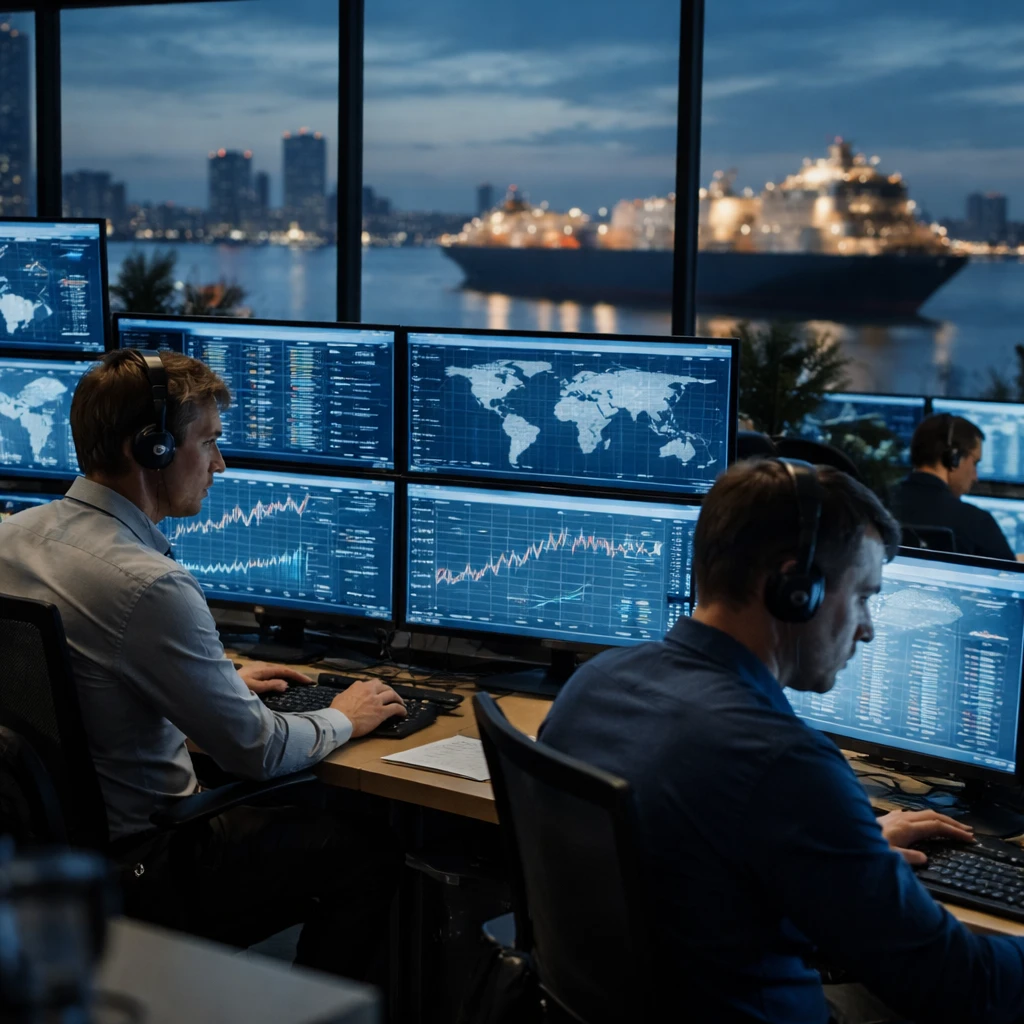
The Intercontinental Exchange (ICE) has announced a permanent extension of trading hours for European gas and power contracts, more than doubling the active trading window to 21 hours per day from the longstanding 10-hour daytime schedule. The change aligns European benchmarks more closely with U.S. and Asian hubs and acknowledges Europe’s evolving position as a major node in the global liquefied natural gas (LNG) market.
Under the new timetable, the Dutch TTF - Europe’s principal gas benchmark - will open at 5:50 a.m. Singapore time on Monday, making it the first major energy contract to begin the global trading week. Market participants say this earlier start allows ‘‘global players’’ to act promptly on overnight geopolitical developments.
The timing of this overhaul comes amid heightened price sensitivity across European gas markets. Contracts in the region remain nearly 40% higher than levels recorded before the referenced conflict. The shift from a market largely supplied by pipelines to one increasingly reliant on global LNG imports has exposed European prices to influences originating well beyond the continent, including regulatory decisions in the United States and demand movements in Asia.
Traders and risk managers describe the contemporary market as having moved beyond being driven primarily by weather patterns and storage metrics. The expanded trading schedule is intended to facilitate more complex cross-market hedging strategies, particularly against the U.S. Henry Hub benchmark, and to accommodate growing participation from hedge funds and algorithmic trading firms.
Responses among market actors are mixed. Cross-commodity hedge funds in Chicago and Miami have greeted the change positively, viewing the longer hours as an opportunity to deploy capital and strategies across a broader window. By contrast, trading desks based in European financial centers are facing immediate operational challenges.
The extended 21-hour trading day fragments traditional intraday rhythms and forces firms to make difficult choices: either recruit additional staff to cover overnight exposure or require existing personnel to extend monitoring duties into late evening and overnight periods. For many London and Amsterdam desk staff, the change has direct human implications. Traders have voiced concerns about work-life balance, especially since market-moving "X" posts from Washington on developments in the Iran conflict often arrive during European evening hours.
Proponents of the expansion argue it could reduce the incidence of volatile "gap openings" by allowing continuous price discovery across a much longer portion of the day. Opponents warn that liquidity could be spread too thin across the extended hours, which in turn may heighten the risk of sharp price swings during low-volume intervals.
What this means for markets
- Benchmark alignment with U.S. and Asian hubs supports more integrated cross-market hedging.
- Growing influence of global LNG flows is increasing Europe's sensitivity to overseas disruptions.
- Operational and human-resources strains for European trading desks are likely to intensify.