
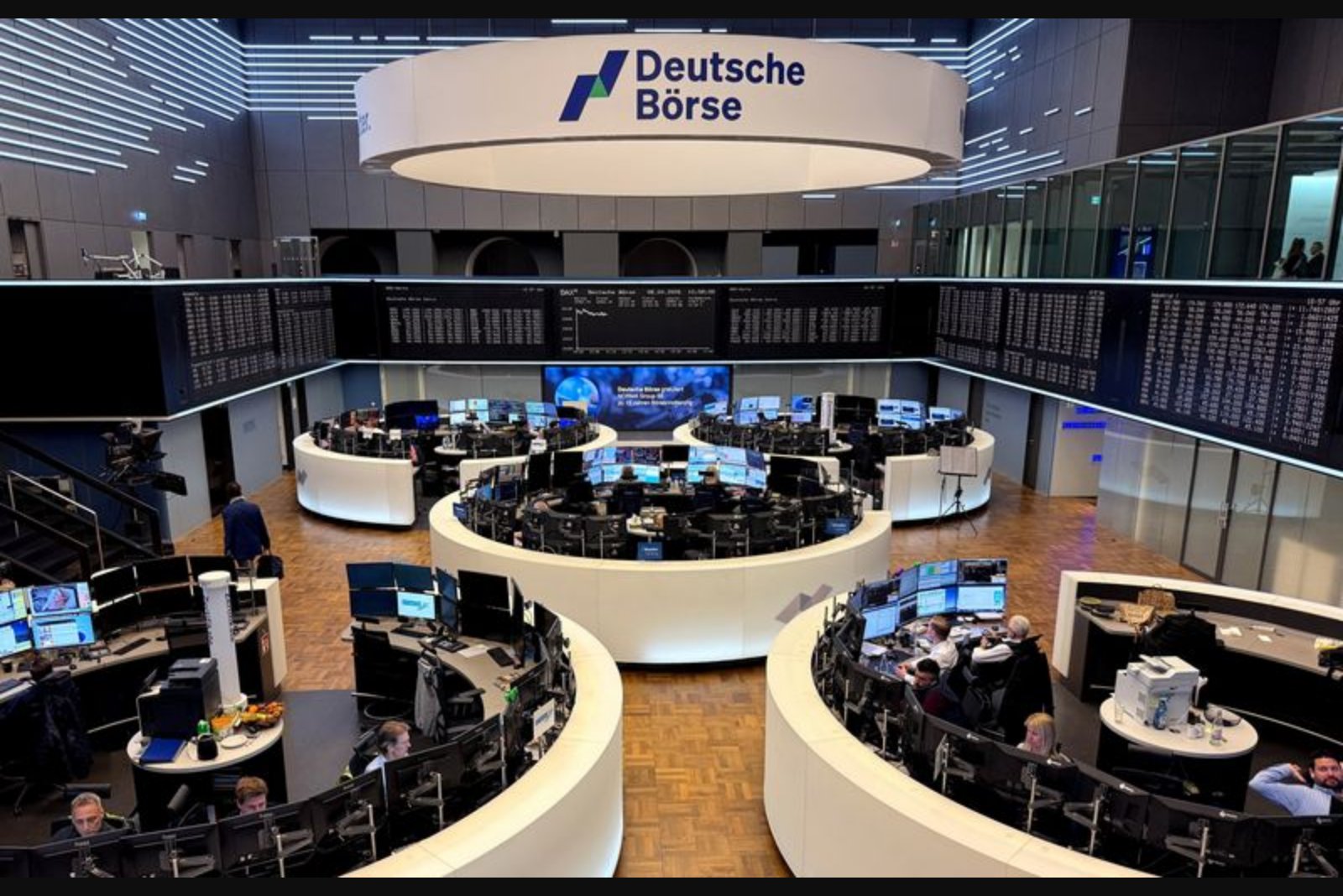
April 13 - European stock futures opened under pressure on Monday as hopes for a rapid diplomatic resolution to the Middle East conflict diminished following the breakdown nL6N40V09S of high-level U.S.-Iran talks. Futures tied to the STOXX 600 were down about 1.3% at 06:43 GMT, with contracts on Germany's DAX off 1.5% and France's CAC 40 down roughly 0.5%.
Investor concern intensified after U.S. officials announced preparations to blockade the strategically vital Strait of Hormuz, a move that would threaten Iran's ability to export oil if implemented. The prospect of a disruption to Iranian crude flows helped push oil prices back above the $100-per-barrel threshold, reviving inflationary pressures that had begun to ease in recent weeks.
The STOXX 600 had climbed 3% in the prior week, bolstered by earlier reports of a U.S.-Iran ceasefire that allowed the European benchmark to recover some losses accrued since hostilities began on February 28. With tensions escalating once more, market participants are adjusting expectations for monetary policy in Europe, increasingly pricing a shift at the European Central Bank toward rate increases rather than the rate cuts or extended pauses that had been anticipated before the conflict.
Interest-rate futures currently imply nearly three rate hikes of 25 basis points each by the end of the year, based on LSEG-compiled data. That repricing reflects growing concern that higher energy costs could reaccelerate inflation and force central banks to tighten.
Among individual names, British drugmaker GSK will attract attention after early results indicated its experimental targeted cancer therapy Mo-rez helped shrink tumors in patients with advanced, difficult-to-treat cancers nL6N40T0P9. The data are likely to be watched closely by investors for implications on future clinical progress and potential commercial prospects.
Market context
Heightened geopolitical risk from the Middle East translated quickly into market moves: equity futures slipped, energy prices spiked, and interest-rate expectations shifted toward a more hawkish trajectory. The interaction of these forces has put renewed emphasis on inflation risk and central-bank policy in Europe.
What to watch
- Near-term developments in U.S.-Iran diplomacy and any actions affecting shipping through the Strait of Hormuz.
- Movements in oil benchmarks and the degree to which higher energy prices feed into broader inflation measures.
- Changes to ECB rate-path expectations as markets respond to shifting inflation and growth signals.