
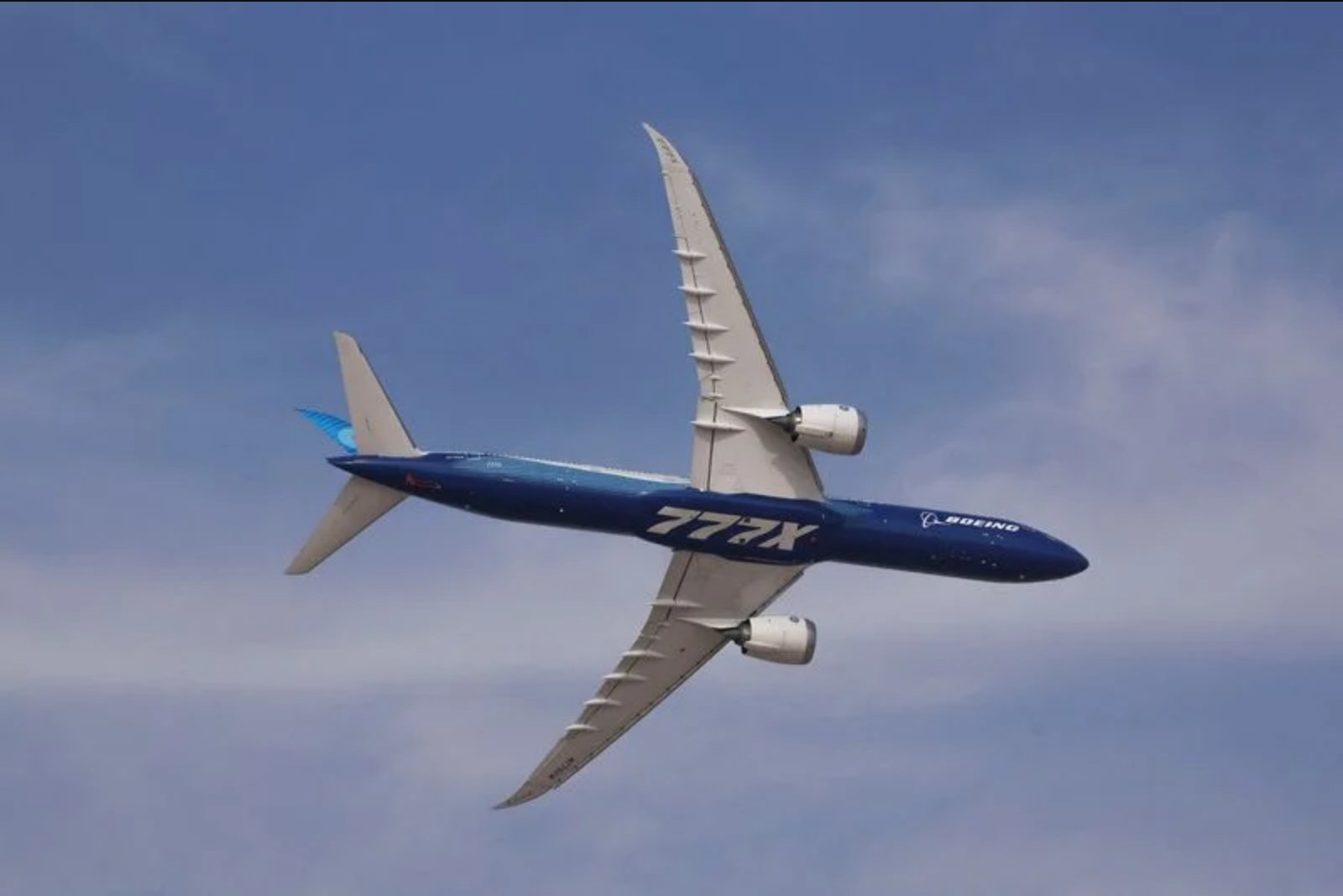
Emirates, the world\'s largest purchaser of wide-body aircraft, said it still anticipates receiving its long-delayed first Boeing 777X by May or June next year, but signalled no breakthrough yet on the engine improvements it says are necessary before it will place an order for the rival Airbus A350-1000.
Speaking on the sidelines of an industry conference in Berlin, Emirates President Tim Clark described the 777X order as "in good shape" while cautioning that "anything can go wrong." The carrier originally led a wave of initial orders for the 400-seat 777X roughly 14 years ago, and its expected first delivery now falls in May or June of the coming year.
The 777X uses engines from General Electric. Development of the GE-powered aircraft has been delayed for years, with certification holdups among the factors that have pushed back the programme.
A350-1000 engine durability and Emirates\' stance
On the competing side, Emirates reiterated longstanding reservations about the Rolls-Royce Trent XWB-97 engine that powers the slightly smaller Airbus A350-1000. Clark said the airline will not finalize an A350-1000 order until concerns about wear and tear in hot and sandy Gulf conditions are addressed.
"The story of the (XWB-)97 is as it was. I know they (Rolls-Royce) are working hard to get it sorted," Clark said, repeating the carrier\'s demand for demonstrable improvements before committing to the type.
Rolls-Royce did not immediately respond to comments about the engine durability points and declined to comment on the pay package referenced by Clark.
Pay package and public tensions
Clark also questioned a reported remuneration package for Rolls-Royce Chief Executive Tufan Erginbilgic that could exceed 100 million pounds, equivalent in the article to about $134 million. The comment followed wider public tensions between the airline and the engine maker.
Erginbilgic has been credited, in public commentary, with a major overhaul of Rolls-Royce that has driven a marked improvement in profits and shares. Emirates\' president did not dispute those results but used the remuneration issue to underscore broader dissatisfaction in parts of the airline industry with engine suppliers.
Industry-wide dispute over prices, deliveries and parts
Clark characterised the current relationship between carriers and engine manufacturers as strained, pointing to high prices and delivery shortfalls that have left aircraft idle at times. "I can\'t say to my government, I can\'t fly because I haven\'t got this; they\'d kick me out. So it\'s brutal, but that\'s the way it is," he said, adding that airlines expect better performance from their suppliers.
Industry group IATA has accused engine makers of "gouging" airlines over parts prices. Engine manufacturers, for their part, argue they have absorbed significant financial risks to deliver fuel efficiency gains and have pointed to supply chain problems as a reason for some delays.
Addressing engine makers directly on supply constraints, Clark said: "Listen, guys, that\'s not my problem, that\'s your problem."
What remains unresolved
Key outstanding items from Emirates\' perspective are the timely delivery of the GE-powered 777X and demonstrable fixes to the Trent XWB-97 that satisfy the airline\'s operational requirements in the Gulf. While the 777X delivery timeline is now set for mid next year, Emirates said it has not seen the progress it needs from Rolls-Royce to move forward on the A350-1000.
Rolls-Royce has not publicly commented on the specific durability concerns raised by Emirates in response to those remarks.
Currency note included in previous reporting: $1 = 0.7461 pounds.