
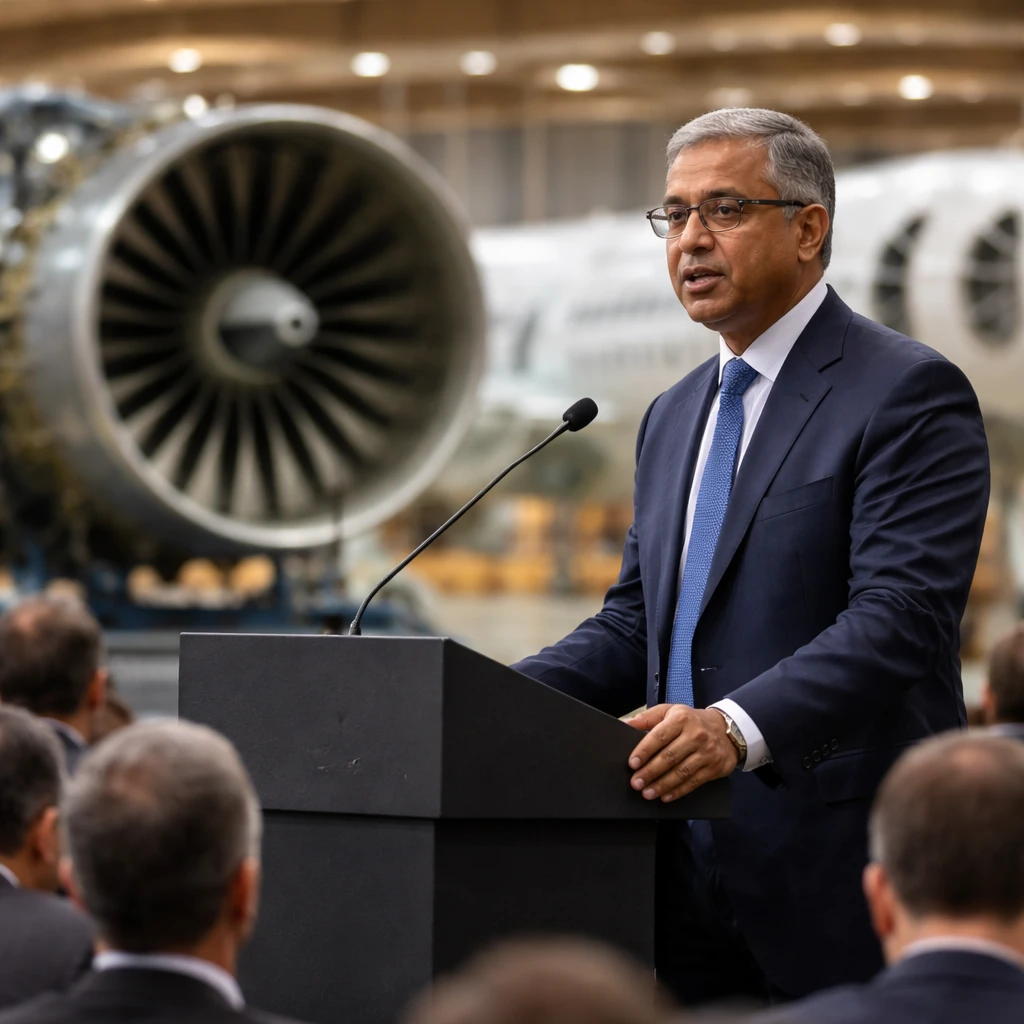
Firoz Tarapore, the chief executive of Dubai Aerospace Enterprise (DAE) Capital, identified engine manufacturers and smaller suppliers as the principal choke points for aircraft production, saying these parts of the supply chain are where most problems persist.
Speaking at the Airline Economics conference on Monday, Tarapore emphasized that DAE has observed notable gains at major airframe producers, singling out Boeing when describing improvements in that segment. He contrasted that progress with persistent difficulties at engine original equipment manufacturers (OEMs) and among a range of smaller suppliers, which he said continue to impede manufacturing and delivery timelines.
Tarapore underscored the mismatch between current production practices and historic expectations: "There’s just no easy way to reconcile why we are still where we are relative to where we used to be in terms of how long it takes to manufacture something, deliver something or to agree to commit to do that," he said during his address. The remark framed his broader point that, while some large airframe companies are advancing, other vendors in the production chain have not kept pace.
In addition to diagnosing supply-side issues, Tarapore offered an outlook for the aircraft leasing industry. He predicted that consolidation will accelerate within the leasing sector, specifically naming companies ranked between 20th and 50th as likely candidates for M&A or other consolidation activity. His forecast signals an expectation of market reshuffling among mid-tier lessors rather than among the largest firms.
The comments link operational supply constraints and market structure: continuing difficulties at engine OEMs and smaller suppliers could prolong manufacturing timelines and delivery schedules, while pressure in the leasing market may drive consolidation among smaller and mid-sized leasing firms. Tarapore’s remarks at the conference highlight two distinct fault lines for the aviation sector — upstream supply-chain performance and downstream fleet-ownership dynamics — without attributing causes beyond the issues he identified.