
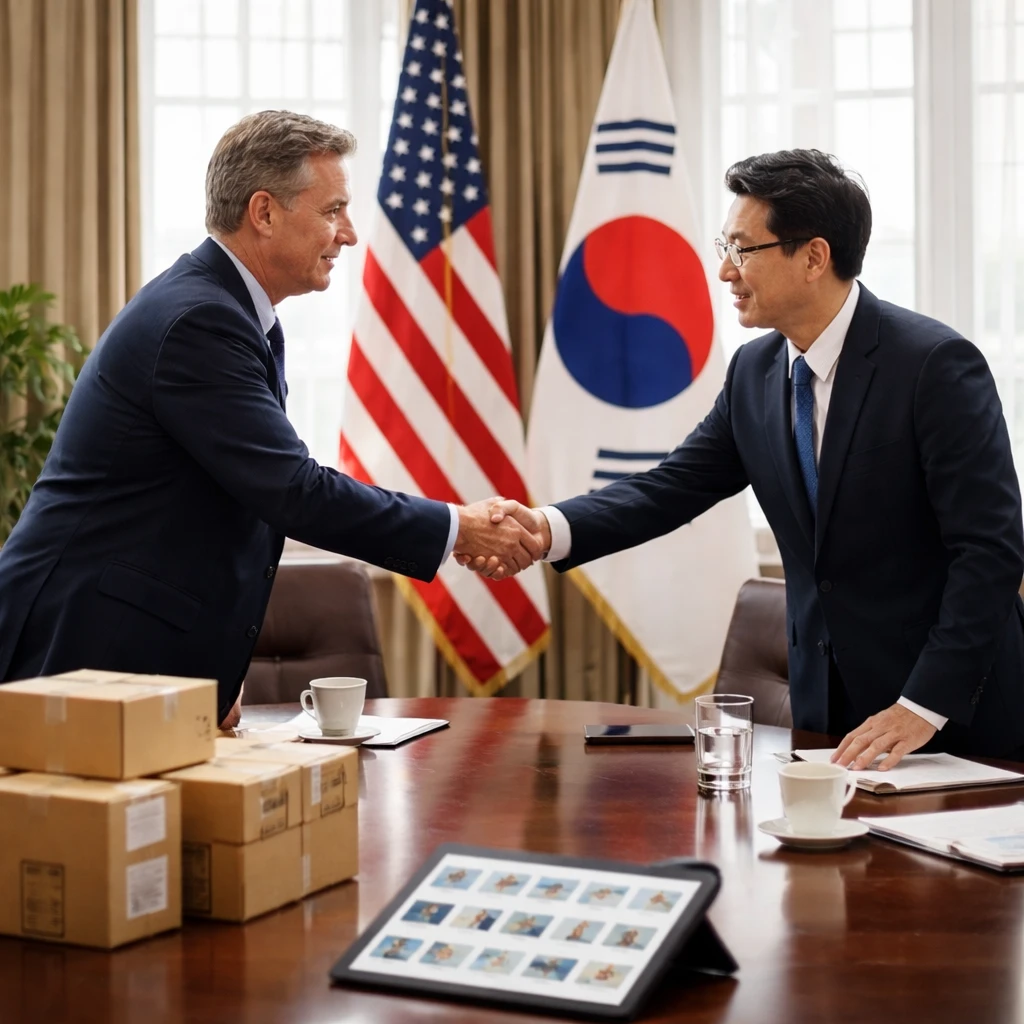
Shares of Coupang (NYSE:CPNG) rose roughly 3% following reports that a U.S. official urged South Korea's prime minister not to pursue punitive measures or regulatory actions directed at American technology companies operating in the country. The discussion singled out Coupang, which is incorporated in the U.S. but conducts the vast majority of its business in South Korea.
The exchange occurred during a Washington meeting last week between the U.S. official and South Korea's Prime Minister Kim Min-seok. During that encounter, the U.S. representative cautioned against steps that could disadvantage U.S.-based technology firms with significant operations in South Korea.
This private diplomatic intervention came as trade tensions between the two countries have grown. The U.S. president recently announced plans to raise tariffs on a range of South Korean exports - including cars and pharmaceuticals - from 15% to 25%, citing the South Korean legislature's failure to ratify a preliminary trade agreement between the nations.
The preliminary agreement had reportedly included a commitment from South Korea to make sizable investments in the United States - a figure of $350 billion - and to refrain from discriminatory treatment of American technology companies. Negotiations between U.S. and South Korean officials have also touched on potential platform and artificial intelligence regulatory approaches that could affect major American tech companies such as Meta Platforms and Google.
Coupang is frequently compared to Amazon in terms of its role in South Korea's e-commerce market. The company is noted to have influential supporters within both the presidential administration and Congress, according to people familiar with the matter.
Investors appeared to respond to the intervention by the U.S. official, lifting the stock by approximately 3% on the report. The situation remains part of a larger set of trade and regulatory discussions between Washington and Seoul that include tariffs, investment commitments, and oversight of digital platforms and artificial intelligence.
Summary
A U.S. official urged South Korea's prime minister not to impose penalties or discriminatory rules on U.S.-based tech companies operating in South Korea. Coupang, a U.S.-listed e-commerce company with most operations in South Korea, saw its shares rise about 3% after the report. The dialogue unfolded amid broader trade tensions, recent U.S. tariff increases, and unsettled preliminary trade commitments reportedly involving $350 billion in South Korean investment in the U.S.