
Stock Markets January 26, 2026

Chinese regulators, automakers convene to tackle fierce competition and chip shortages

CAAM says state planner, industry ministry and major carmakers met to discuss anti-involution, supply constraints and export issues

By Derek Hwang
Chinese regulators, automakers convene to tackle fierce competition and chip shortages

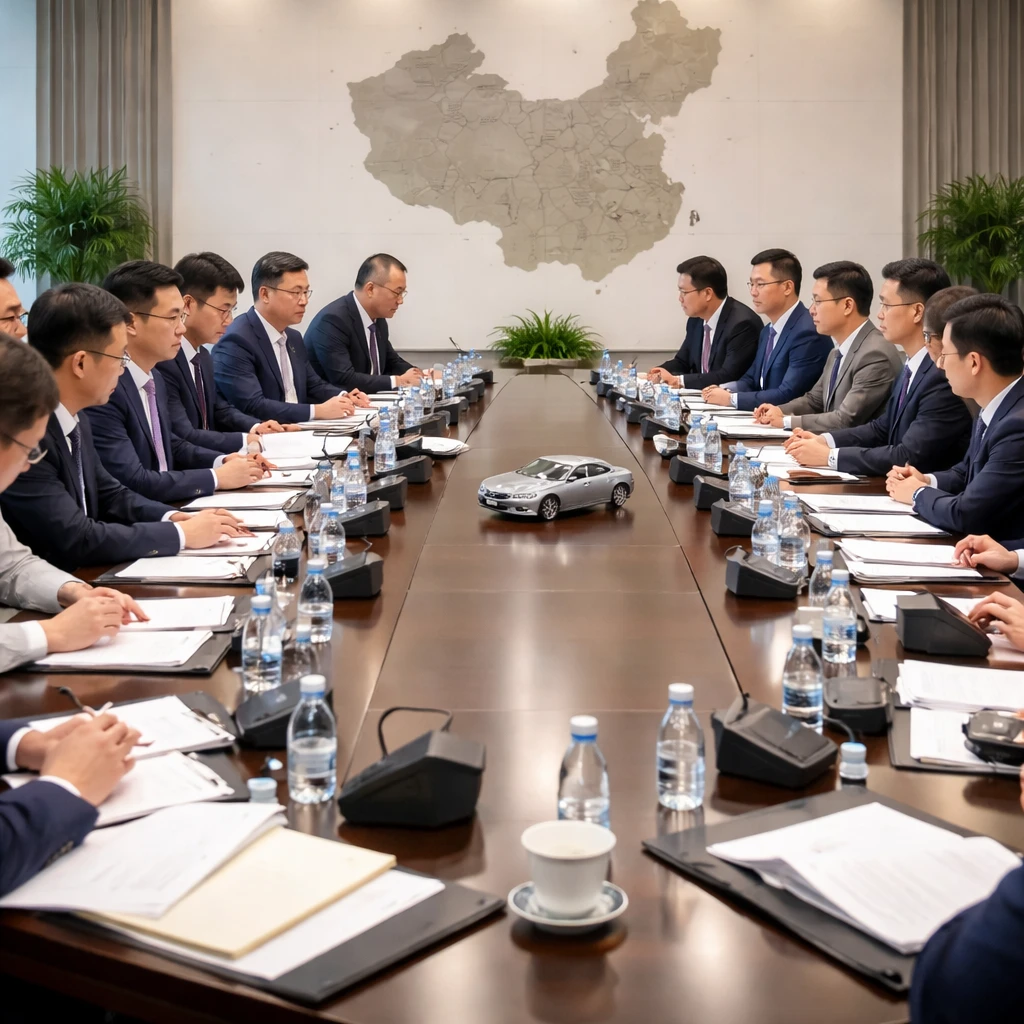
China’s auto sector held a high-level meeting convening government planners, the industry ministry and senior executives from major domestic carmakers to discuss intensifying competition, semiconductor shortages and export challenges, the China Association of Automobile Manufacturers said Monday. The gathering focused on concerns tied to 'anti-involution' - excessive competitive pressure that could undermine industry returns - alongside supply-chain and international sales questions.

Key Points

  • High-level meeting convened by CAAM included the state planner, the industry ministry and executives from major Chinese automakers including FAW, Dongfeng, SAIC Motor, Changan and BAIC - sectors impacted: automotive manufacturing, government policy.
  • Meeting topics centered on intense market competition described as "anti-involution," semiconductor chip shortages, and export issues - sectors impacted: autos, semiconductors, trade/logistics.
  • CAAM provided a concise statement listing attendees and topics but offered no detailed outcomes or next steps - sectors impacted: corporate strategy, regulatory oversight.

Chinese automotive industry leaders and senior government representatives met in a joint session to discuss a cluster of pressing industry issues, the China Association of Automobile Manufacturers (CAAM) said Monday.

CAAM said the meeting included officials from the country’s state planner and the industry ministry and brought top executives from several major local automakers together. Participating companies named in CAAM’s statement included FAW, Dongfeng, SAIC Motor, Changan and BAIC.

The agenda addressed a set of sector-wide concerns. One was intense competitive pressure within the market, framed in the statement as "anti-involution" - a term used to describe a situation where excessive rivalry leads to diminishing returns across the industry. The meeting also discussed shortages of semiconductor chips, a supply constraint that has been a recurring point of concern for vehicle production. Exports were included among the topics covered, according to CAAM.

CAAM’s description indicates the gathering was intended to bring together policy makers and industry leaders to air and examine those challenges. The organisation noted the presence of both planning and industry authorities alongside senior management from leading automakers, underscoring the cross-cutting nature of the issues under discussion.

While CAAM identified the participating firms and the main subjects covered, the announcement did not provide additional detail on any follow-up steps, specific measures discussed, or commitments made by either government bodies or corporate participants. No further information on timelines, policy changes, or company actions was included in the statement.

The meeting’s focus on competition, chips and exports highlighted a set of risks that remain on the agenda for China’s automotive sector. CAAM’s use of the term "anti-involution" signals concern about industry dynamics and the possibility that aggressive competitive tactics could erode profitability or distort investment decisions. Semiconductor availability continues to be cited as a constraint on production, and export-related discussion points to ongoing attention to overseas demand and trade channels.

CAAM conveyed the details of the meeting in a brief statement but did not elaborate on operational or regulatory outcomes. As reported, the participants and topics were limited to those named by CAAM, and additional specifics were not provided in the announcement.

Risks

  • Persistent semiconductor shortages that can constrain vehicle production and affect supply chains - impacts the automotive and semiconductor sectors.
  • Escalating competitive pressure described as "anti-involution," which could reduce industry-wide returns and influence investment and pricing decisions - impacts automakers and capital markets tied to the sector.
  • Uncertainty around export performance and related trade considerations, given that exports were a named topic but no specifics were provided - impacts international sales, logistics and trade-exposed manufacturers.

More from Stock Markets

Moody's Raises Twilio to Ba1, Cites Growth Trajectory and Conservative Financial Discipline Feb 2, 2026 Moody's Raises OUTFRONT Media Credit Rating to Ba3, Citing Lower Leverage and Digital Push Feb 2, 2026 Moody's Moves Mister Car Wash Outlook to Positive as Credit Metrics Improve Feb 2, 2026 S&P Elevates SM Energy to BB After Civitas Deal, Cites Bigger Footprint and Diversification Feb 2, 2026 NXP Sees Strong Start to Quarter, Cites Automotive Strength and Stable Industrial Demand Feb 2, 2026