
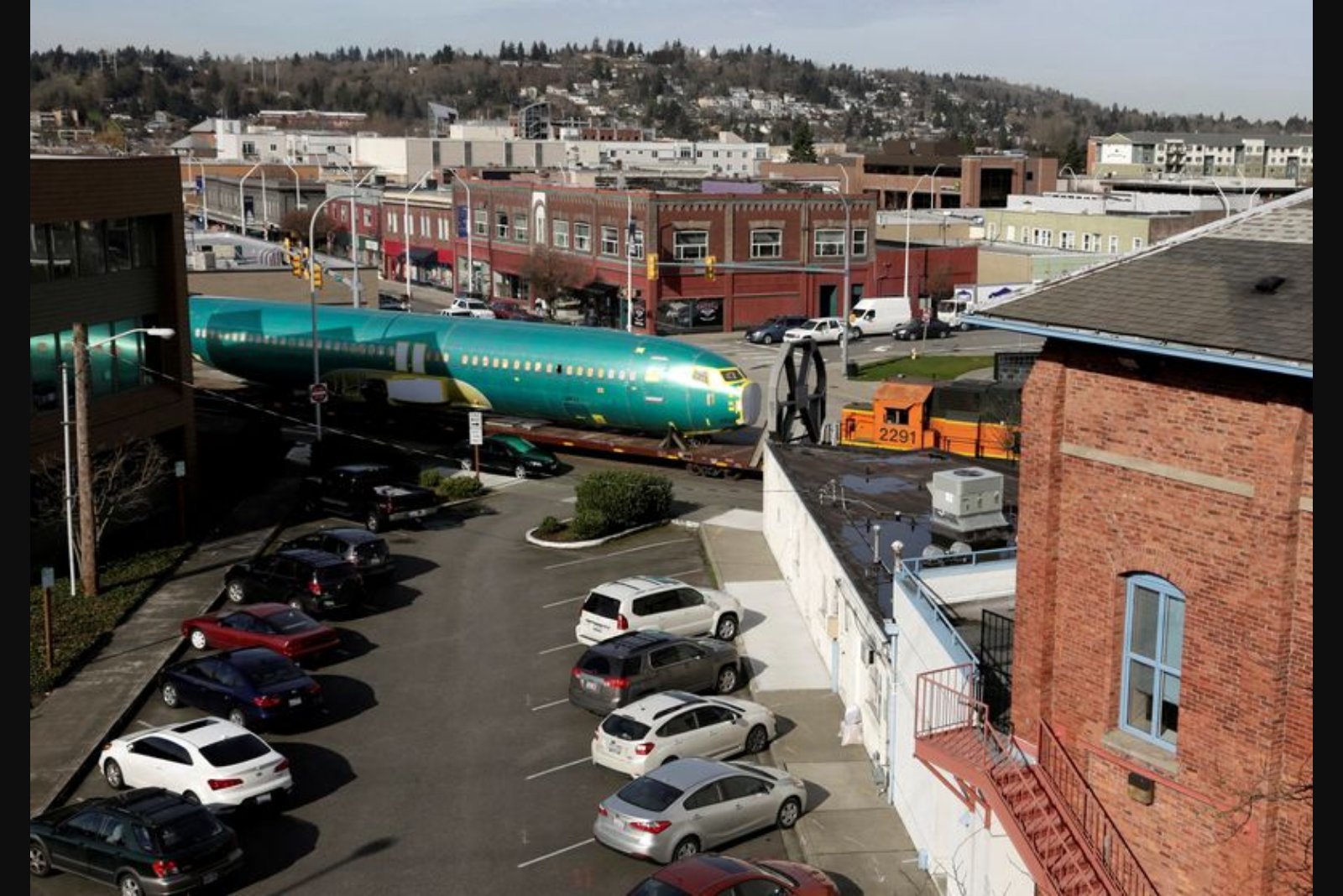
Boeing’s intentions to lift jetliner production and guidance on improving free cash flow will be central themes when the planemaker releases fourth-quarter results. Even though analysts broadly expect another quarterly loss, investors are watching whether the company can sustain the operational recovery that took shape last year.
After a high-profile in-flight panel break on a relatively new Alaska Airlines 737 MAX about two years ago that exposed deep production-quality issues, Boeing’s share price tumbled more than 30% in 2024. Since then, the company appears to have made progress stabilizing output of its primary single-aisle product, the 737 MAX, which has been the driver of cash generation for the business.
Last year contained a string of significant corporate developments for Boeing. The company completed the sale of its Jeppesen subsidiary for $10.6 billion, closed the acquisition of its largest supplier Spirit AeroSystems, secured the U.S. F-47 fighter contract, and, for the first time in several years, outpaced European rival Airbus on new orders.
Certification and program delays remain unresolved
Despite those commercial and structural moves, Boeing continues to face certification obstacles on multiple fronts. The 737 MAX 7 and 737 MAX 10 variants - the smallest and largest members of the 737 MAX family - remain uncertified. In addition, the wide-body 777X program continues to lag, described in industry reporting as roughly six years behind schedule.
On the earnings preview front, Wall Street analysts polled by LSEG expect Boeing to report a loss of $0.39 per share for the fourth quarter. Analyst sentiment toward the company, however, skews positive: 24 of 29 analysts surveyed by LSEG carry buy recommendations.
Production-rate debate: 42 versus 47 and beyond
A pivotal question for market participants is whether Boeing can raise 737 production well beyond the federally imposed cap that had been set at 38 airplanes per month. Federal regulators approved an increase to 42 per month in October. The pace of subsequent increases, and the supply-chain actions required to support them, will be closely watched.
Doug Harned, an aerospace investment analyst at Bernstein, said that because Boeing built up substantial inventory in recent years, moving to 42 per month should not present a major challenge. Harned cautioned, though, that reaching a 47-per-month rate would demand a clearer ramp-up across suppliers.
Boeing CEO Kelly Ortberg has indicated the company will not accelerate production rates more frequently than every six months. Harned added that even a more conservative cadence - taking nine to 12 months between rate increases - would be acceptable provided the increases are stable and not accompanied by the quality and safety problems that surfaced in the post-pandemic period.
Free cash flow: when will it cross $10 billion?
Investors, supported by a backlog of orders that extends the company’s workload past 2030, are pressing for clarity on when Boeing’s free cash flow will exceed $10 billion - a metric that is closely monitored in the market. Bernstein’s projections anticipate free cash flow surpassing that threshold in 2028, while the firm also expects cash flow to be negative in 2025.
BNP Paribas analyst Matthew Akers, one of the more cautious voices on the stock, has said the financials must add up to more than $10 billion in free cash flow sooner rather than later to appease bullish investors. Akers’ own projection places Boeing at $9 billion in free cash flow in 2029.
What investors will watch
- Management commentary on the timing and cadence of further 737 production-rate increases.
- Updates on certification progress for the 737 MAX 7 and 10 and the 777X program.
- Revised free cash flow guidance and multiyear cash-flow trajectories tied to production and deliveries.
Those items will shape market expectations as Boeing reports quarterly results, even as the company is still expected to post a fourth-quarter loss per LSEG consensus.