
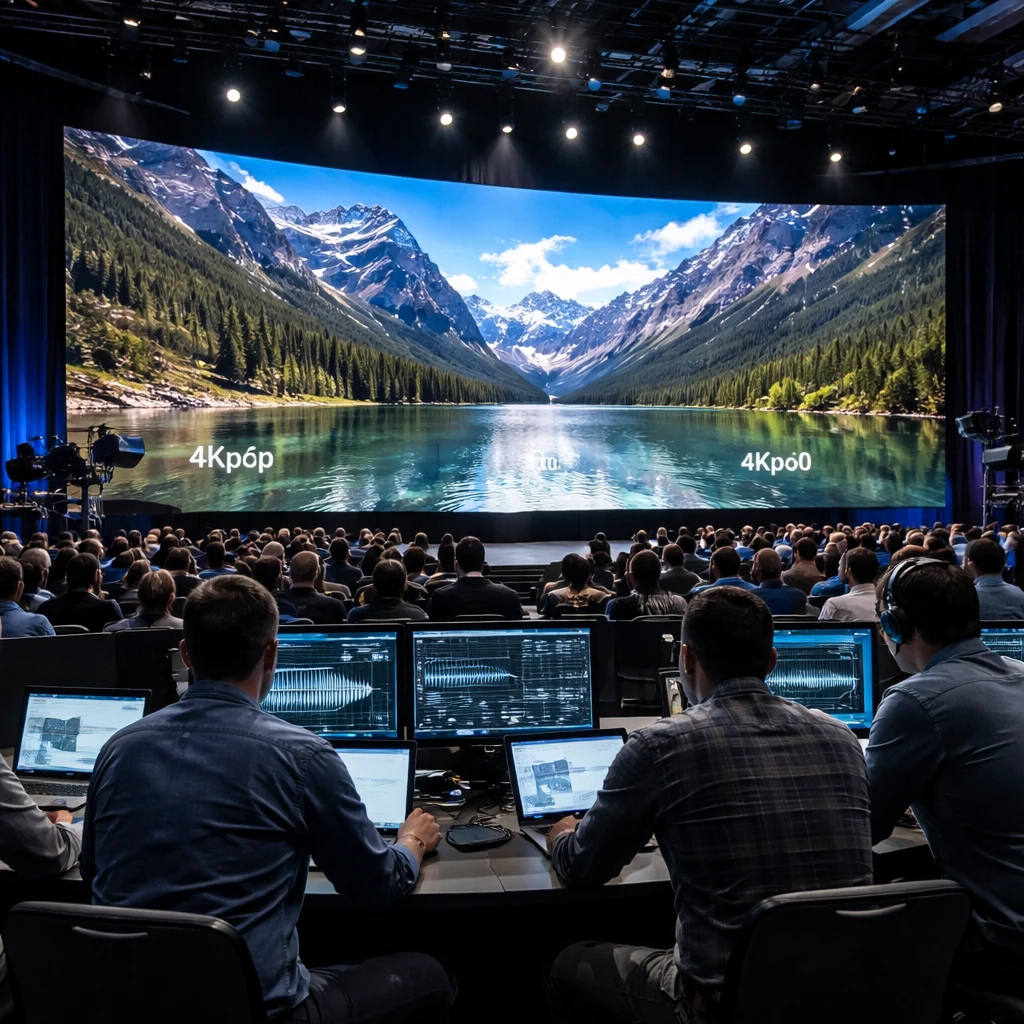
Beamr Imaging Ltd. (NASDAQ: BMR) shares climbed 2% in premarket trading Wednesday as the company gets ready to demonstrate a new validation framework for compressed and AI-enhanced video at the Mile High Video 2026 conference.
The event is scheduled for February 2-5, 2026, in Denver, Colorado, where Beamr will outline a three-layer approach intended to confirm that video compressed or enhanced by artificial intelligence continues to deliver quality as experienced by human viewers.
The framework comprises three principal elements. First, Beamr describes a real-time AI quality enhancement solution that can upgrade 720p source material to live 4Kp60 output. Second, the company is promoting its patented Content-Adaptive Bitrate technology, which it says can cut frame size by up to 50%. Third, the package includes a quality verification framework designed to align objective checks with human visual perception.
In explaining the rationale, Tamar Shoham, Beamr's Chief Technology Officer, said: "Media teams require quantifiable evidence that video compression preserves visual quality and that AI enhancement produces reliable results without hallucinations. Our approach delivers real-time processing with measurable confidence at every stage, from capture through compression and AI enhancement to live 4Kp60 output."
Beamr positions the validation framework as a response to operational pressures faced by streaming platforms and broadcasters as Ultra HD adoption increases and AI-driven video workflows become more prevalent. The company emphasizes that operators must safeguard perceived visual quality while managing the capital and operating costs of upgrading infrastructure that may have been built for lower-resolution workflows.
The company also notes that its solution is compatible with major codecs, such as HEVC and AV1, and that it is already deployed by major media and technology companies, according to the firm.
Market context and implications
Beamr's public demonstration at an industry conference could serve to validate the firm's technical claims to potential customers and partners. For operators weighing Ultra HD rollouts or integrating AI-based enhancement tools, the combination of a visible upscaling capability, bitrate reduction, and a measurement framework addresses both quality assurance and cost-efficiency considerations.
However, the company’s claims and the value of the framework will be tested in public demonstrations and in customer deployments following the conference.