
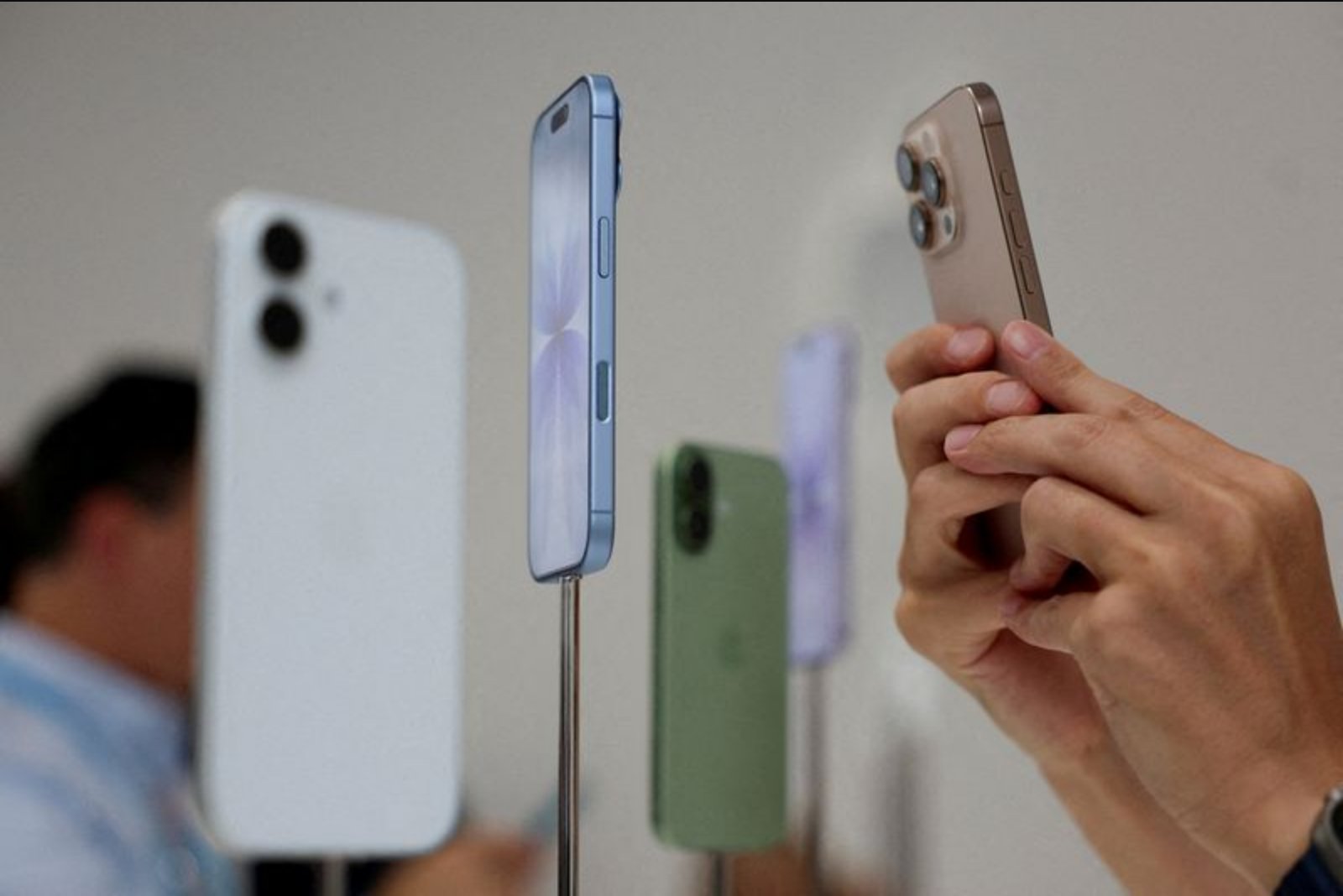
Jan 29 - Apple exceeded Wall Street estimates for quarterly revenue, driven largely by exceptional demand for its iPhone 17 lineup and a pronounced rebound in Greater China. CEO Tim Cook described consumer interest in the new handsets as "staggering," attributing the results to broad-based upgrades and improved device capabilities.
For the fiscal first quarter ended December 27, Apple reported iPhone revenue of $85.27 billion, well above analysts' consensus of $78.65 billion. The company said iPhone sales set records across all geographic segments, a sign of widespread strength despite lingering macroeconomic uncertainty.
Overall quarterly revenue reached $143.8 billion, a 16% increase from the prior year and higher than the $138.48 billion average estimate tracked by LSEG. Diluted earnings per share were $2.84, topping the consensus of $2.67.
Gross margin for the quarter came in at 48.2%, above both Apple's guidance and analyst expectations of 47.45%, suggesting that near-term cost pressures from components had not yet materially compressed profitability.
Management comments and strategic moves
In a company interview, Cook characterized demand for the new iPhones as "simply staggering, with revenue growing 23% year over year to achieve its biggest quarter in history." He also noted that Apple's installed base now totals 2.5 billion active devices.
Apple highlighted a recent partnership with Alphabet's Google that integrates the Gemini artificial-intelligence models into Apple's ecosystem, positioning the company to expand AI-driven features across its devices and services.
When asked about shifts in memory costs, including DRAM, Cook declined to comment directly and indicated that the topic would be addressed on the company's quarterly conference call with analysts.
Regional performance and product segments
Sales in Greater China climbed 38% year on year to $25.53 billion, materially above the Visible Alpha estimate of $21.32 billion. Apple noted that the iPhone set a sales record in the region and that the iPhone 17 contributed to double-digit growth in Android-to-iPhone switchers.
While Apple does not publish specific India sales figures, management said the company recorded "double-digit" revenue growth in that market, with iPhones, Macs and other products setting revenue records. The company also confirmed plans to open a retail store in Mumbai.
Within product categories, Mac revenue totaled $8.39 billion, slightly below the $8.95 billion analyst expectation, while iPad sales rose to $8.6 billion, beating the $8.13 billion forecast aided by steady education demand and momentum for higher-priced iPad Pro models.
The services segment, which includes offerings such as Apple Music and iCloud, generated a record $30.01 billion in revenue, broadly in line with the $30.07 billion estimate.
Wearables and supply constraints
The wearables, home and accessories category recorded $11.49 billion in sales, missing the $12.04 billion consensus. Management singled out the AirPods Pro 3 as an example of constrained supply: "AirPods Pro 3 were supply-constrained during the quarter, and we think we would have grown year over year if we would not have been constrained," Cook said. The product has functionality such as in-headset translation that drew unexpectedly strong demand.
What the results indicate
Apple's quarter was characterized by a dominant iPhone cycle that translated into record hardware revenue in multiple regions and a services business that continued to expand. Gross margins exceeded expectations, suggesting that cost pressures on components and commodities had not yet fully impacted reported profitability for the period.
At the same time, the company flagged constraints in wearables and deferred commentary on memory-price trends to its formal earnings call, leaving open questions about the short-term pass-through of rising component costs into margins and supply dynamics for in-demand products.