
Amazon's chief executive officer, Andy Jassy, disclosed in a shareholder letter that the company's cloud-based AI services achieved an annualized revenue run rate exceeding $15 billion in the first quarter of 2026. The announcement, which addressed investor concerns about the scale of the company's AI spending, coincided with a roughly 2% rise in Amazon shares during pre-market trading.
Investors have scrutinized Amazon's push into AI, particularly after the company in February signaled that capital expenditures would reach $200 billion this year, largely to support AI development and the infrastructure that underpins it. That sizable capex plan provoked unease among some market participants, prompting questions about near-term cash flow and the broader implications for the technology sector.
In his letter, Jassy framed the heavy investment as a deliberate choice: the company is prepared to accept short-term free cash flow headwinds in order to secure larger medium- and long-term free cash flow benefits. "We are willing to make large capex investments and endure short-term FCF headwinds for the substantial medium to long-term FCF surplus. AI is a once-in-a-lifetime opportunity where the current growth is unprecedented and the future growth even bigger," he wrote.
The shareholder communication marked the first time the company has published disclosed numbers for this particular AI business after directing major investments to compete with peers in the space, including NVIDIA Corporation (NASDAQ:NVDA), Microsoft Corporation (NASDAQ:MSFT), and Alphabet Inc Class A (NASDAQ:GOOGL).
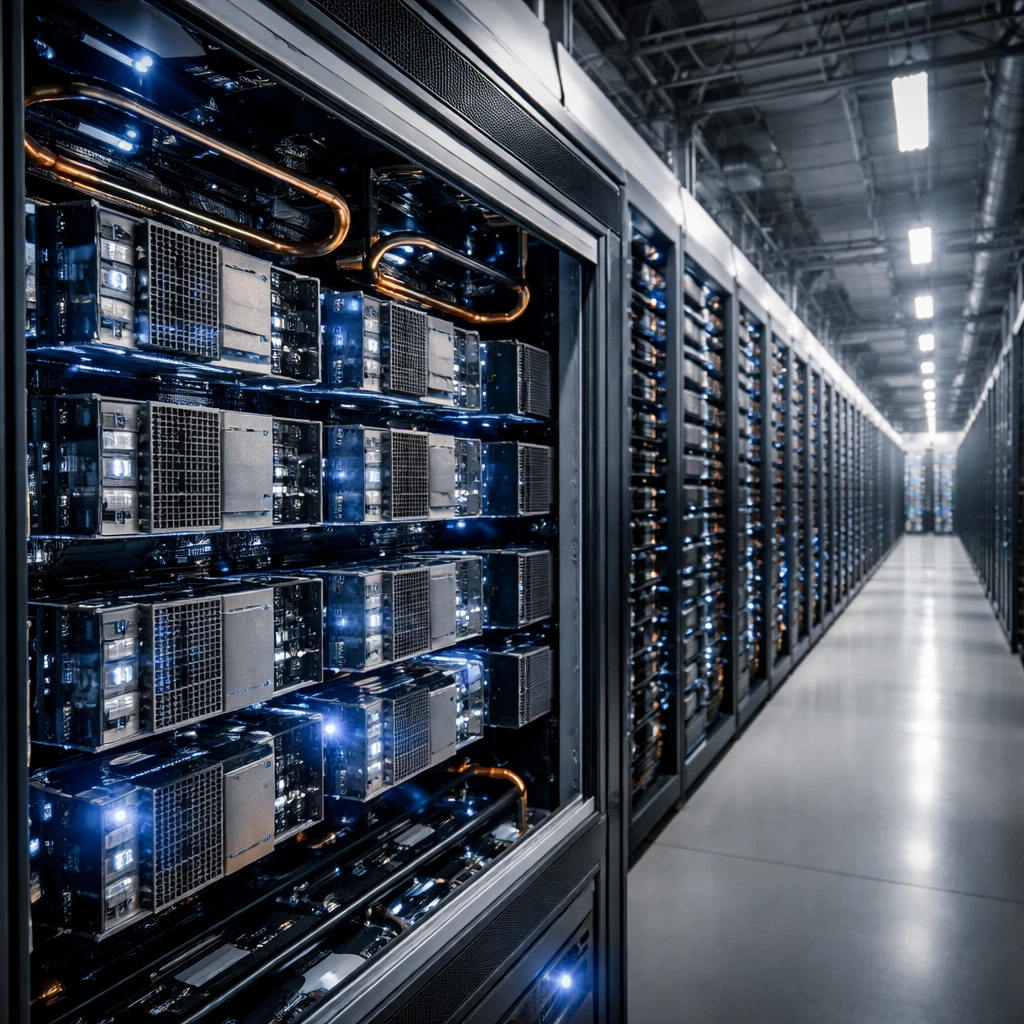
Jassy also provided updated figures for Amazon's internal chip operations. The business that encompasses Graviton processors, Trainium AI chips, and Nitro networking cards has reportedly doubled its annualized revenue run rate to more than $20 billion, up from $10 billion that Amazon disclosed alongside its fourth-quarter results.
Market commentators reacted to the disclosure. Citron Research, in a post on X, described Amazon's chip efforts as highly significant and set a $300 price target for the company's stock. Citron additionally suggested that if Amazon's chip business had been structured as a stand-alone operation and sold chips produced this year to AWS and to third parties in the same way leading chipmakers sell product, the annualized run rate could be roughly $50 billion, according to the post.
On the subject of selling chips to outside customers, Jassy signaled openness to greater third-party engagement. He said demand for Amazon's chips is substantial and that it is quite possible Amazon will sell racks of them to external firms in the future. That comment points to a potential shift from using the chips solely for internal infrastructure to offering them more broadly, although no specific plans or timelines were provided.
Context and market response
The combined disclosure of AI service revenue and the enlarged chip business run rate seeks to reassure investors that Amazon's heavy investment in AI and custom silicon is beginning to produce measurable returns. At the same time, the company continues to confront the balancing act between large, near-term capital outlays and expectations for longer-term cash generation.