
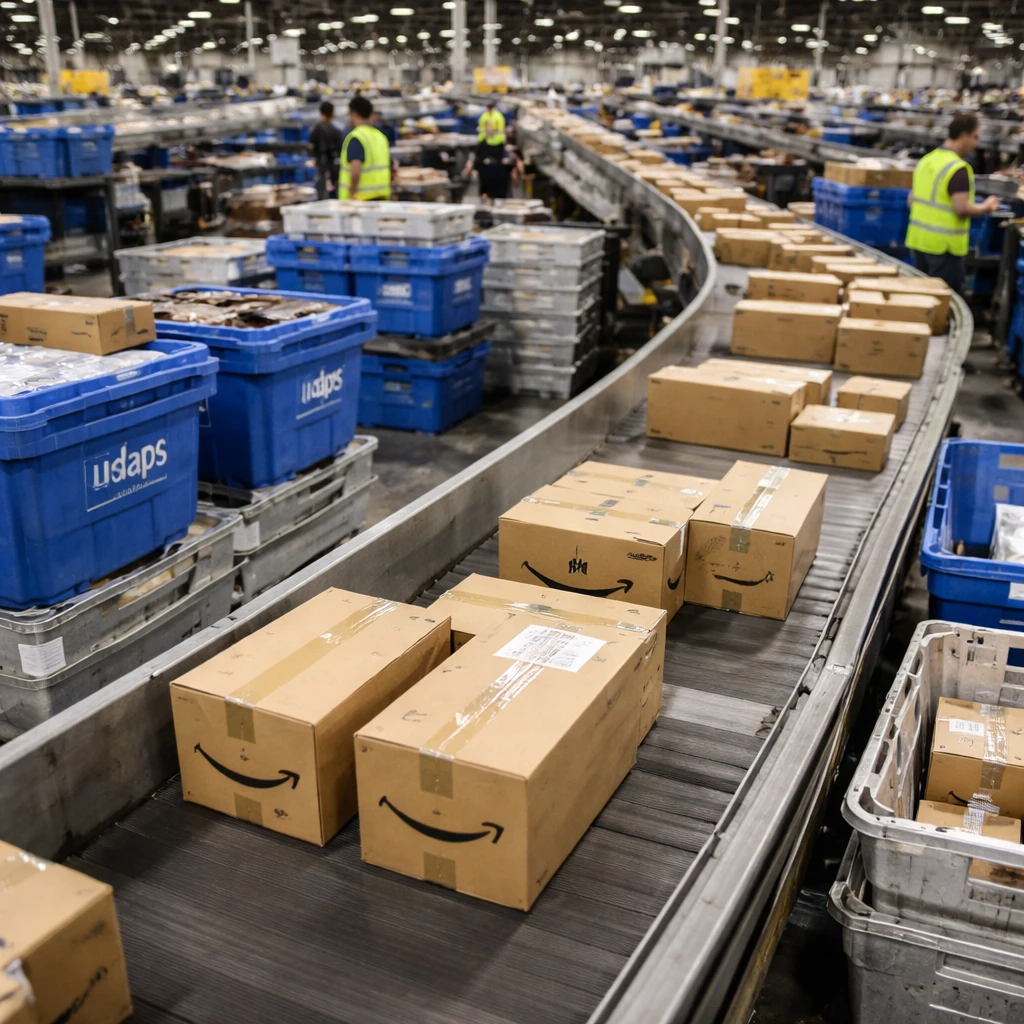
Amazon.com (NASDAQ:AMZN) announced that it has reached a new agreement with the U.S. Postal Service regarding the delivery of packages. The arrangement, described in media reports, would maintain the majority of Amazon’s current parcel flow through the Postal Service while reducing the total volume handled by USPS compared with prior levels.
According to reporting, Amazon would remain the Postal Service’s largest single customer under the proposed terms, keeping about 80% of the deliveries it currently routes through USPS. That share translates to more than one billion packages per year, based on figures cited in the reports.
Other reporting places the impact to USPS at a roughly 20% decline in parcel volume tied to this agreement. The reduction figure was reported by the Wall Street Journal, while the estimate of deliveries retained was cited by sources speaking to Reuters.
The proposed contract is not final. It must undergo review and approval by the Postal Regulatory Commission before it can take effect. That regulatory step remains an outstanding condition of the arrangement.
Company statement
"We’re pleased to have reached a new agreement with USPS that furthers our longstanding partnership and will let us continue supporting our customers and communities together," Amazon said in a statement.
Context and implications
While the details reported so far outline the scale of deliveries that would continue to flow from Amazon to the Postal Service, the proposal still requires regulatory sign-off. The reports note both the retained volume for USPS and the extent of the projected reduction in parcel traffic. Beyond confirming the existence of a new agreement and providing Amazon’s statement, the reporting does not include a timetable for implementation or additional contractual specifics.
This development touches the e-commerce and postal services sectors most directly, with implications for broader logistics and last-mile delivery operations. The magnitude of deliveries referenced reflects the scale of Amazon’s reliance on postal networks for a substantial portion of its package distribution.