
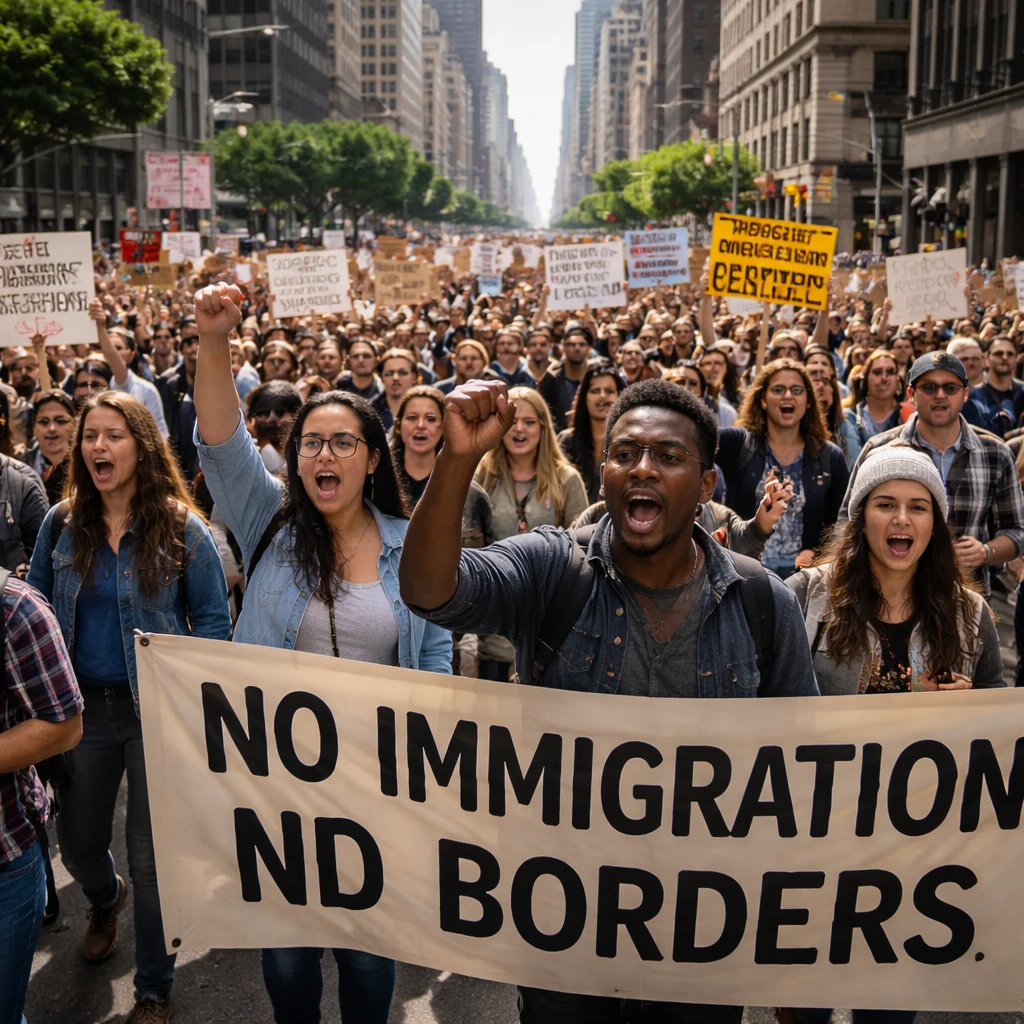
On the anniversary of President Donald Trump's second term, cities and academic institutions nationwide witnessed large-scale protests opposing his immigration policies. Thousands of participants, including workers and students, took to the streets to denounce the administration's firm stance on immigration enforcement.
The recent weeks have been marked by contentious episodes, notably involving federal agents forcibly removing a U.S. citizen from her vehicle and the fatal shooting of Renee Good, a 37-year-old mother in Minneapolis. These events have intensified public backlash and fueled protest activity.
In Washington, D.C., several hundred demonstrators gathered alongside smaller groups in cities such as Asheville, North Carolina. Protesters moved through central urban areas chanting slogans including "No ICE, no KKK, no fascist USA," as captured in various online videos. Despite these protests, the Trump administration maintains that it holds a clear mandate from voters to proceed with the deportation of millions residing in the country without legal status.
Polling data suggests that a majority of Americans disapprove of the use of force by Immigration and Customs Enforcement (ICE) and other federal law enforcement bodies. This public sentiment was reflected in various educational settings where students voiced their opposition: in Cleveland, Ohio, university students chanted, "No hate, no fear, refugees are welcome here," while in Santa Fe, New Mexico, high school students left classrooms to join a "Stop ICE Terror" rally held at the state capitol.
These protests were largely coordinated by left-leaning organizations, including Indivisible and 50501, alongside labor unions and grassroots groups actively resisting immigrant detention centers. One particular facility located in El Paso, Texas, has attracted scrutiny after the deaths of three detainees over the last six weeks, according to federal authorities.
Plans were underway for continued demonstrations extending westward to cities such as San Francisco and Seattle, where additional afternoon and evening protests were scheduled. This national wave of activism reflects persistent tensions surrounding immigration enforcement policies and their implementation across multiple jurisdictions.